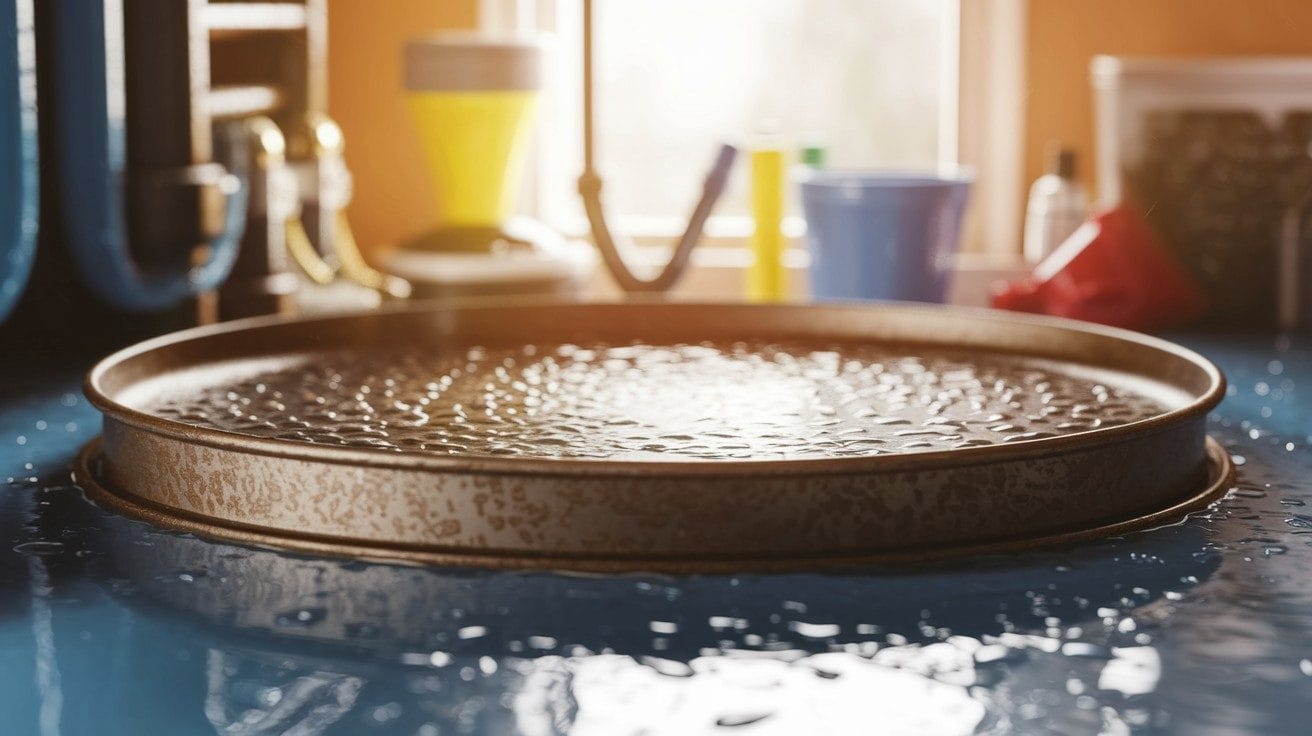
Walking into your utility closet or basement and seeing a puddle of water sitting in your water heater pan can be an alarming sight. Your mind might immediately jump to expensive repairs and potential water damage. But before you panic, it’s essential to understand what that water means. The short answer to the question, “is it normal to have water in the water heater pan?” is no, it’s not normal—but it doesn’t always signal a catastrophe. That pan is doing precisely what it was designed to do: catch a problem before it becomes a disaster.
Splash of Reality
Think of your water heater’s drip pan, drain pan, or overflow pan as an early warning system. Its primary job is to collect water from a small leak or drip and contain it, preventing moisture from seeping into your subflooring, drywall, and framing. A water heater pan is a simple but essential component designed to prevent water damage and make it easier to diagnose the source of a leak.
Understanding the purpose of a water heater drain pan is the first step in troubleshooting. It’s not a reservoir for regular operation; it’s a safeguard. So, when you see water in it, your water heater sends you a clear message: “It’s time for a closer look.” The good news is that you, as a DIY-oriented homeowner, can often identify the source of the issue with a little investigation.
Common Sources of Pan Water
Finding water in the pan doesn’t automatically mean you need a new water heater. Several different issues, ranging from minor to severe, can cause water to accumulate. Here are the most common culprits, starting with the most likely.
- Leaking Temperature & Pressure (T&P) Relief Valve: This critical safety valve releases water if the temperature or pressure inside the tank gets too high. It often has a discharge pipe that runs down the side of the tank. Sometimes the valve itself can fail and begin to leak. Troubleshooting this valve is a great place to start.
- Leaky Drain Valve: The drain valve, located near the bottom of the tank, flushes sediment. These valves, especially older plastic ones, can degrade over time and develop a slow drip, which is one of the most common sources of leaks.
- Condensation: In humid basements or utility closets, condensation can form outside the tank, fittings, and pipes, eventually dripping into the pan. This is more common with gas water heaters, where the cool air drawn in for combustion meets the warm, humid ambient air.
- Leaking Water Line Connections: The hot and cold water pipes that connect to the top of your water heater can sometimes have loose or failed fittings, causing water to run down the side of the tank and into the pan.
- A Cracked Inner Tank: This is the most serious issue. If the steel tank inside your water heater has rusted through or cracked, it will leak continuously. Unfortunately, this is not repairable, which means a full replacement of the water heater is needed.
Sometimes homeowners wonder, “why is my water heater connected to my furnace?” While these are typically separate systems, they are often located next to each other in a utility closet. High-efficiency furnaces also produce condensation and have their own drain lines. It’s crucial to confirm the water is coming from the water heater and not a neighboring appliance.
Warning Signs of a Leak
So, how can you tell the difference between a minor drip and a major problem? Look for these tell-tale signs to determine the severity of the situation.
- The Amount of Water: A few drops or a small, damp spot might indicate condensation or a very slow drip. A full or overflowing pan points to a more significant, active leak that needs immediate attention.
- Active Dripping: After drying the pan, watch closely. Can you see water actively dripping from a valve, fitting, or the bottom of the tank?
- Rust or Corrosion: Look for rust-colored streaks on the side of the tank or corrosion buildup on the pipe fittings or valves. This is a clear sign of a persistent water leak.
- Hissing or Sizzling Sounds: If you have a gas water heater, a sizzling sound could mean water is dripping onto the hot burner assembly below. This is a sign of an active leak from above. Unusual sounds like popping or whistling can also point to issues like sediment buildup or pressure problems which can, in turn, lead to leaks.
- Puddles That Reappear: If you clean up the water and find a new puddle in the same spot within a few hours, you have an active leak, not just a one-time condensation event.
Steps to Take When You Spot Water
If you’ve discovered water in your drip pan, follow these steps to safely diagnose the problem. This methodical approach will help you pinpoint the source and decide on the next course of action.
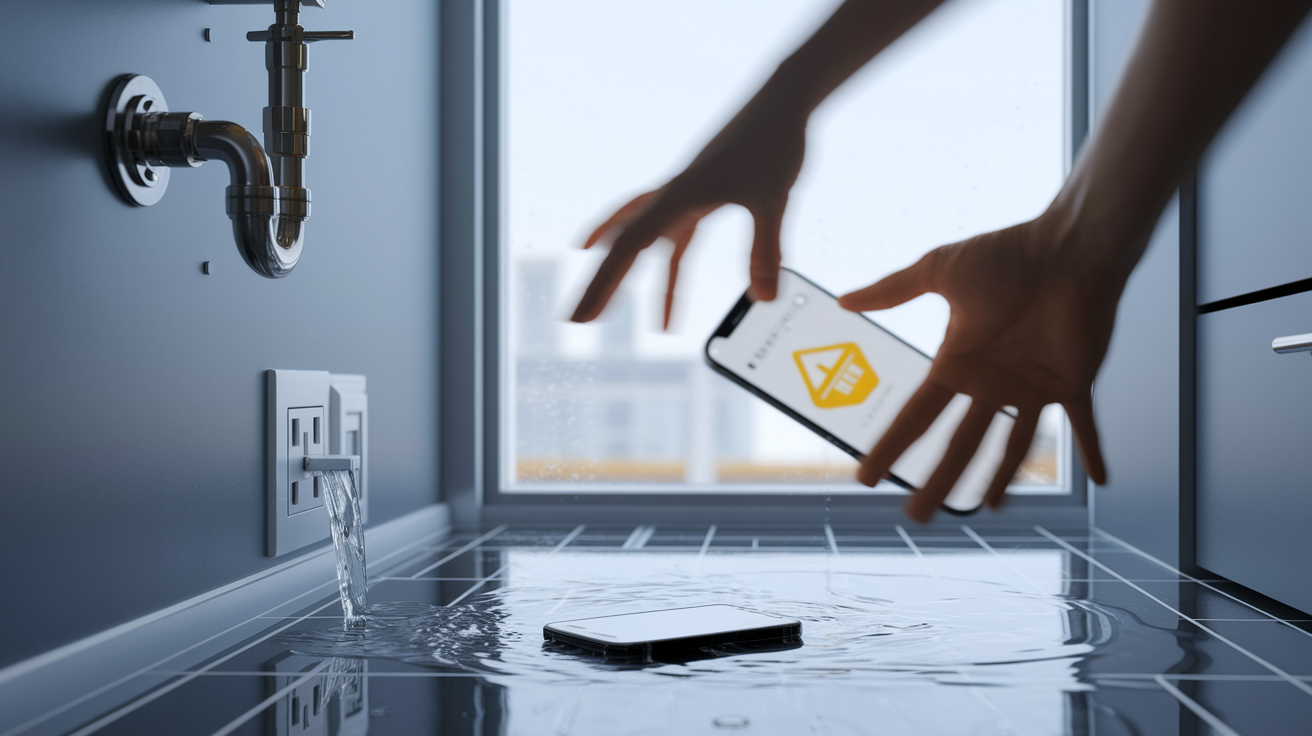
- Safety First: Shut Off the Power. For an electric water heater, go to your breaker box and shut off the circuit dedicated to the heater. For a gas heater, turn the control dial on the unit to the “OFF” position. This prevents any risk of electrical shock or gas issues.
- Turn Off the Water Supply. Locate the cold water shut-off valve, which is typically a lever or gate valve on the pipe leading into the top of the water heater. Turn it clockwise to stop water from entering the tank.
- Dry the Pan and Tank. Use towels or a wet/dry vacuum to remove all the accumulated water from the pan. Carefully dry off the exterior of the tank, the pipes, and all the valves. A dry surface makes it much easier to spot a fresh drip.
- Inspect for the Source. With a bright flashlight, carefully examine all potential leak points:
- The T&P valve and its discharge pipe.
- The drain valve at the bottom.
- The hot and cold water connections on top.
- The seams around the top and bottom of the tank jacket.
- Wait and Watch. Once everything is dry, give it some time. Check back every 30 minutes. A leak will typically reappear as a distinct drip from a specific spot. Condensation, on the other hand, will re-form more slowly and broadly over a larger surface area.
Drying Up Your Worries
Once you’ve identified the source of the water, you can decide how to proceed. Your next steps will depend entirely on what your investigation revealed.
For Fixable Leaks: If the water comes from a loose pipe fitting, a faulty T&P valve, or the drain valve, you may be in luck. These are often fixable and are among the most common causes of water heater leaks. For a confident DIYer, replacing these parts is a manageable project. However, if you’re uncomfortable draining your tank or working with plumbing, a licensed plumber can handle this repair quickly and affordably.
For Condensation Issues: If you’ve determined the culprit is simply condensation, there’s no immediate danger. Improving air circulation around the unit or running a dehumidifier in the space can often solve the problem.
For a Leaking Tank: If your inspection reveals that water is seeping from the tank body itself, the unit has reached the end of its life. A leaking tank cannot be repaired and will require a full water heater replacement. This is a job best left to the professionals, as it involves disconnecting water, gas or electric lines, and hauling away the old, heavy unit.
When the pan is full or overflowing, the leak is significant, or you simply cannot find the source, it’s always best to contact a qualified plumber. A small leak can quickly escalate, and taking swift action can help you avoid major water damage and expensive headaches. Taking steps to protect your basement from water damage is always a wise investment, and a functioning water heater pan is your first line of defense.