Keeping your plumbing system working well is key. Pipe corrosion can cause big problems and expensive fixes. You can stop this by taking steps to protect your pipes.
It’s important to keep your pipes in good shape. We’ll share tips to help you do this. This way, you can avoid costly repairs and keep your pipes working well for longer.
Getting your pipes checked by a pro regularly is a must. This helps stop clogs and corrosion. We’ll show you how to keep your pipes safe and avoid big plumbing problems.
By acting early, you can lower the chance of pipe corrosion. This keeps your home safe from damage. We’re here to help you keep your plumbing system healthy and your home running smoothly.
Understanding Pipe Corrosion and Its Impact on Your Home
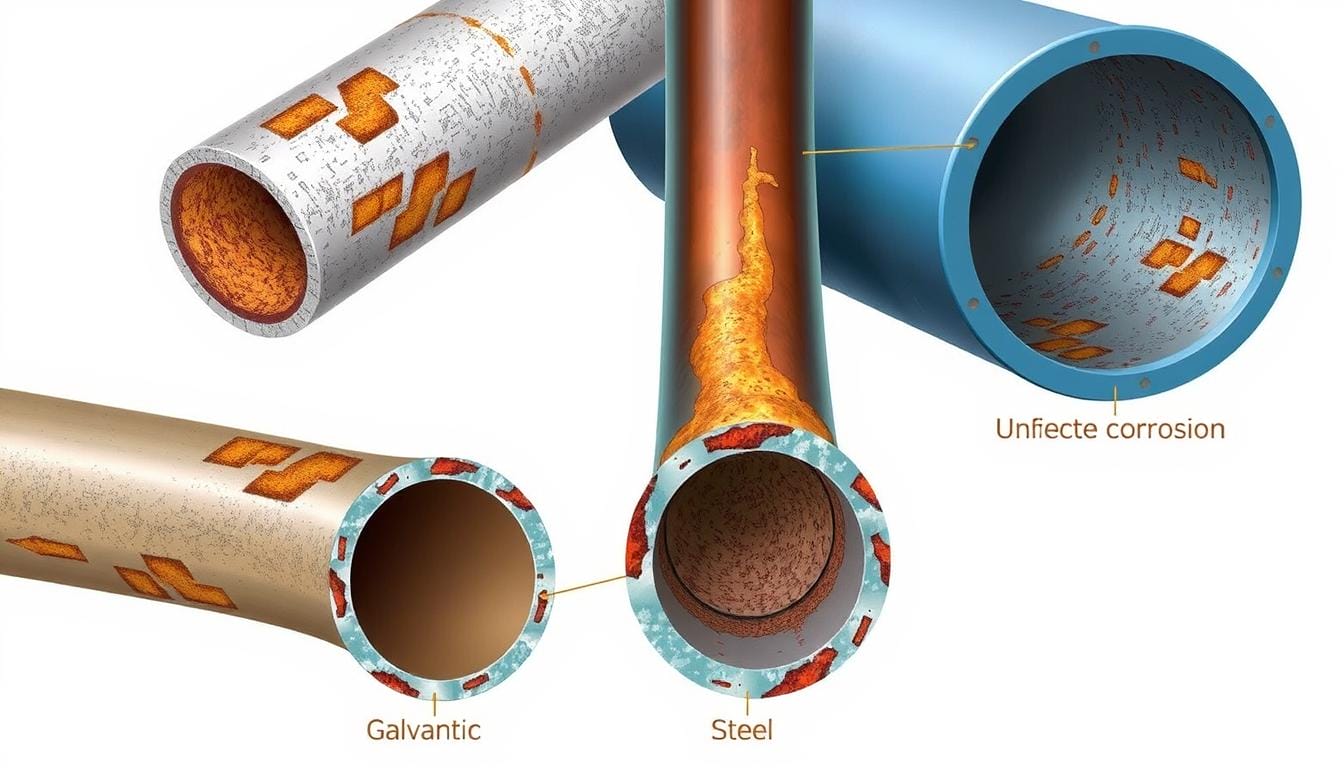
As a homeowner, knowing about pipe corrosion is key. There are many types, like uniform, pitting, and galvanic corrosion. Uniform corrosion is common and happens when pipes react with their surroundings.
Corroded pipes can cause big problems. These include water damage, mold, and lower water pressure. It’s important to catch these issues early.
Pipe deterioration can sneak up on you. But ignoring it can lead to big costs. Repairs and disruptions from corroded pipes cost millions each year.
Hard water speeds up pipe corrosion. But, regular checks and upkeep can help. This way, you catch small problems before they get big.
Types of Pipe Corrosion in Residential Plumbing
There are several types of pipe corrosion in homes. These include:
- Uniform corrosion: a general corrosion that occurs evenly across the surface of the pipe
- Pitting corrosion: a localized corrosion that can cause significant damage to the pipe
- Galvanic corrosion: occurs when two different metals are in contact with each other, causing an electrochemical reaction
The Hidden Costs of Corroded Pipes
Corroded pipes can hide costs like water damage and mold. They can also lower water pressure. The cost of fixing corroded pipes can be small or very big.
It’s important to know about pipe corrosion. This way, you can prevent problems and avoid big costs.
Signs Your Pipes Are Starting to Corrode
Pipe corrosion is a big worry for homeowners. It’s key to spot corroding pipes early. Look out for discolored water, low water pressure, and leaks. These signs mean your pipes might be corroding.
Corroding pipes can cost a lot to fix, thousands of dollars. To save money, watch your water quality and check your pipes often. Here are some signs to watch for:
- Discolored water, which can appear rusty, brown, or blue-green
- Low water pressure, which can affect your daily activities
- Leaks, which can cause water damage and increase your water bills
- Strange noises coming from the pipes, which can indicate corrosion
Spotting these pipe corrosion signs early helps prevent damage. Regular checks and upkeep can catch corrosion early. This way, you can fix problems before they get worse.
Corroding pipes can lead to big problems. They can cause low water pressure, pipe clogs, and leaks. Knowing the signs and acting fast can protect your home and save money.
| Signs of Pipe Corrosion | Description |
|---|---|
| Discolored Water | Water that appears rusty, brown, or blue-green due to corrosion |
| Low Water Pressure | Reduced water pressure due to corrosion, which can affect daily activities |
| Leaks | Water leaks that can cause damage and increase water bills |
Essential Preventing Pipe Corrosion Tips for Homeowners
As a homeowner, it’s key to stop pipe corrosion early. This saves money and keeps your plumbing working well. Using a water softener or filter helps. It makes your water less harsh on your pipes.
Keeping your water at the right temperature is also important. Wrap your pipes to keep the water warm. Also, check your pipes often for leaks and damage.
Here are more ways to stop pipe corrosion:
- Replace old metal pipes with plastic or PEX.
- Use protective coatings or linings on your pipes.
- Check and replace the sacrificial anode rod in your water heater.

By following these tips, you can make your pipes last longer. Always focus on water quality management and temperature control. This keeps your plumbing in top shape.
Water Treatment Options to Protect Your Pipes
We know how important it is to keep your pipes safe from corrosion. Using water treatment options is a great way to do this. These options can take out minerals and bad stuff from the water that can harm your pipes. Installing a water treatment system can make your pipes last longer and save you money on repairs.
Water softeners, for example, can get rid of calcium and magnesium. These minerals can make your pipes corrode.
The EPA recommends keeping water pH between 6.5 and 8.5 to fight corrosion. Also, cleaning pipes often and using special treatments can stop corrosion caused by living things. Some good water treatment options are:
- Water softeners to remove minerals that can cause corrosion
- Water filters to remove impurities from the water
- Phosphate-based treatments to add a protective layer to pipe surfaces
Using these water treatment options and keeping up with maintenance can protect your pipes well. This can also save you money by avoiding expensive repairs and replacements.
Keeping your pipes safe is key to a good plumbing system at home. By stopping corrosion early, you ensure your water is safe and healthy for your family.
Professional Inspection and Maintenance Guidelines
Regular professional inspection and maintenance stop pipe corrosion. By checking often, you catch problems early. A professional inspection finds corrosion signs like colored water or low pressure.
Setting up maintenance schedules is key. This means checking water pressure, pH, and pipe health. Keeping a record helps you track issues and plan for the future.
Some cheap maintenance schedules include:
- Checking and swapping out old pipes and fittings
- Cleaning filters to stop damage
- Using special chemicals to protect metal pipes

By following these tips and getting help from experts, you can stop pipe corrosion. This keeps your plumbing safe and working well for a long time.
| Maintenance Task | Frequency | Benefits |
|---|---|---|
| Regular inspections | Every 6-12 months | Early detection of potential issues, reduced repair costs |
| Pipe cleaning and replacement | As needed | Prevention of corrosion, improved water quality |
| Water quality testing | Every 3-6 months | Identification of potential water quality issues, adjustment of maintenance schedules |
Long-Term Solutions for Pipe Protection
As a homeowner, you want to keep your pipes safe from damage. Pipe protection is key to avoid expensive fixes and keep your plumbing working well. Using long-term solutions can help your pipes last longer.
Some long-term solutions are pipe lining and replacing old pipes. Pipe lining puts a protective layer inside the pipe. Replacing the pipe means swapping it for a new one. Both methods can stop corrosion and damage, saving you money on repairs.
Investing in pipe protection and long-term solutions keeps your plumbing system strong. It also saves you from expensive fixes. It’s smart to protect your pipes and keep your home’s value up.
- Extended pipe life
- Reduced maintenance costs
- Prevention of corrosion and damage
Choosing the right pipe protection solutions keeps your plumbing safe for a long time. This way, you avoid expensive repairs.
Conclusion: Implementing Your Pipe Corrosion Prevention Strategy
Keeping your home’s pipes safe from corrosion is important. It’s a job that never stops, but it’s worth it. By following the tips in this article, you can make your pipes last longer and save money on repairs.
It’s key to keep your pipes in good shape. Check them often and get help from experts if you find problems. Watch your water, control its temperature, and clean your pipes well. Using special treatments and coatings can also help a lot.
Being proactive about preventing pipe corrosion is very important. It helps your home stay healthy and strong. By focusing on this, you’ll feel good knowing your pipes are safe from corrosion.