Water Quality
Water Leak Detection: Homeowner Observations Before Calling a Pro
Find early leak clues by checking visible fixtures, meter behavior, sensors, stains, and shutoff location before opening walls or ceilings.
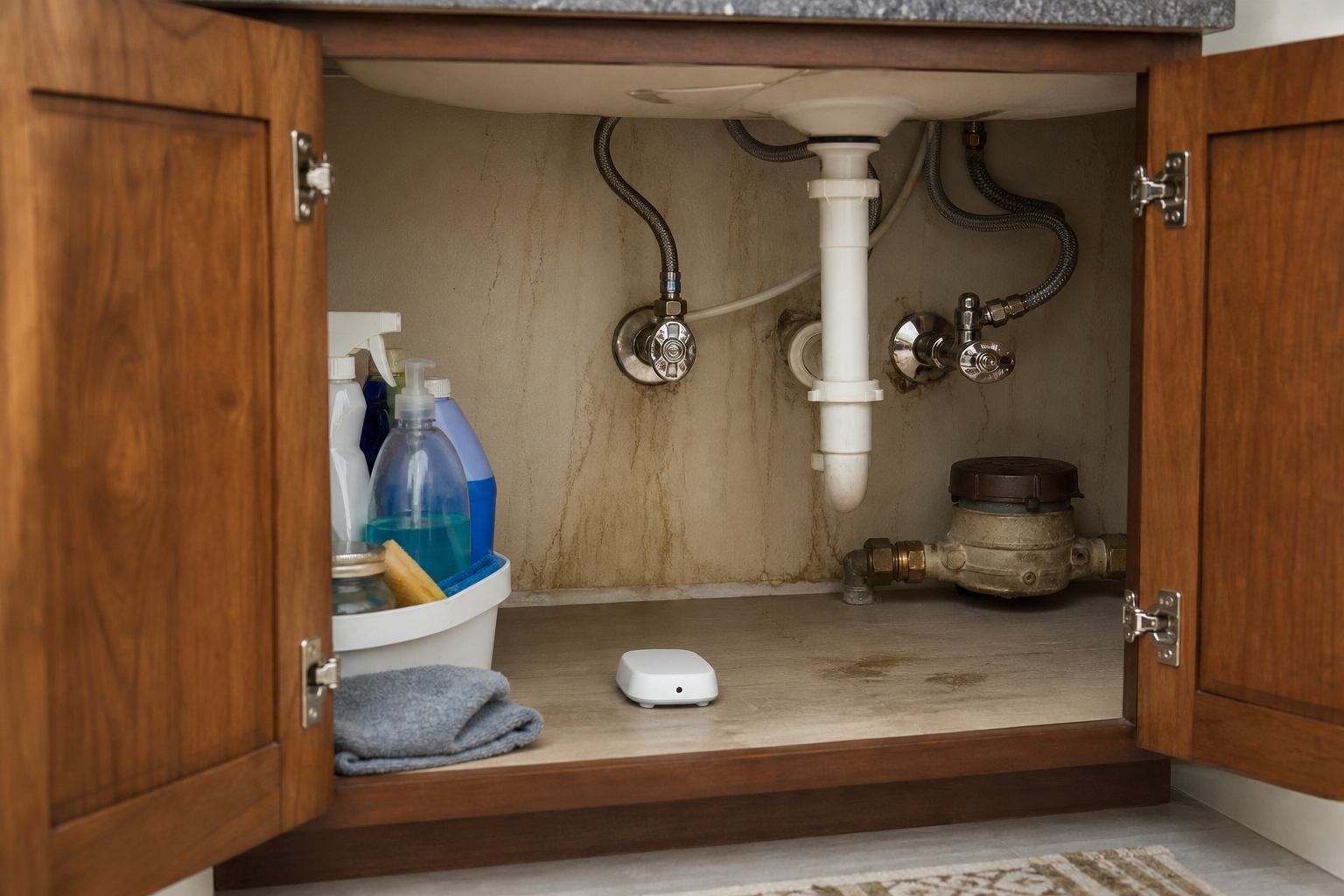
What to know about Water Leak Detection: Homeowner Observations Before Calling a Pro
Water leak detection for homeowners means finding visible clues early, knowing where the shutoff is, and documenting patterns for a plumber. It does not mean opening walls, probing ceilings, or relying on a gadget to diagnose hidden damage.
Leak clue table
| Clue | What it may mean | Safe next step |
|---|---|---|
| Meter moves when fixtures are off | Possible hidden or running fixture leak. | Record reading/time and check visible fixtures. |
| Stain on ceiling/wall | Leak path above or behind surface. | Do not cut open; photograph and call pro. |
| Musty odor/soft floor | Moisture damage concern. | Stop using nearby fixture and document. |
| Sensor alarm | Water at sensor location. | Check safely and shut off water if needed. |
What to photograph
- Stain size/location, nearby fixtures, meter reading, shutoff valves, sensor placement, and any active drip path.
Annotated leak-observation map
meter/main shutoff -> water heater -> laundry -> kitchen sink/dishwasher -> bathrooms -> exterior hose bibbs
Check visible areas only; do not open walls, ceilings, energized panels, or wet electrical spaces.
What to bring to the plumber or insurance call
- Photos of stains, meter reading, active drip, shutoff location, and affected rooms.
- When the leak appears: constant, after rain, after shower, after laundry/dishwasher, or overnight.
- Whether the main shutoff stops the water movement.
- Any leak sensor alerts and timestamps.
What this guide does not cover
It does not cover opening walls, mold remediation, slab leak locating, electrical hazards, or pressure testing. Call a qualified plumber for active flooding, hidden leaks, warm floors, sewage, or water near electrical equipment.
Decision aid: Water Leak Detection: Homeowner Observations Before Calling a Pro
Start by identifying the relevant symptom, fixture, or planning question before choosing parts or arranging work.
Write down when the issue began, what changed, which fixtures are affected, and any model or service-history details. That record makes it easier to compare the article with the exact product documentation and to explain the problem if qualified help is needed.
- Identify the water source, affected fixtures, timing, color or odor, recent plumbing work, and whether anyone may drink the water.
- Match product-specific directions to the exact model manual and confirm local requirements where installation, gas, electricity, water quality, or structural work is involved.
- Stop relying on appearance alone when drinking-water safety, a private well, lead, bacteria, or chemical contamination may be involved.
Authoritative references for this topic
Use the current version of these sources to verify safety, efficiency, health, or product-specific details that apply to your situation.