Water Quality
Water Leak Detectors for Homeowners: Types, Limits, and Buying Checks
Compare leak detector types by placement, alarms, app reliability, shutoff capability, and installation requirements without product rankings.
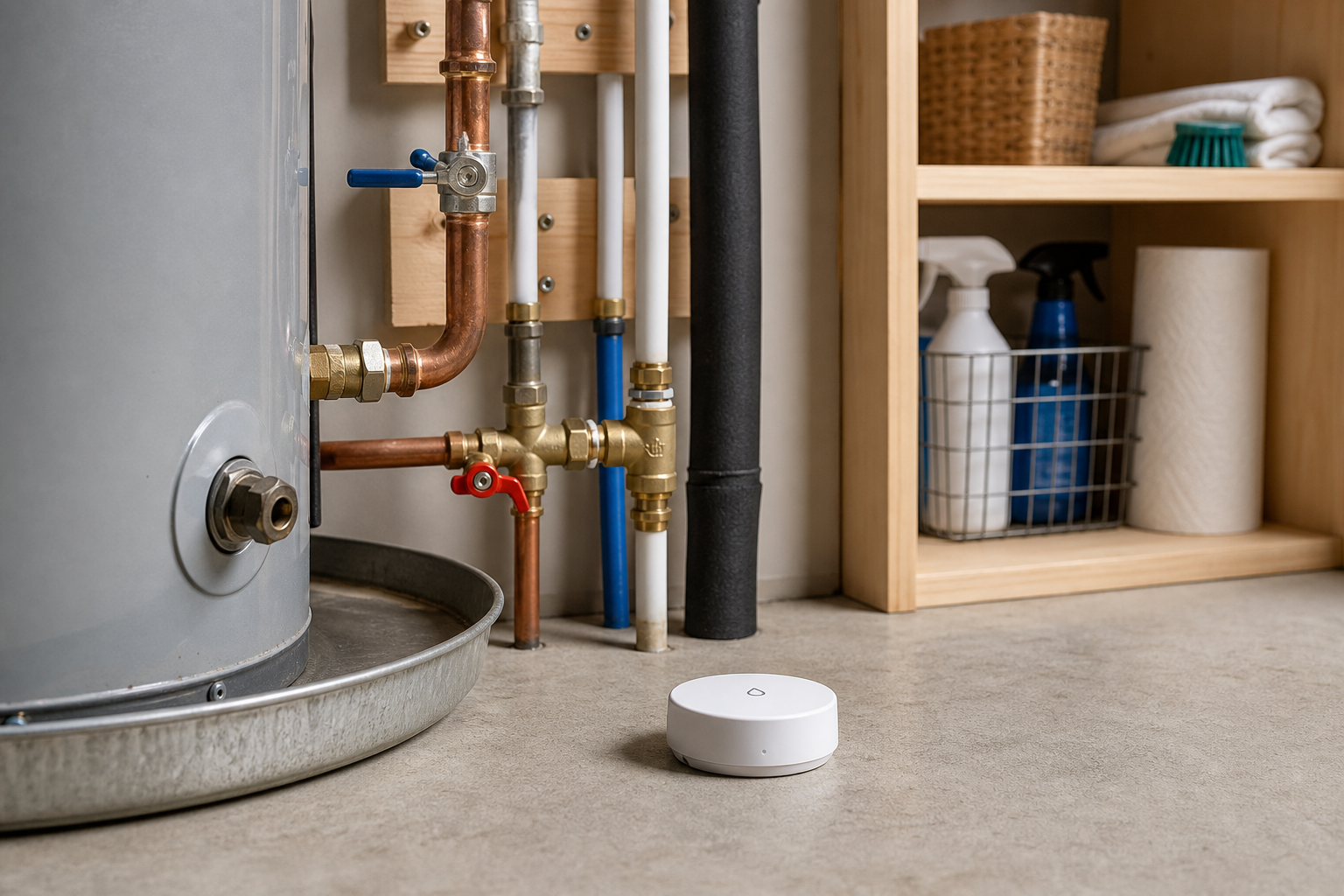
What to know about Water Leak Detectors for Homeowners: Types, Limits, and Buying Checks
Water leak detectors help you notice water earlier; they do not prevent every leak or replace plumbing repair. Choose by sensor placement, alarm type, app reliability, battery plan, shutoff capability, and whether installation touches the main water line.
Detector type table
| Type | Good fit | Poor fit | Pro needed? |
|---|---|---|---|
| Standalone puck sensor | Under sinks, behind toilets, near appliances. | Need automatic water shutoff. | No for placement. |
| Wi-Fi sensor | Remote alerts while away. | Weak Wi-Fi or ignored notifications. | No for placement. |
| Rope/probe sensor | Long pans or mechanical rooms. | Tiny localized leak point. | No for placement. |
| Smart shutoff valve | Vacation homes/repeated leaks. | Main line inaccessible or code concerns. | Usually yes. |
Placement checklist
- Place sensors where water first collects, not where it is convenient.
- Test alarms and notifications before relying on them.
- Replace batteries on a schedule.
- Call a plumber for any device that cuts into or clamps onto the main water line.
Sources for this guide
No ranking or guarantee boundary
This guide compares leak-detector types and installation questions. It does not promise a detector will prevent damage, does not rank a universal best product, and does not replace professional installation for automatic shutoff valves or powered devices near water.
Buyer documentation checklist
- Placement plan: water heater pan, laundry, dishwasher, sinks, toilets, basement, crawl-space access, or mechanical room.
- Alert path: audible alarm, app, text/email, hub integration, battery state, and what happens during internet/power outages.
- Installation scope: puck sensor vs rope sensor vs automatic shutoff valve on the main line.
- Maintenance: battery replacement, sensor testing, valve exercise, app support, and warranty terms.
- Professional review when a shutoff valve, pressure system, water heater area, or electrical outlet is involved.
Important context
This topic may involve drinking-water safety, treatment equipment, pressure systems, local requirements, or water-heater risk. Limit homeowner action to observation, documentation, certified testing where appropriate, and planning. Ask a licensed plumber, certified water-treatment professional, local health authority, or applicable code official to confirm the requirements before work begins.
Decision aid: Water Leak Detectors for Homeowners: Types, Limits, and Buying Checks
Start by identifying the relevant symptom, fixture, or planning question before choosing parts or arranging work.
Write down when the issue began, what changed, which fixtures are affected, and any model or service-history details. That record makes it easier to compare the article with the exact product documentation and to explain the problem if qualified help is needed.
- Identify the water source, affected fixtures, timing, color or odor, recent plumbing work, and whether anyone may drink the water.
- Match product-specific directions to the exact model manual and confirm local requirements where installation, gas, electricity, water quality, or structural work is involved.
- Stop relying on appearance alone when drinking-water safety, a private well, lead, bacteria, or chemical contamination may be involved.
Authoritative references for this topic
Use the current version of these sources to verify safety, efficiency, health, or product-specific details that apply to your situation.