Dishwasher
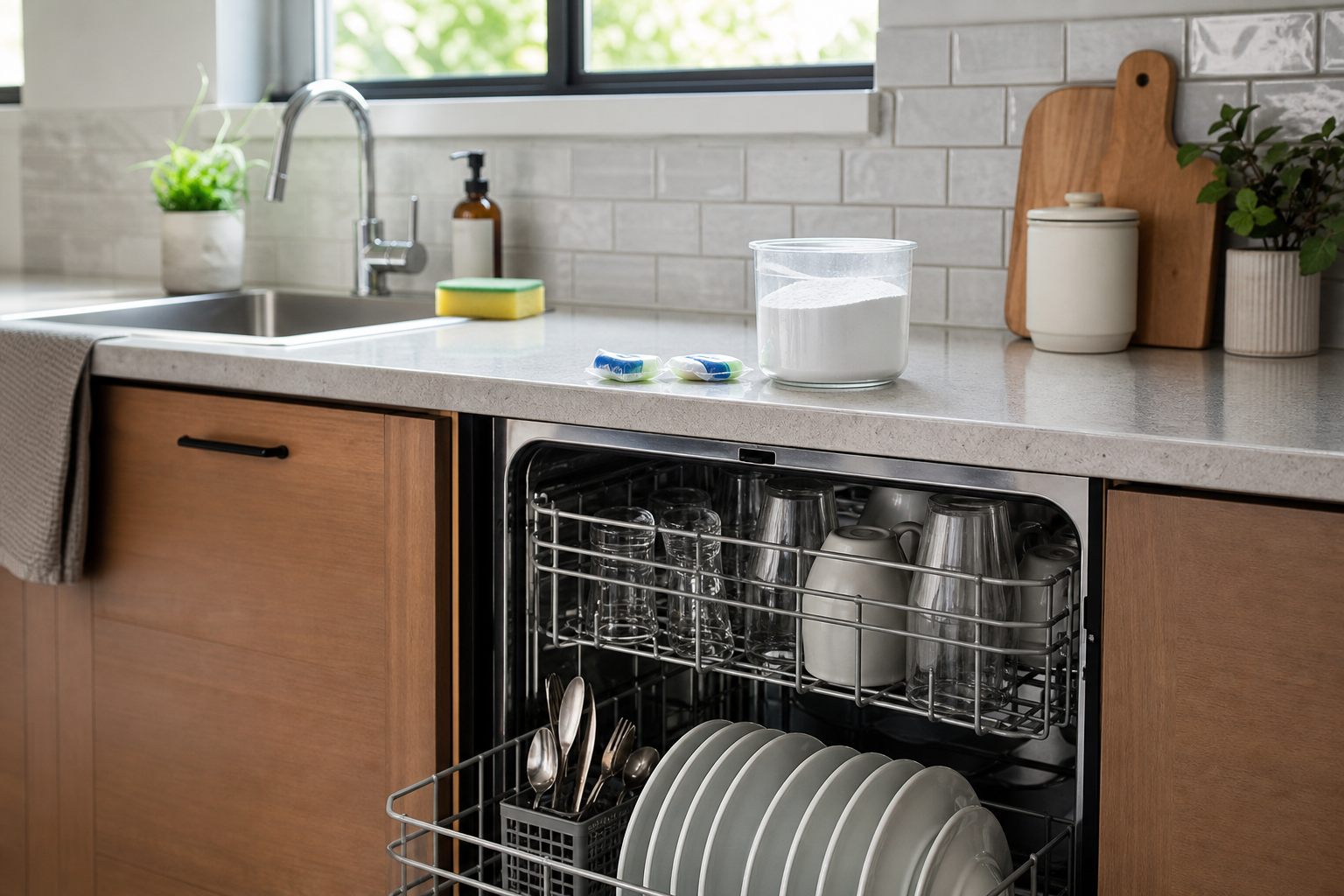
How to Choose Dishwasher Detergent for Your Water and Machine
Choose dishwasher detergent by water hardness, cycle type, machine manual, rinse-aid guidance, and label compatibility.
Read guideHomeowner plumbing guides
Use the exact model manual first for dishwasher drainage, odor, cleaning, door, and under-sink symptoms.
Stop and arrange service if water is near electrical parts, a hose has come loose, an error code persists, or the cabinet is being damaged.
Choose the guide that best matches the fixture, symptom, or decision in front of you.
Choose dishwasher detergent by water hardness, cycle type, machine manual, rinse-aid guidance, and label compatibility.
Read guide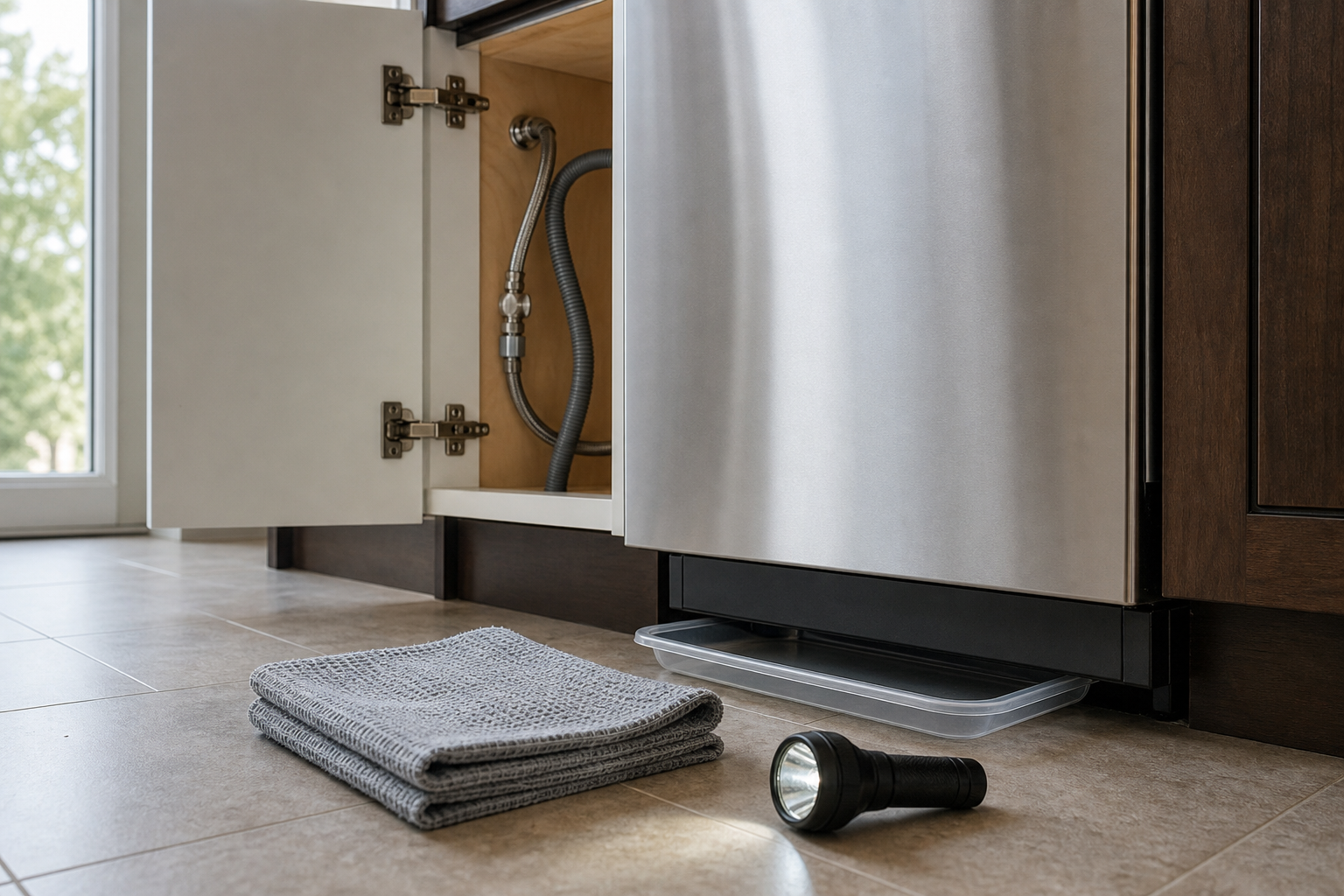
Watch dishwasher leak-prone points—door, filter, hose, air gap, supply, and cabinet floor—without opening electrical or hidden parts.
Read guide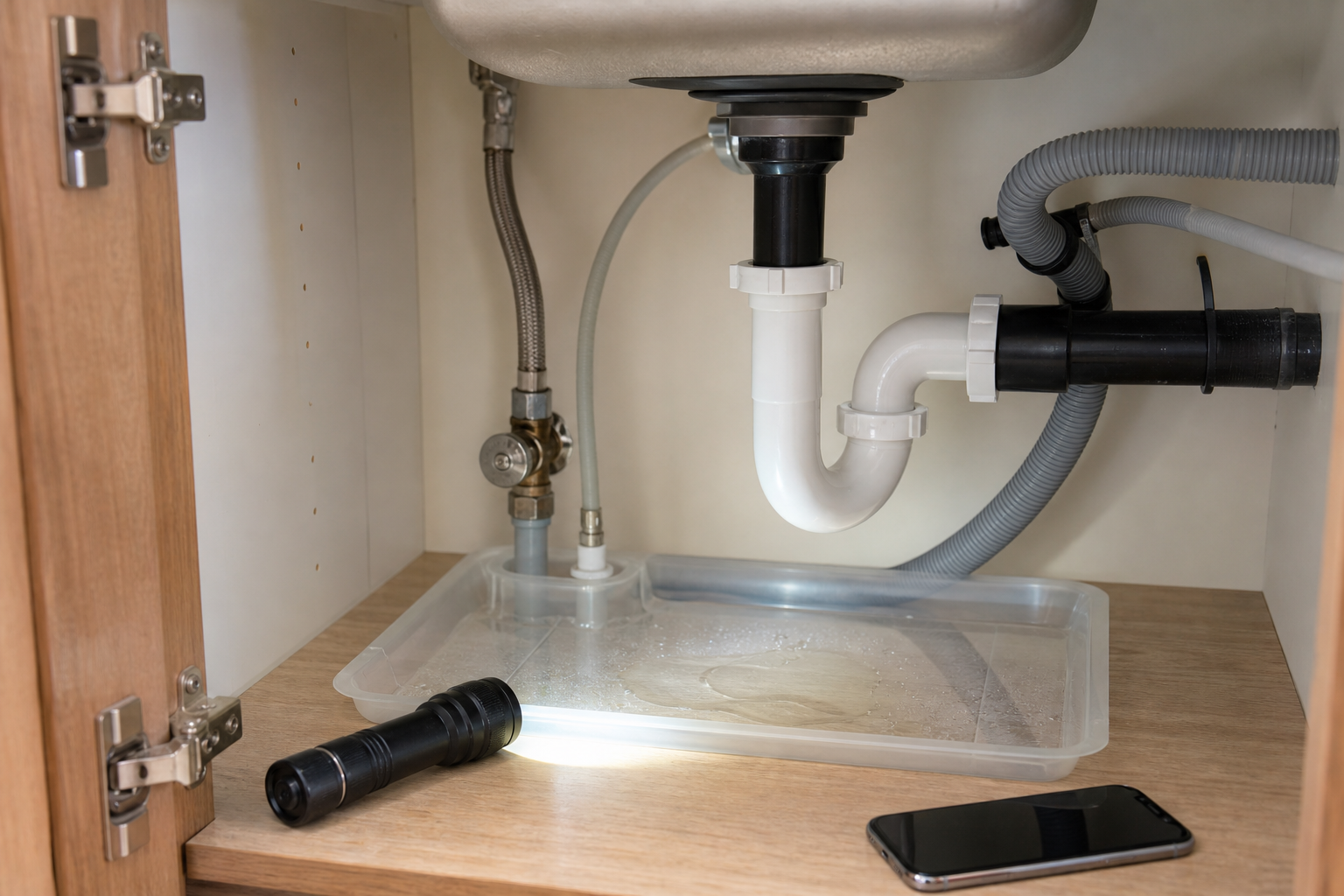
Separate dishwasher hose, air gap, disposer inlet, sink drain, supply valve, and condensation clues before touching under-sink connections.
Read guide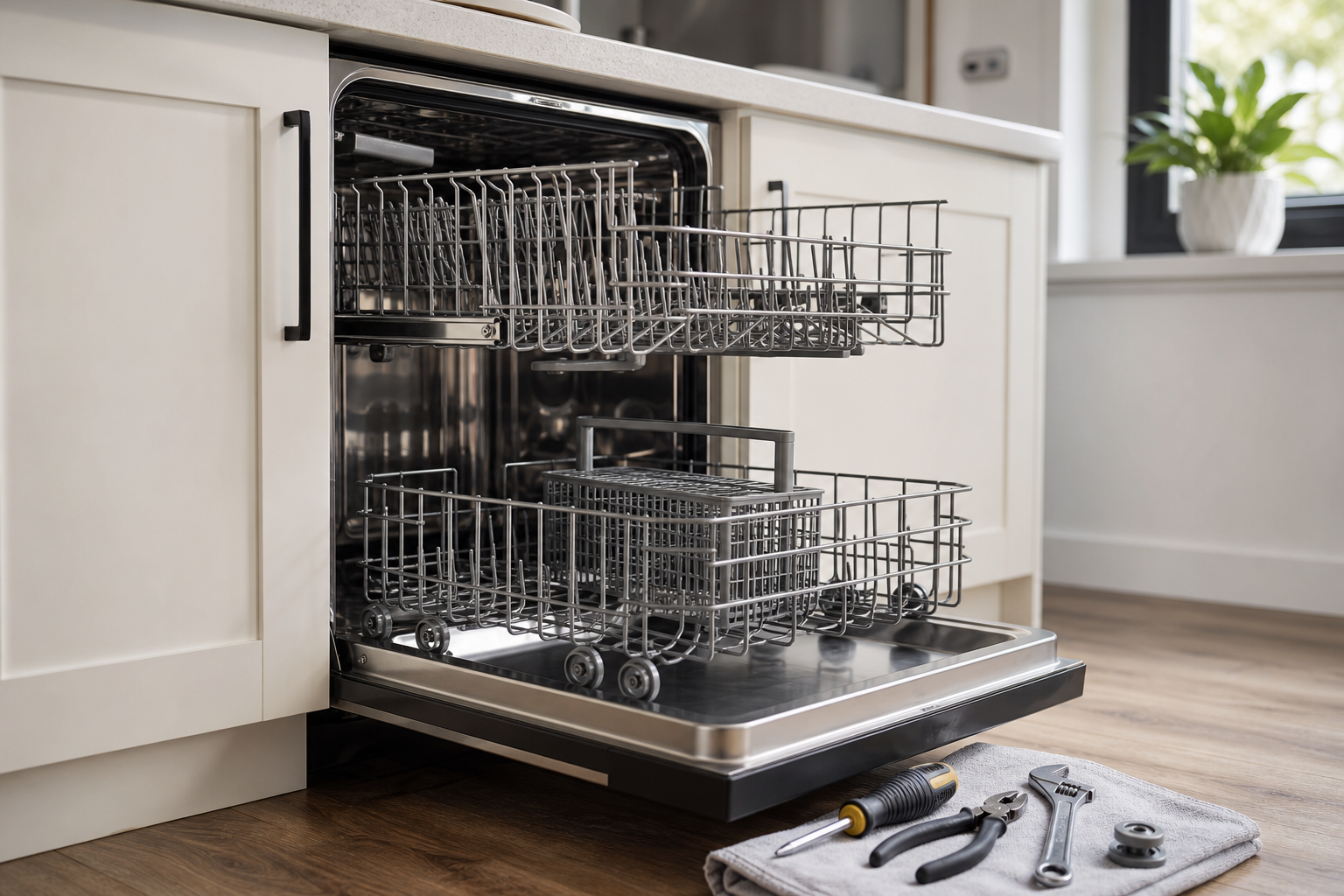
Dishwasher rack wear can be cosmetic or functional; check rust, tine caps, rollers, model compatibility, and coating damage before buying parts.
Read guide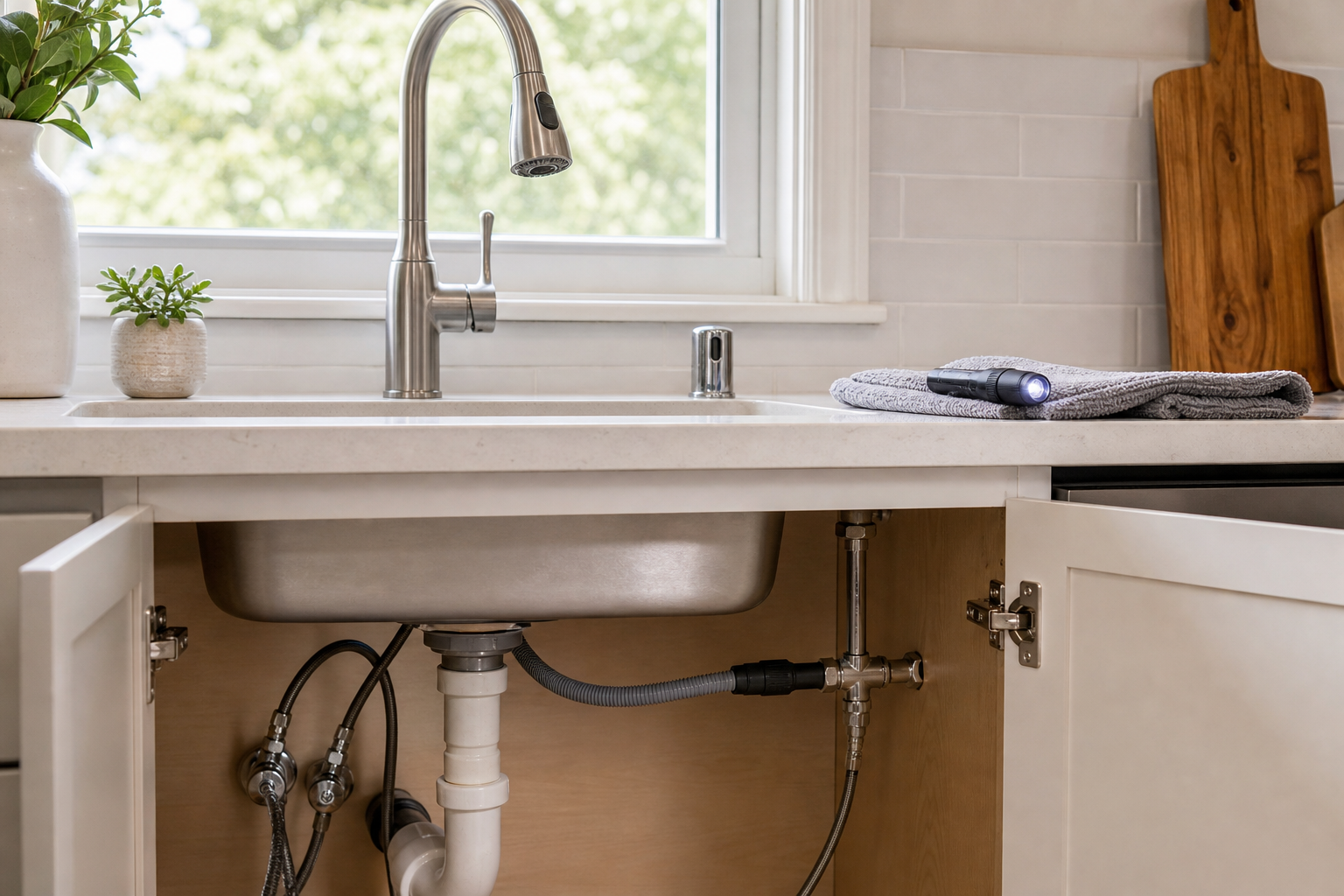
Air-gap water usually points to a blocked discharge path, hose routing issue, or recent disposer connection problem; check visible parts and manuals first.
Read guide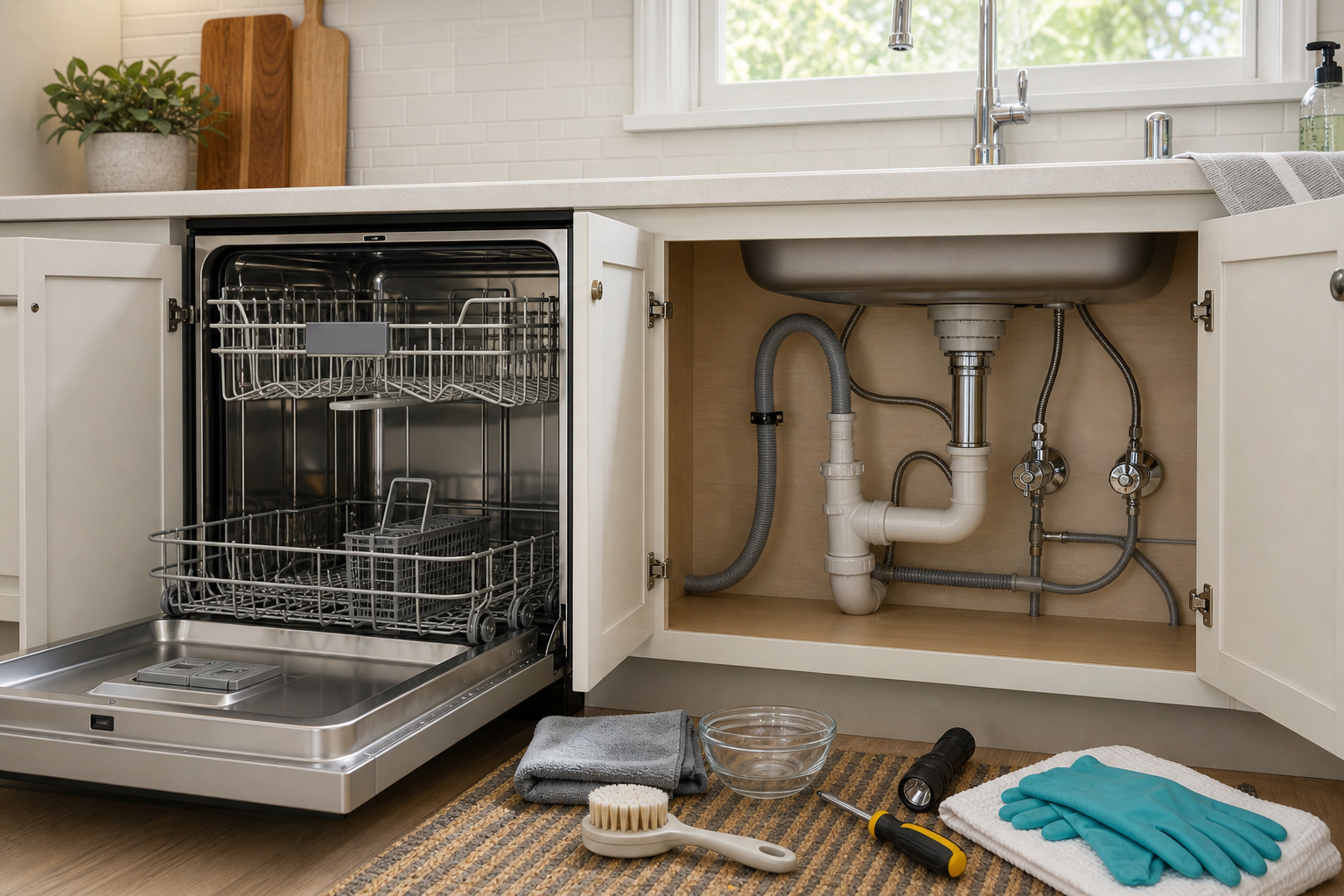
Clean a Bosch dishwasher by following the exact manual first: filter, spray arms, gasket edges, detergent cup, and cleaner-label boundaries.
Read guide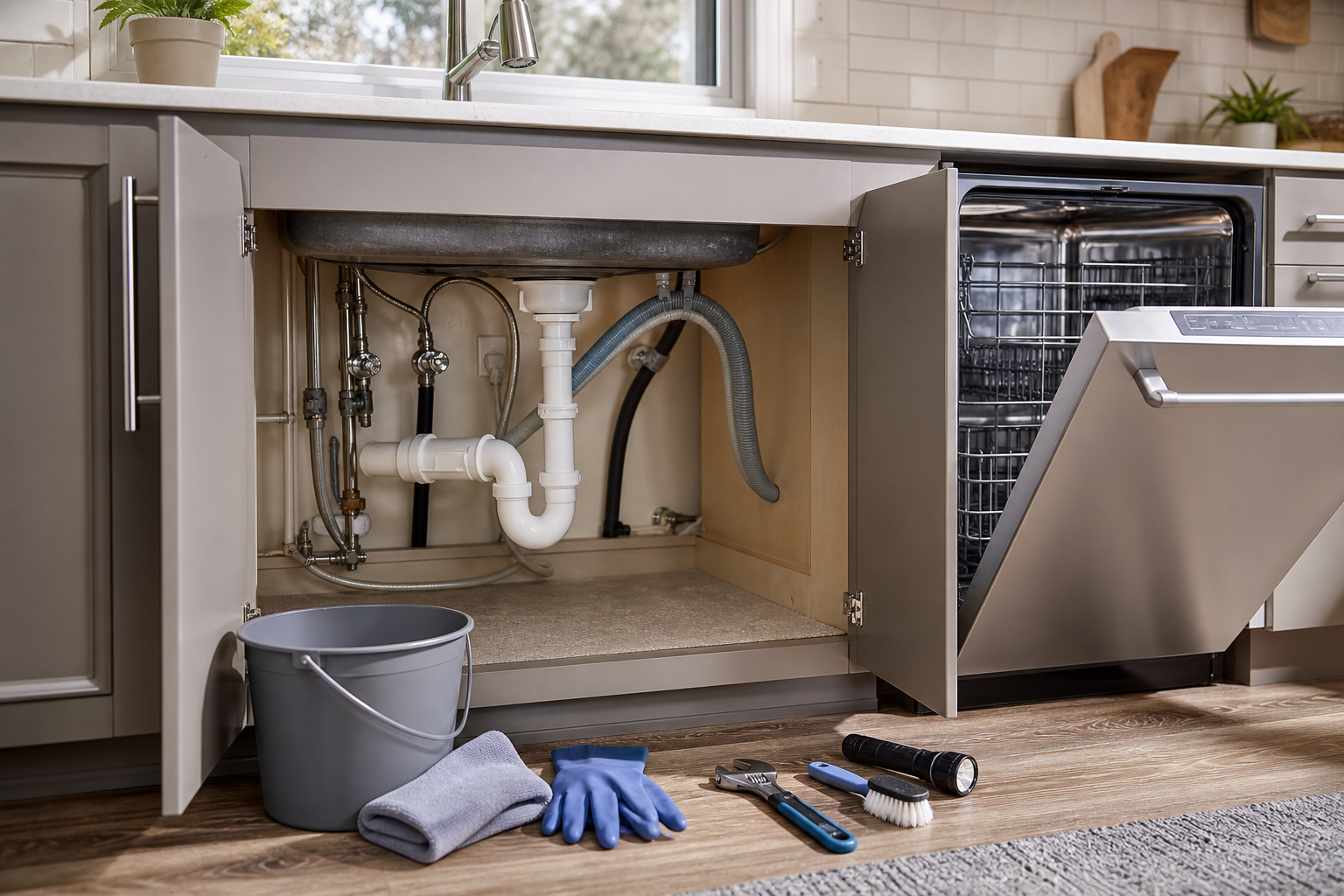
Treat drain-hose odor or backup as a manual-first observation problem; do not disconnect hoses while water, power, or uncertainty is present.
Read guide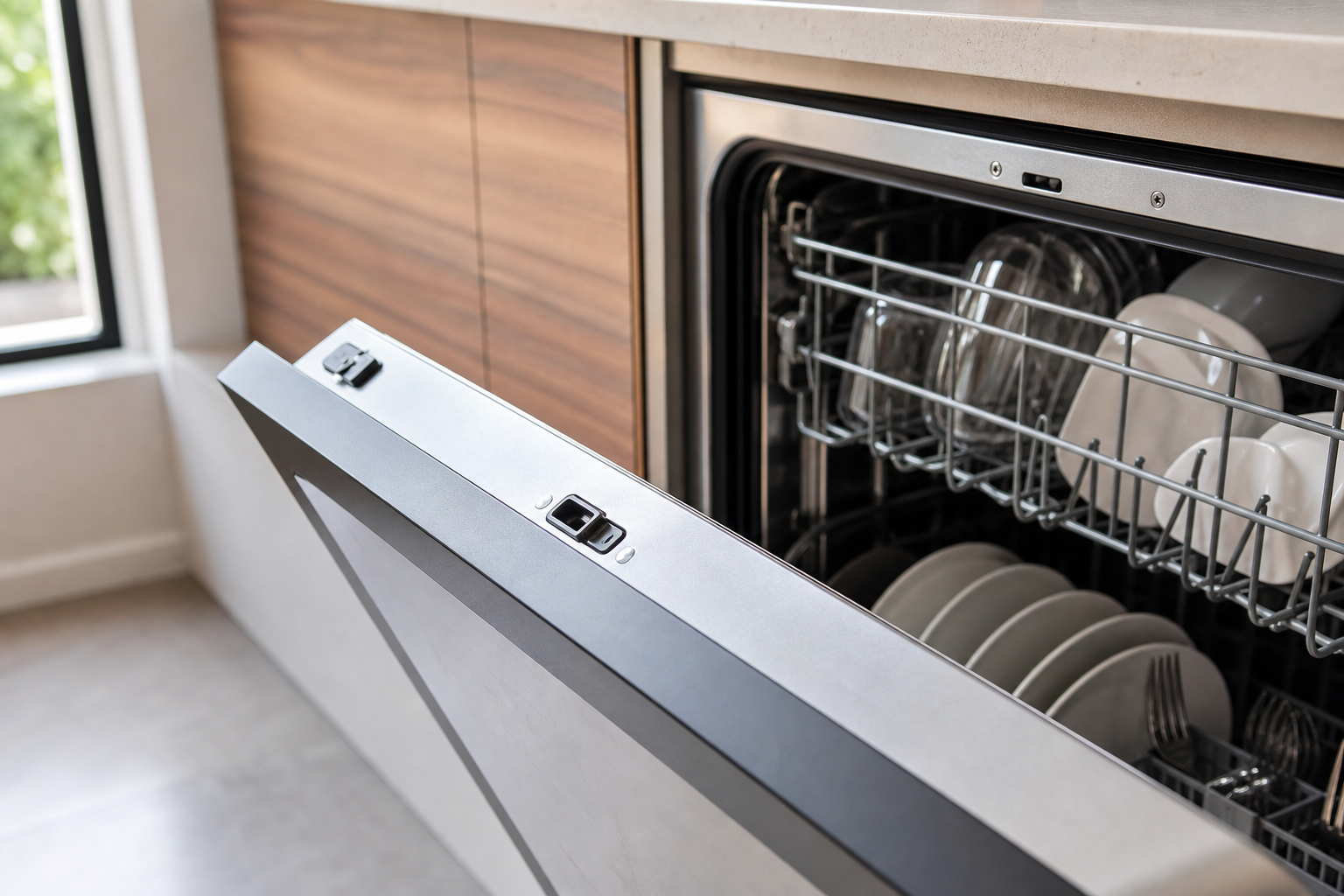
A dishwasher door that will not latch may be blocked, misloaded, out of level, or have a damaged latch; check visible causes before forcing it.
Read guide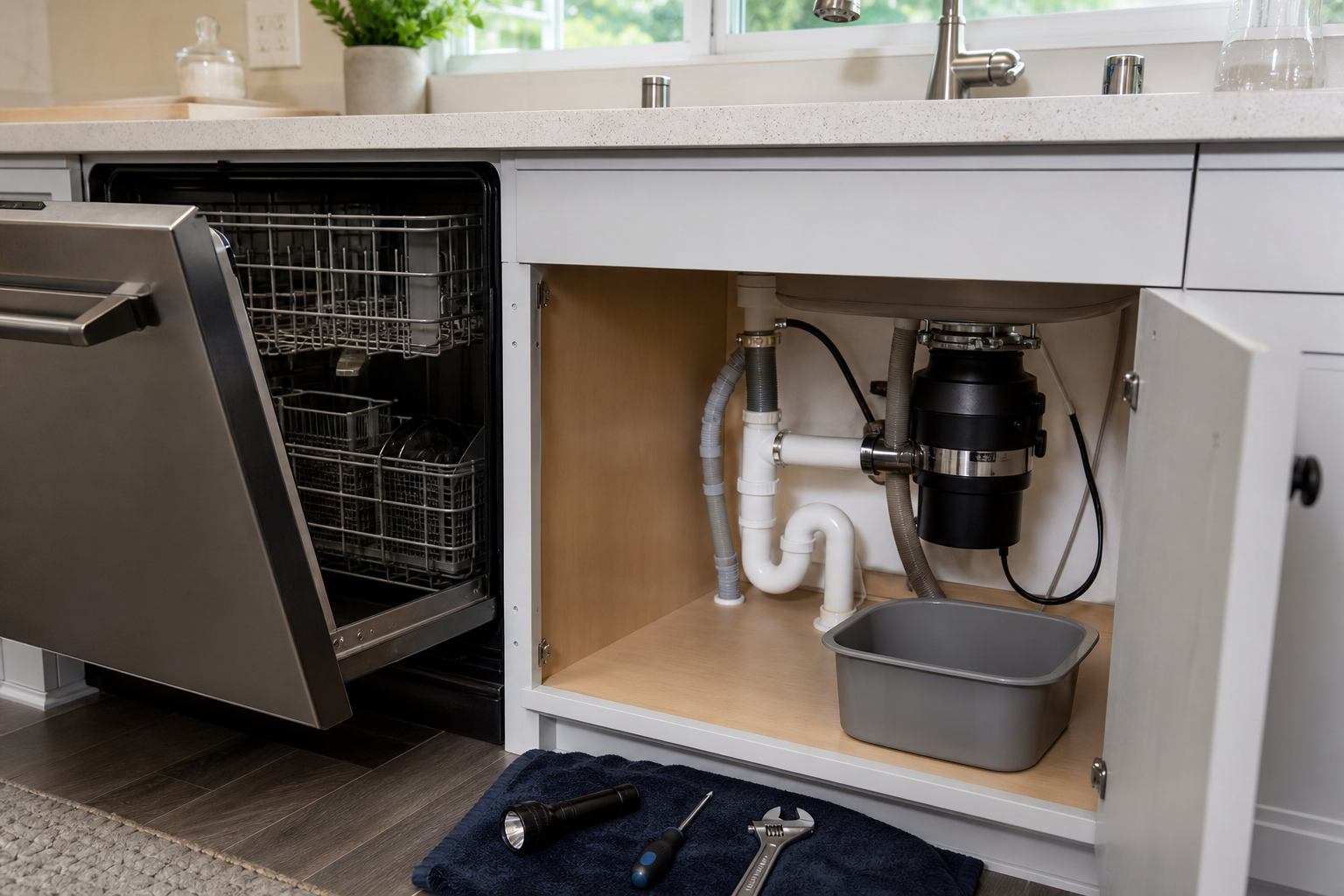
Start with the dishwasher manual, filter, standing-water pattern, air gap, high loop, and disposer connection before touching hoses.
Read guide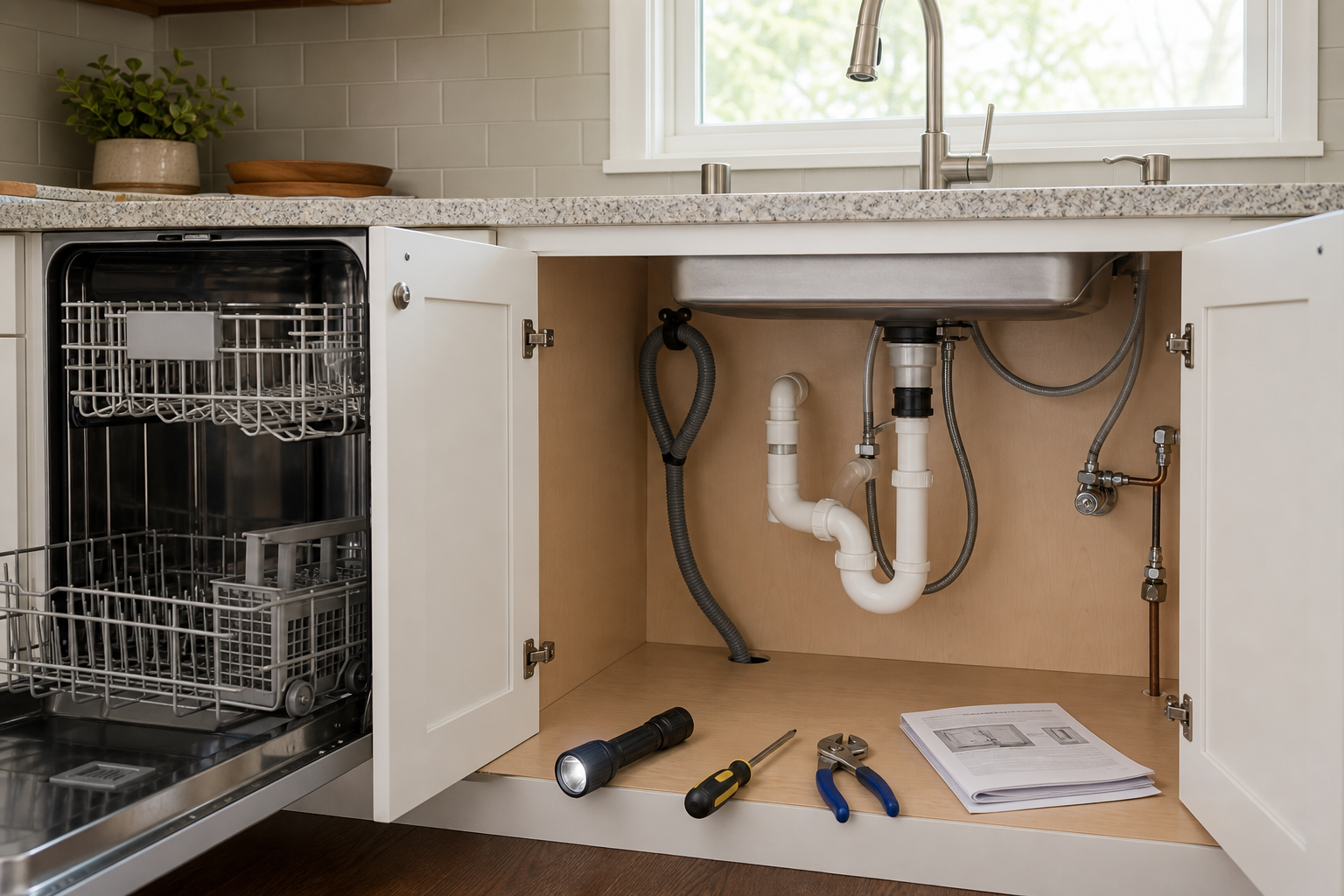
A dishwasher that will not start can involve power, door latch, control lock, delay start, water supply, or error-code issues; use the manual first.
Read guide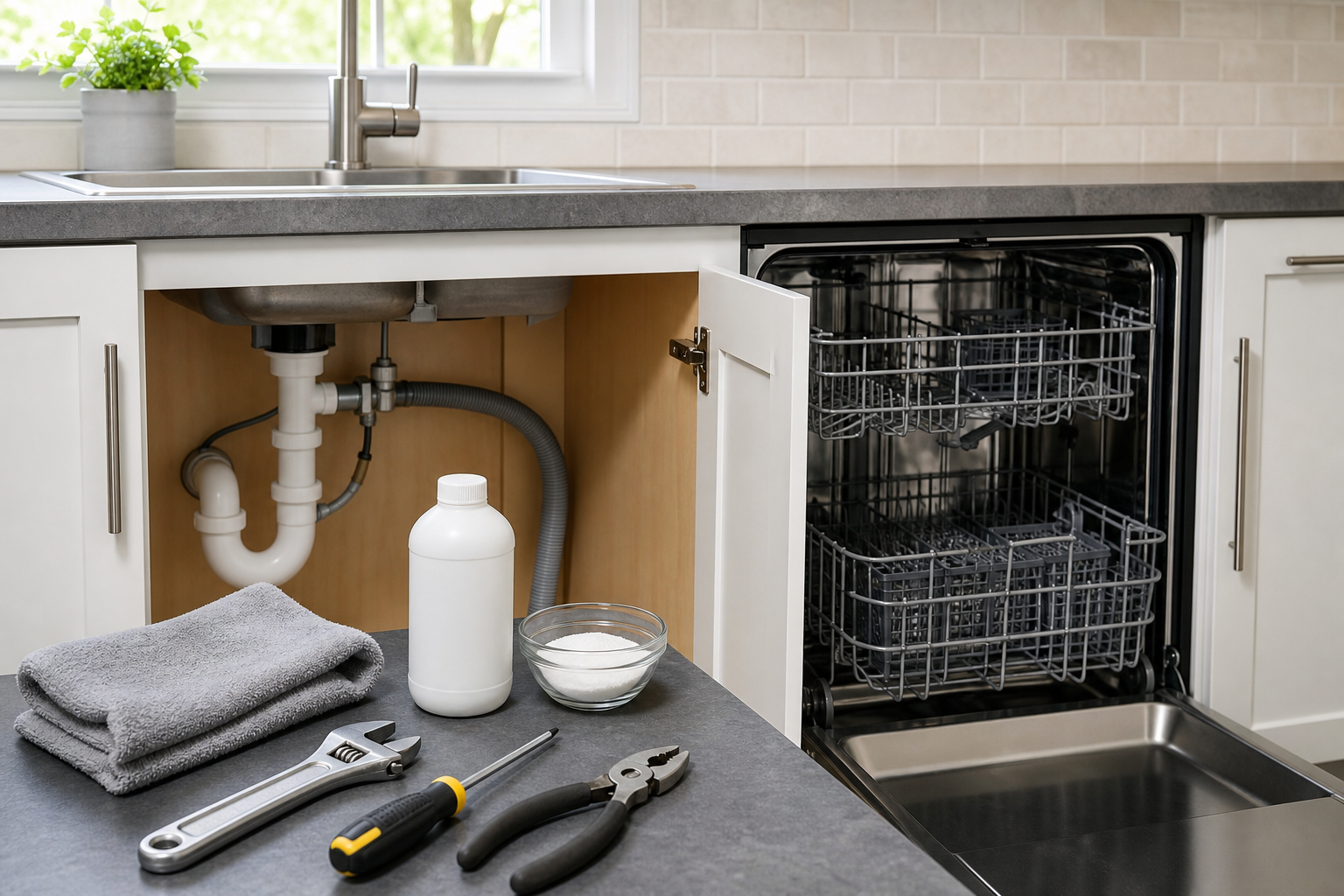
Remove dishwasher limescale with manual-approved cleaners and cycle settings, not random acids or abrasive scraping.
Read guide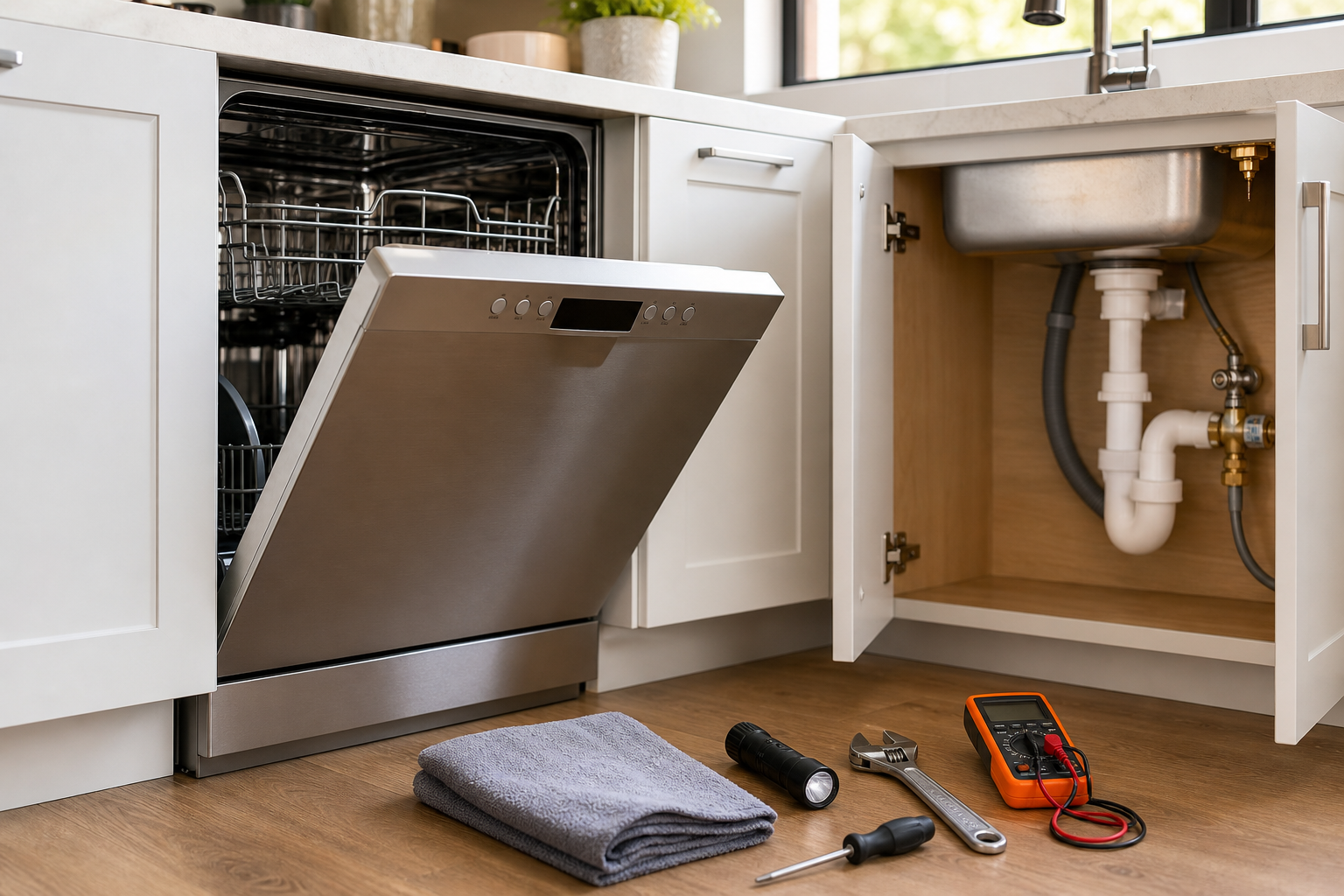
A Bosch reset can clear some control-state issues, but document error codes, water level, and door/latch symptoms before repeating resets.
Read guide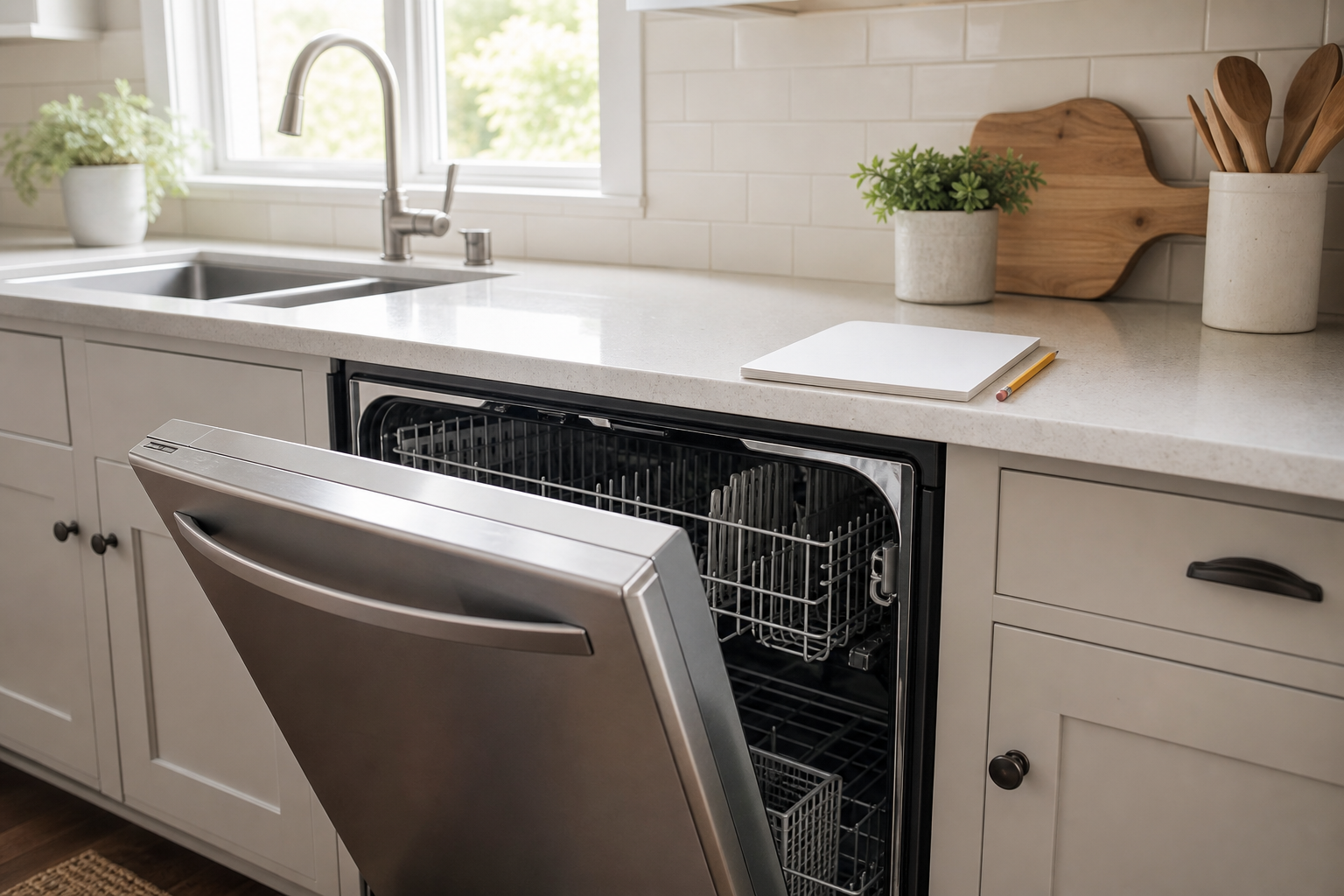
Dishwasher reset steps differ by brand and model; use the manual, note error codes, and avoid electrical or panel work.
Read guide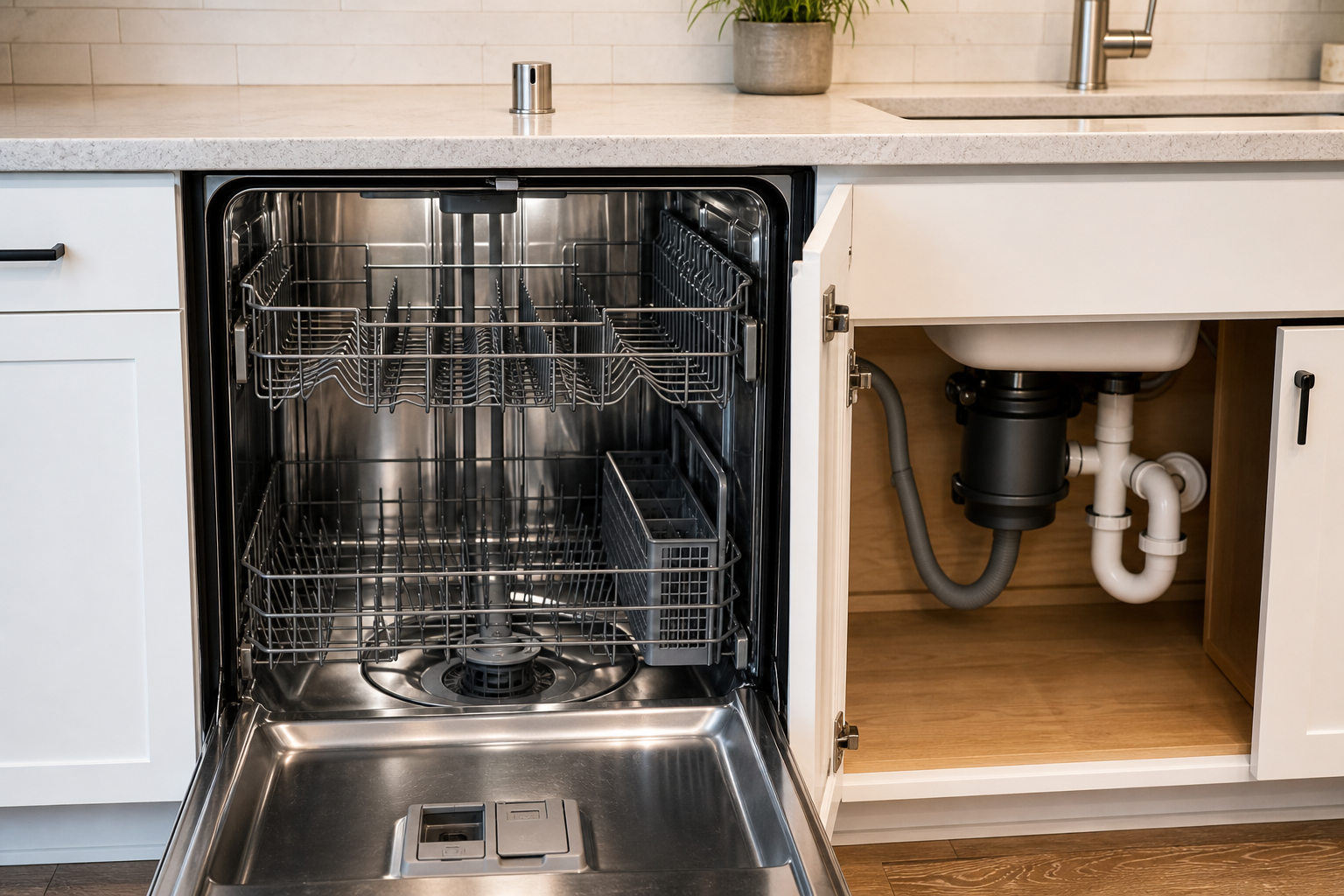
A stainless dishwasher tub can help durability, odor, drying, and sound, but filter access, rack design, drying system, support, and fit matter too.
Read guide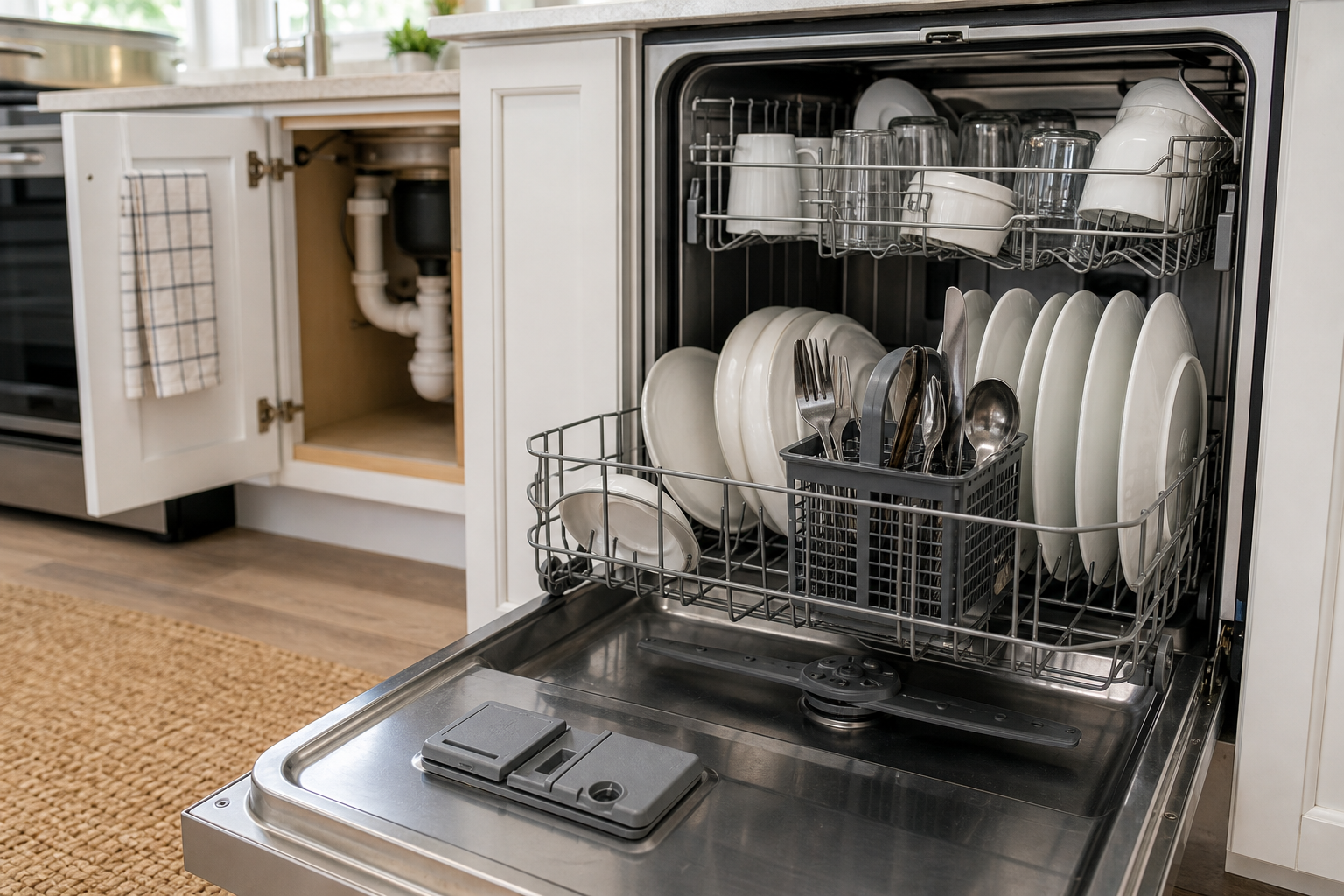
Good dishwasher loading keeps spray arms, detergent doors, filters, and rack movement clear while following the model manual.
Read guide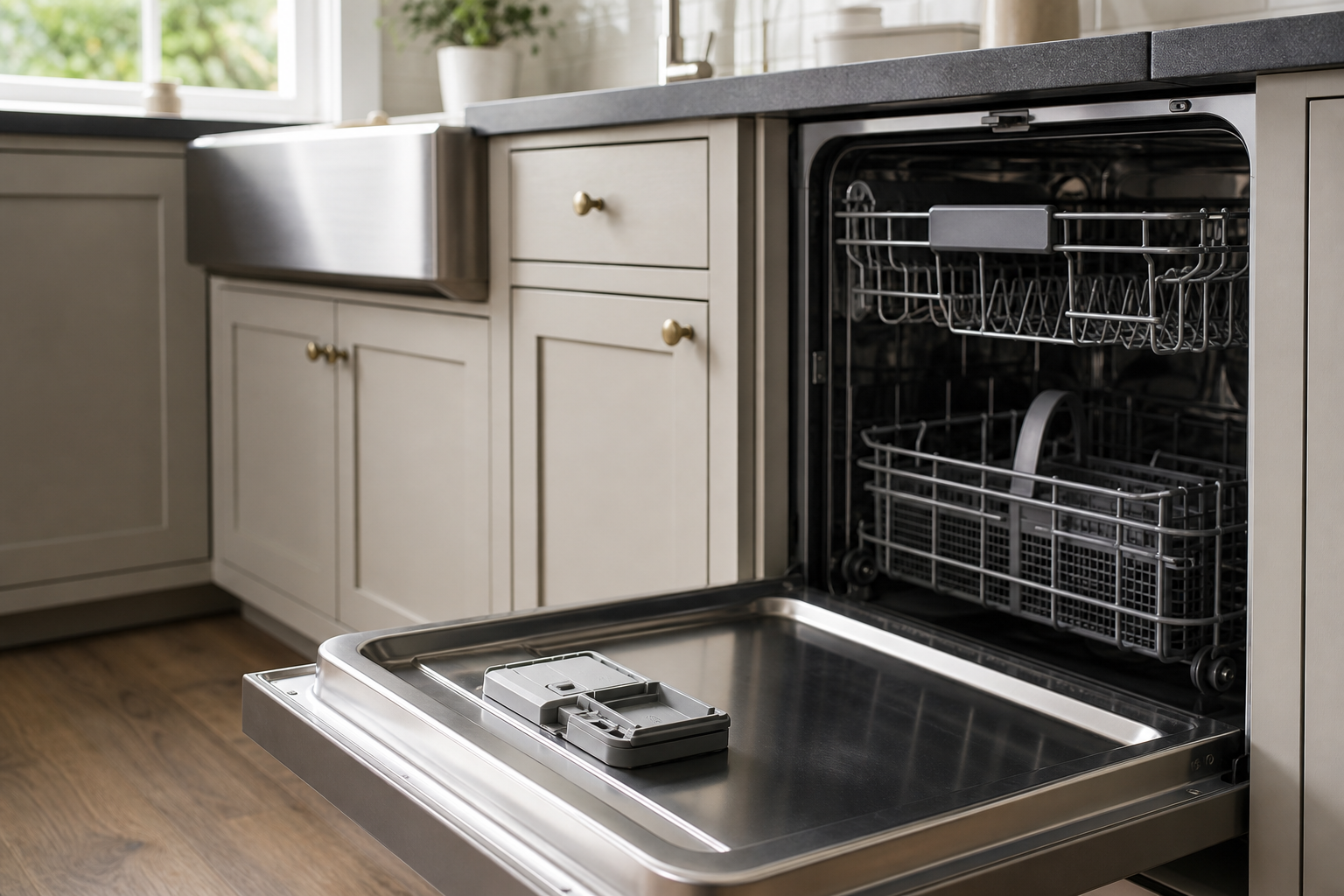
A dishwasher soap dispenser that will not close may involve loading interference, residue, latch damage, or a door/spring issue.
Read guide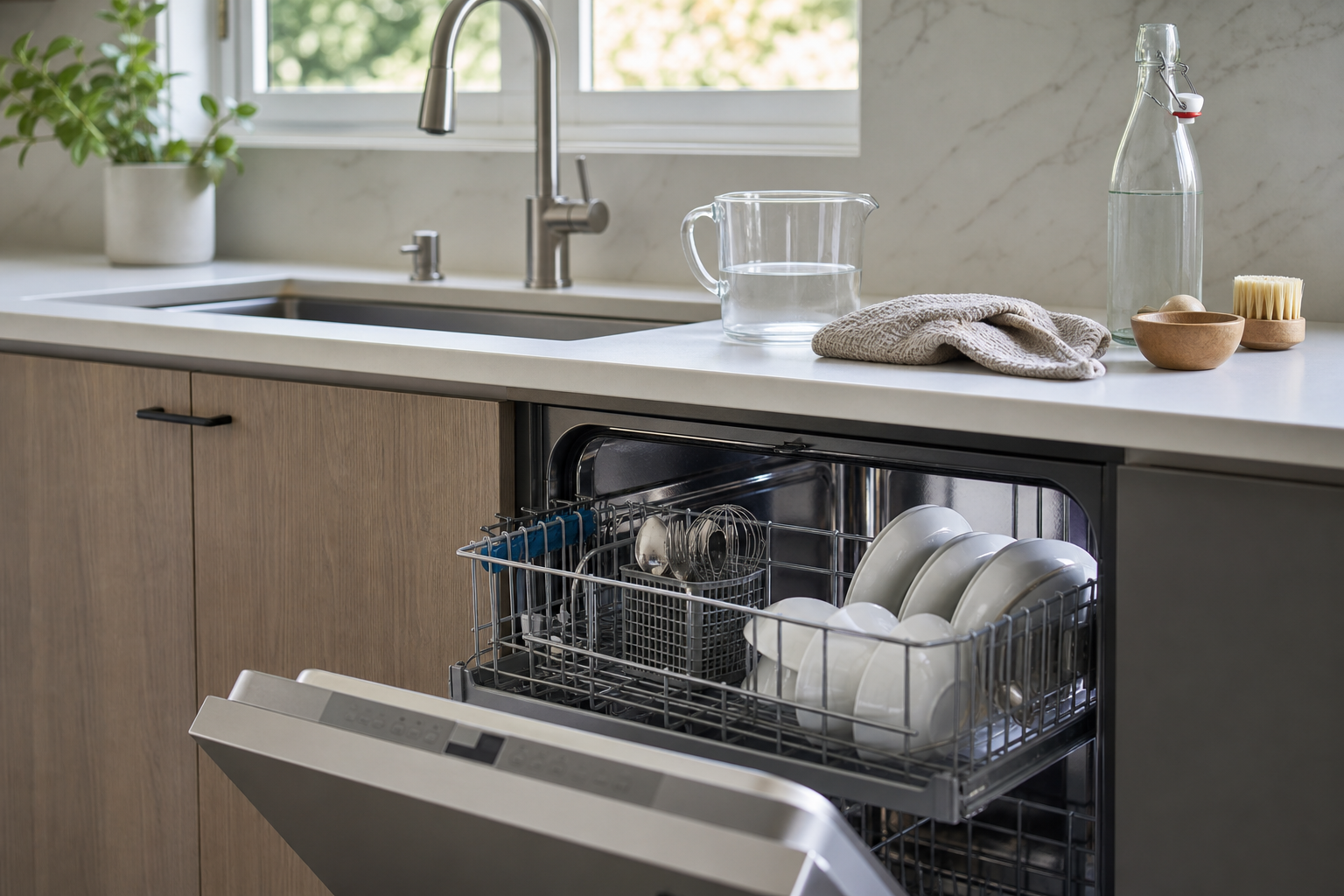
Vinegar can conflict with appliance manuals, rubber parts, cleaner labels, and warranty care; check the model manual before using it.
Read guide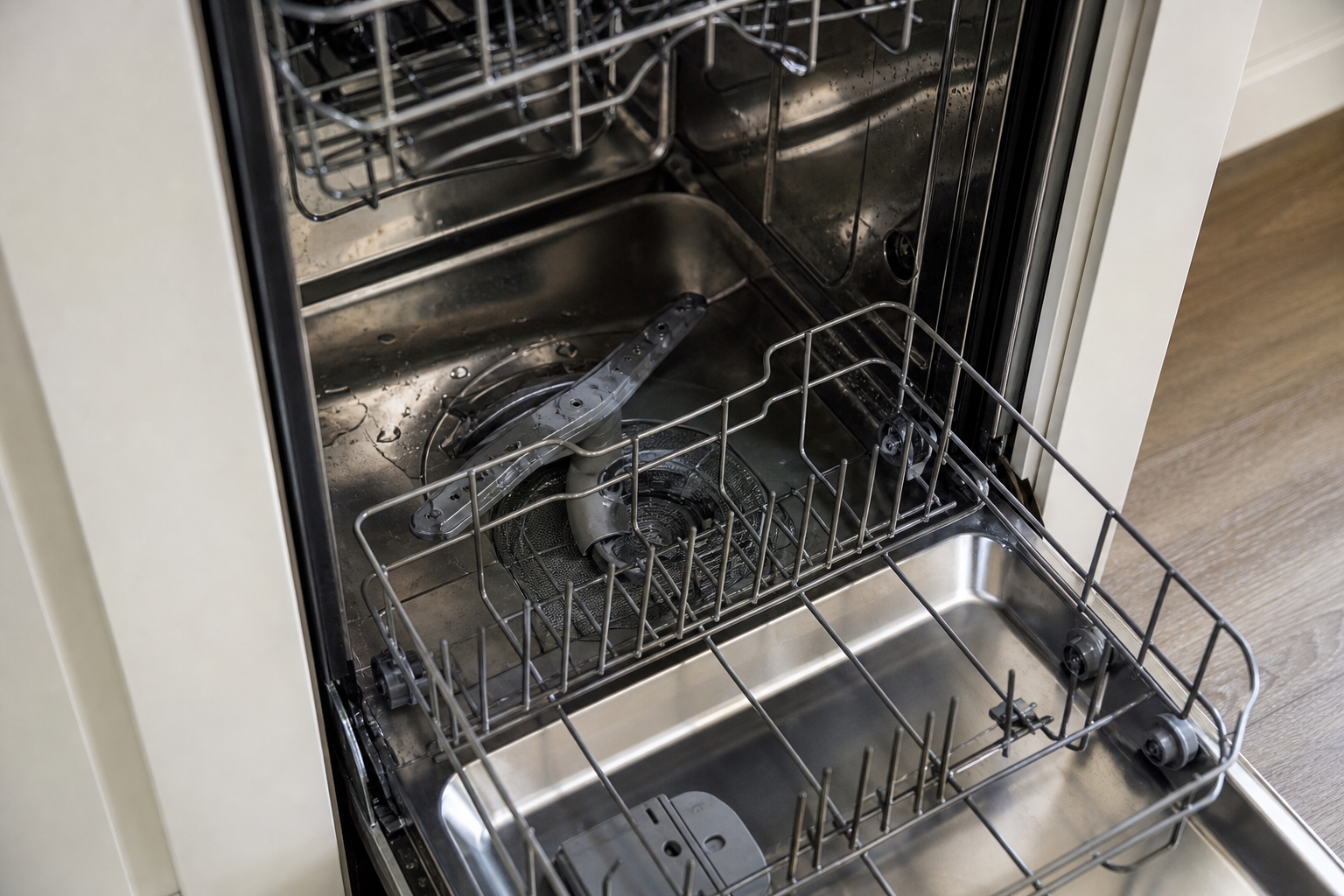
Standing water in an idle dishwasher can be normal residual water, backflow, drain routing, filter, or inlet-valve trouble; use manual-first checks.
Read guide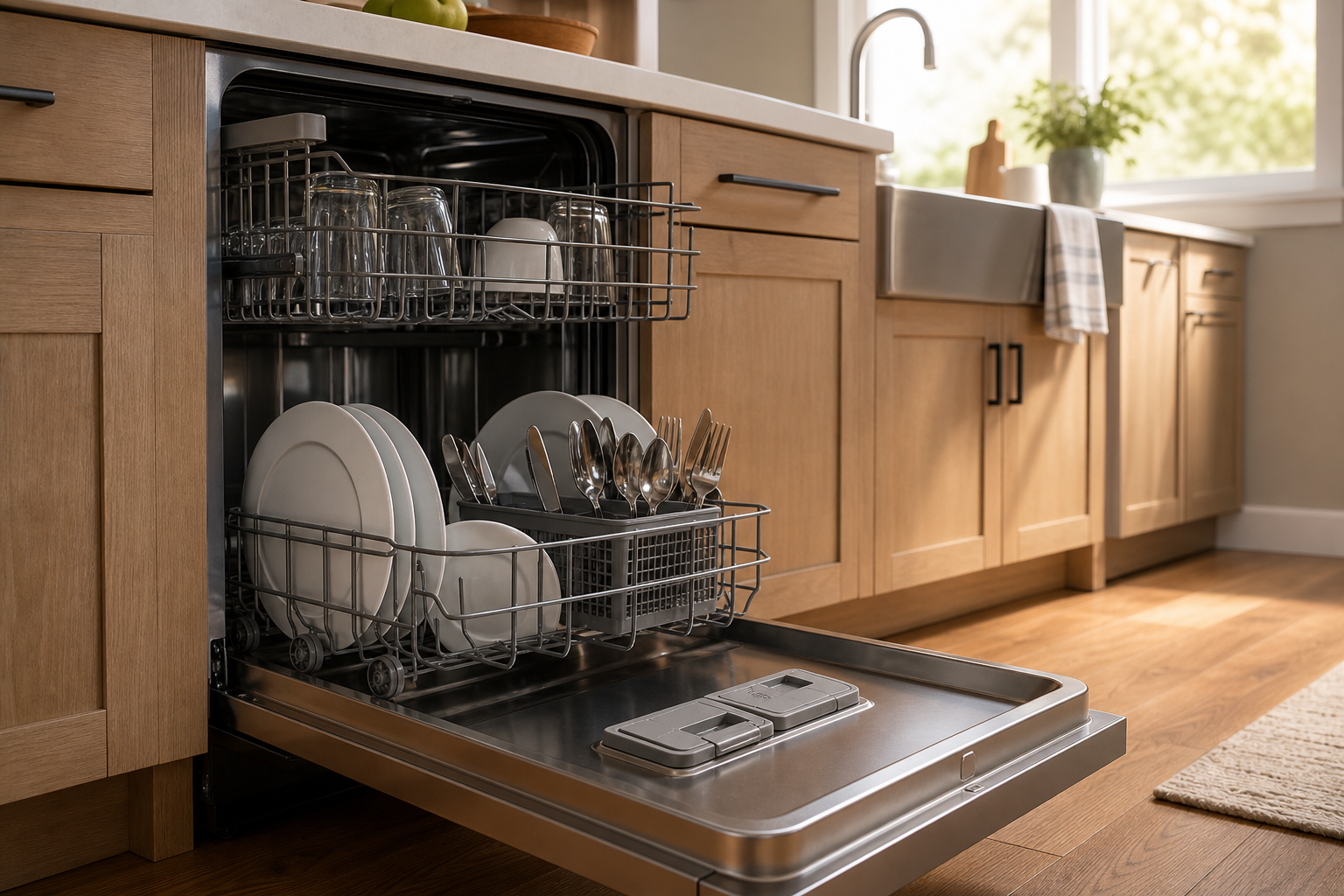
Drying problems often involve loading, rinse aid, cycle selection, plastic items, venting/fan features, or model design—not one universal repair.
Read guide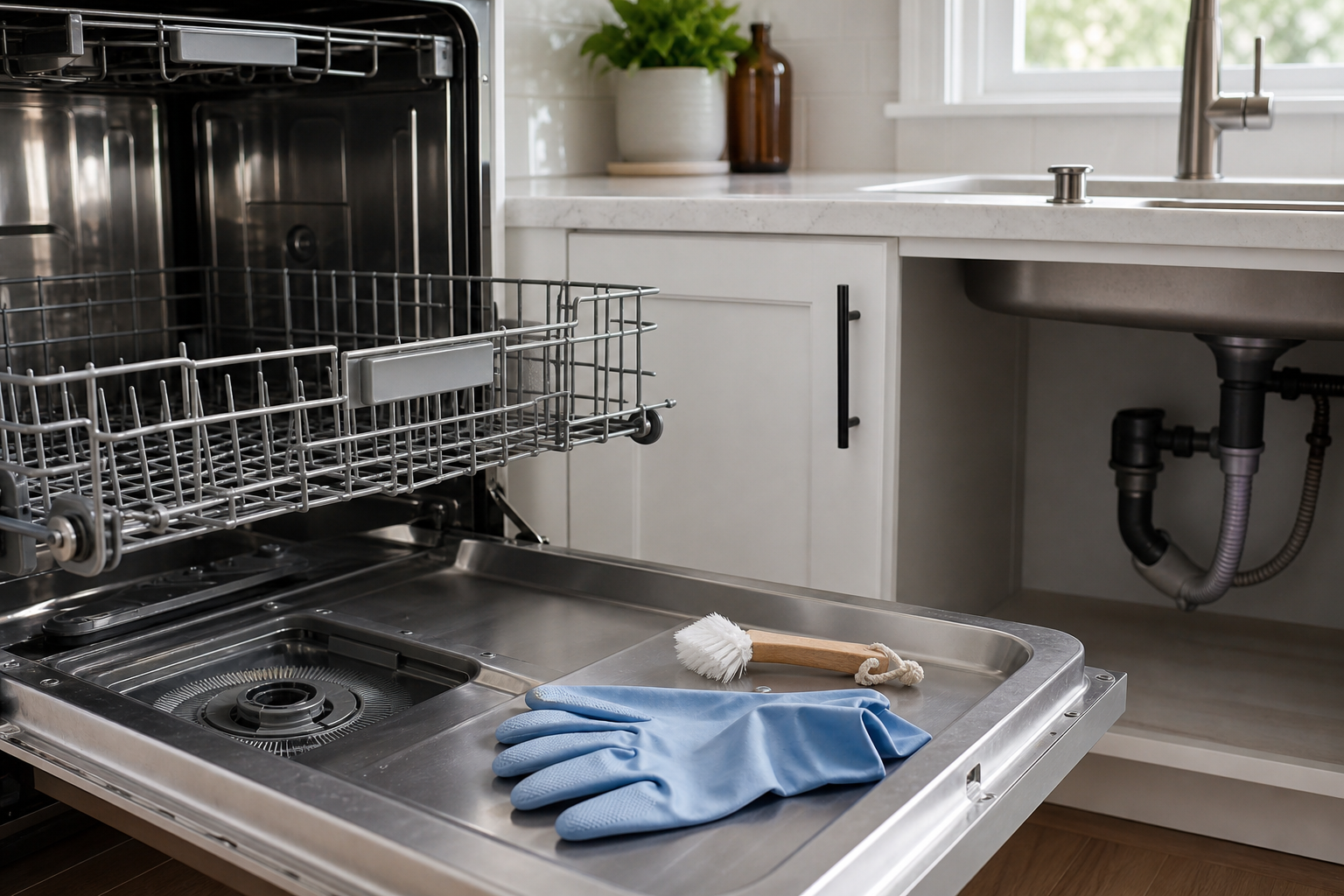
Rotten-egg dishwasher odor may come from food residue, filter/gasket buildup, drain backflow, well water, or rarely plumbing gas symptoms.
Read guide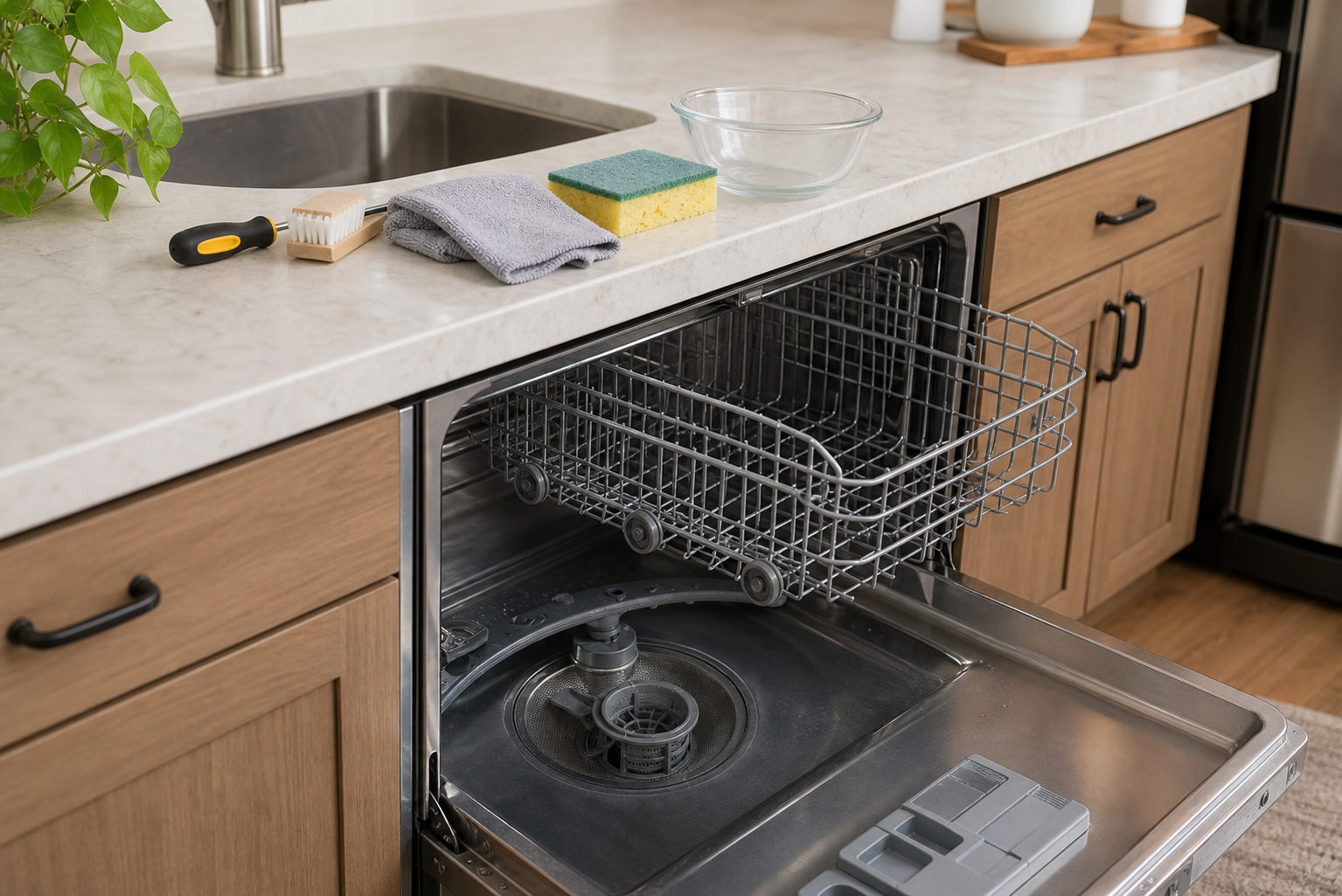
Dishwasher odor usually starts with filter, gasket, standing water, high loop/air gap, or disposer connection checks from the manual.
Read guide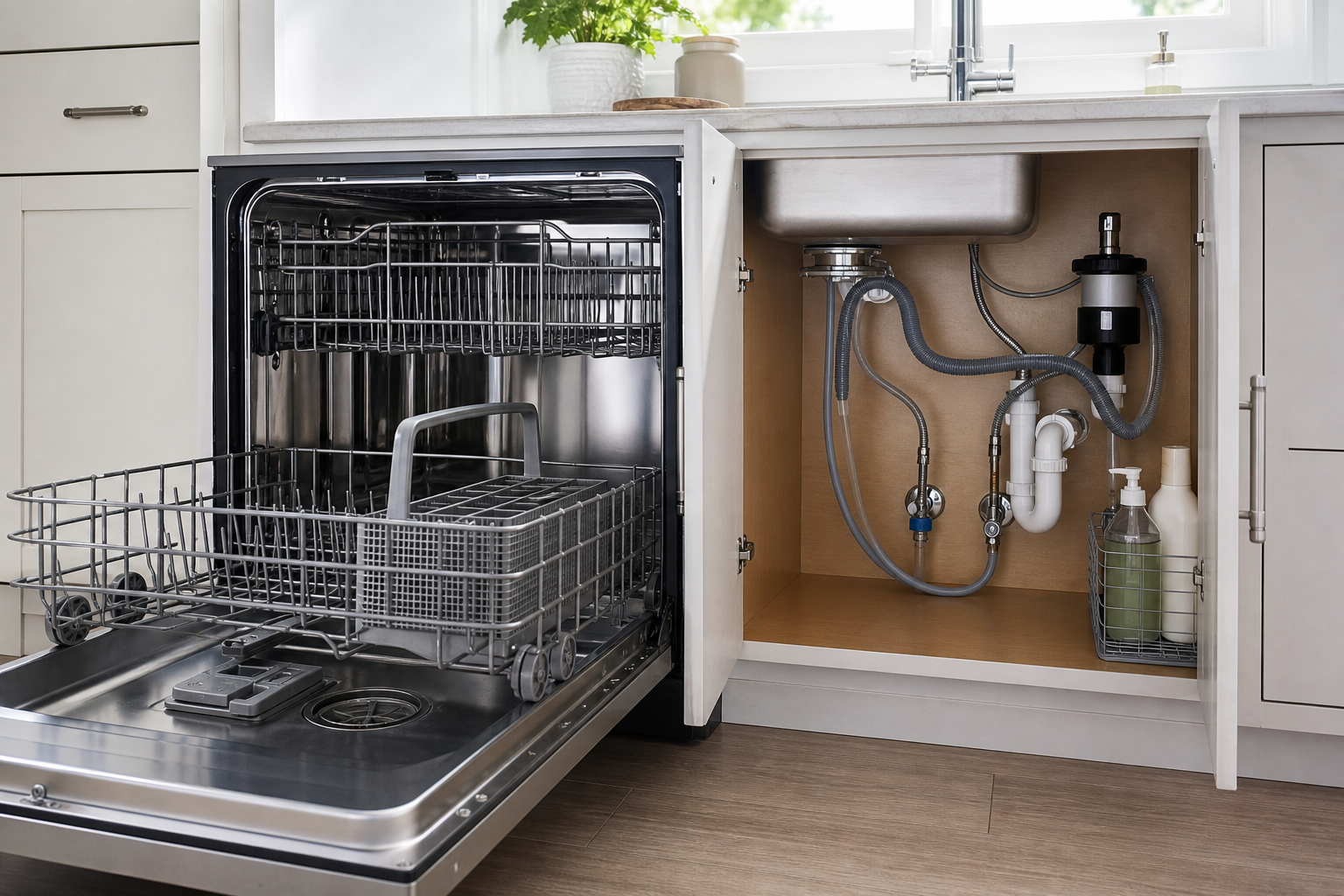
A sewer smell at the dishwasher often involves filter soil, drain routing, air gap/high loop, disposer connection, or sink-drain behavior.
Read guide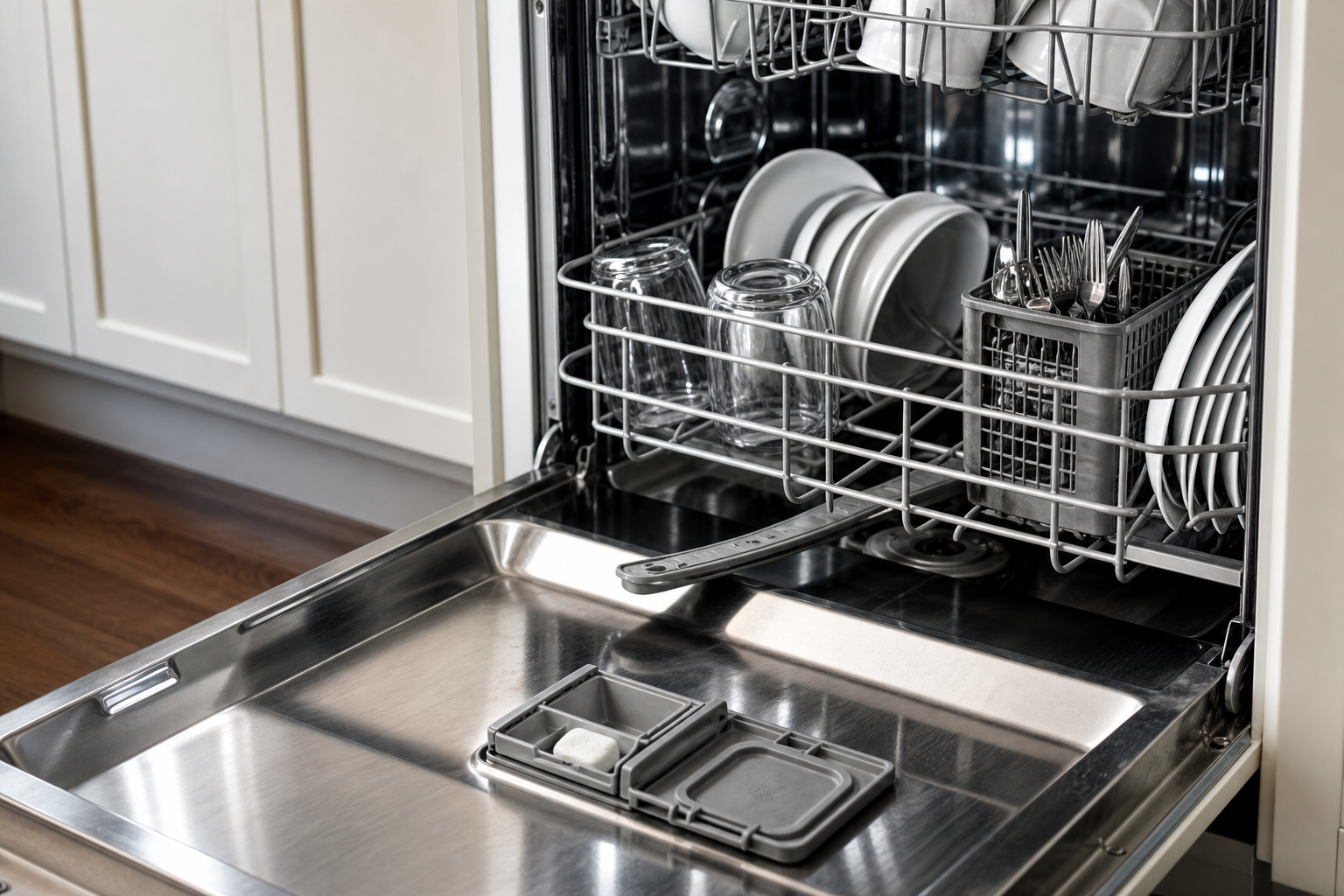
Undissolved dishwasher pods often point to dispenser clearance, cycle choice, spray pattern, filter condition, water temperature, or damp detergent storage.
Read guide