Dishwasher
How to Clean a Bosch Dishwasher: Manual-First Maintenance Guide
Clean a Bosch dishwasher by following the exact manual first: filter, spray arms, gasket edges, detergent cup, and cleaner-label boundaries.
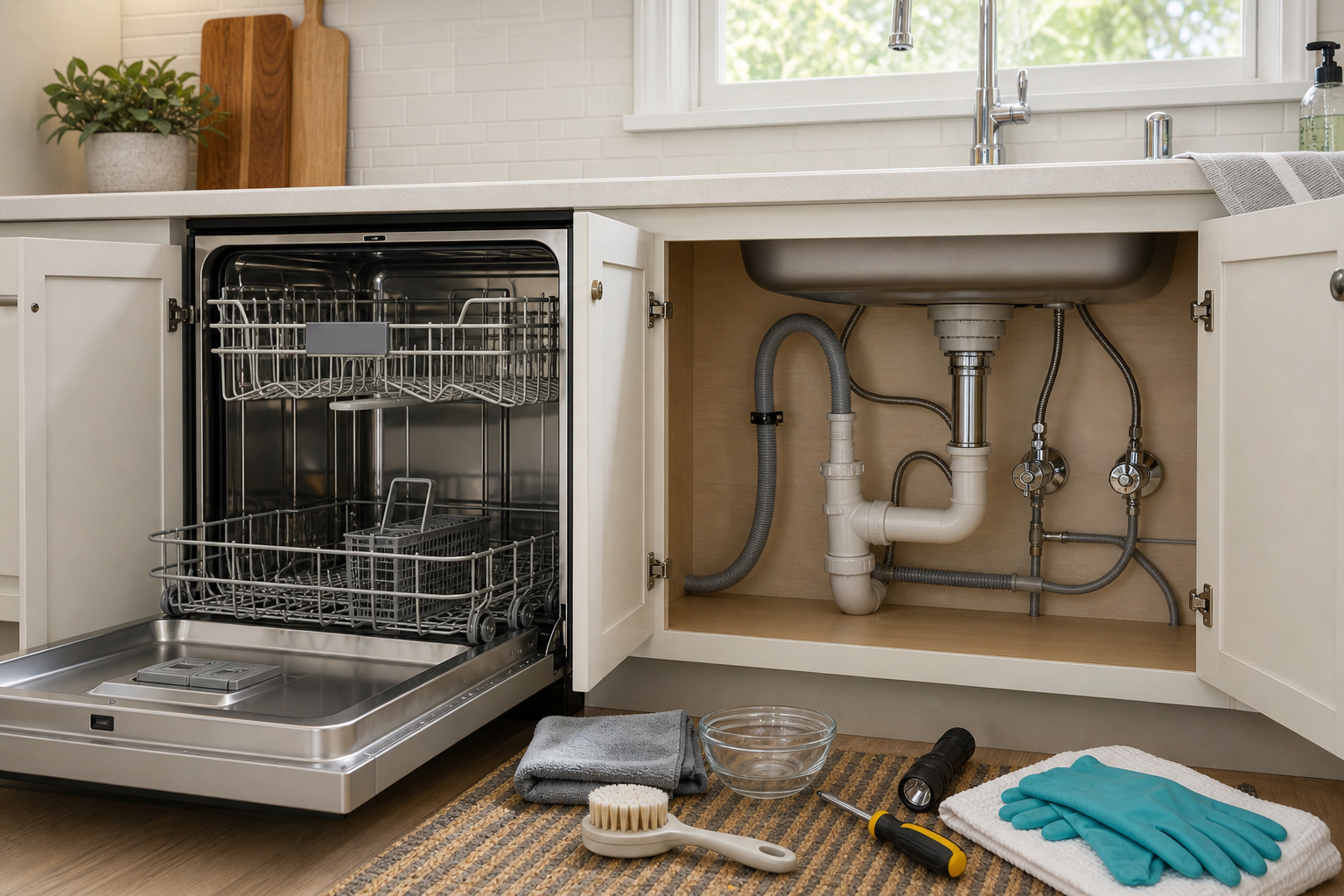
What to know about How to Clean a Bosch Dishwasher: Manual-First Maintenance Guide
Clean a Bosch dishwasher by following the exact Bosch owner manual first: remove food debris, clean the filter assembly, check spray arms, wipe door seals and edges, and use only dishwasher-safe cleaners approved by the appliance and cleaner labels. Do not remove panels, open electrical areas, or pour household chemicals into the machine to solve an odor or draining problem.
Manual-first cleaning map
| Area | Why it matters | Safe homeowner action |
|---|---|---|
| Filter assembly | Food soil can recirculate, smell, or reduce cleaning | Remove and rinse only as the Bosch manual shows. |
| Spray arms | Blocked holes can reduce water coverage | Check for visible debris; do not force brittle parts. |
| Door gasket and lower edge | Biofilm can collect outside normal spray areas | Wipe with mild manual-approved cleaning method. |
| Detergent dispenser | Residue can keep the cup from opening/closing well | Wipe dry; do not pry stuck mechanisms. |
| Drain area | Standing water or odor may point beyond cleaning | Stop if water returns or error codes appear. |
Step-by-step safe cleaning checklist
- Turn the dishwasher off and let hot surfaces cool before reaching inside.
- Remove racks only if the manual shows how and you can reinstall them without forcing rollers or clips.
- Lift out the filter components in the order shown in the Bosch manual; photograph the order before rinsing.
- Rinse filters under running water with a soft brush if the manual allows it; avoid wire brushes or harsh cleaners.
- Inspect spray-arm holes for visible food particles and reinstall parts fully before running a cycle.
- Wipe the door edges, gasket contact area, and detergent cup with a soft cloth.
- Run a cleaning cycle only with a product labeled for automatic dishwashers and allowed by the manual.
Odor, residue, and white film clues
| Symptom | Possible cause | Next step |
|---|---|---|
| Rotten or sewer-like odor | Drain connection, air gap, high loop, or stagnant food residue | Compare with air-gap and dishwasher-odor guides. |
| White film on tub or dishes | Hard water, detergent amount, rinse aid, or water temperature issue | Check manual settings and local water hardness. |
| Grit after cycle | Dirty filter, blocked spray, or loading issue | Clean filter and review loading pattern. |
| Water standing after cleaning | Drainage problem, not just dirt | Stop and use manual-first drain checks. |
What not to use
Do not mix bleach, vinegar, drain cleaner, toilet cleaner, abrasive powder, or general household degreasers inside a dishwasher. Dishwasher cleaner labels are written for specific use patterns; household chemical mixing can damage seals, stainless interiors, plastics, and create unsafe fumes.
When cleaning is not enough
Call an appliance technician if the dishwasher shows repeated error codes, will not drain, leaks from the door or under the unit, has burning smells, trips a breaker, or has pump/spray-arm damage. Call a plumber when the symptom is at the air gap, disposer connection, sink drain, trap, or under-sink plumbing.
Sources for this guide
What to document before service
- Brand, model number, serial tag location, and any blinking lights or error code.
- When the issue happens: startup, fill, wash, drain, dry cycle, or after sitting unused.
- Photos of the filter area, spray arms, detergent cup, air gap/high loop, under-sink drain connection, and any floor or cabinet water.
- Recent changes: new detergent, rinse aid, disposer installation, plumbing work, power outage, or water-quality changes.
Decision aid: How to Clean a Bosch Dishwasher: Manual-First Maintenance Guide
Start by identifying the relevant symptom, fixture, or planning question before choosing parts or arranging work.
Write down when the issue began, what changed, which fixtures are affected, and any model or service-history details. That record makes it easier to compare the article with the exact product documentation and to explain the problem if qualified help is needed.
- Find the exact model manual and separate appliance behavior from the drain hose, air gap, disposer, or sink connection.
- Match product-specific directions to the exact model manual and confirm local requirements where installation, gas, electricity, water quality, or structural work is involved.
- Stop for leaking near electrical parts, repeated error codes, a recently disturbed hose, or water that returns after visible cleaning.
Authoritative references for this topic
Use the current version of these sources to verify safety, efficiency, health, or product-specific details that apply to your situation.