Dishwasher
How to Reset a Bosch Dishwasher: Manual-First Checklist
A Bosch reset can clear some control-state issues, but document error codes, water level, and door/latch symptoms before repeating resets.
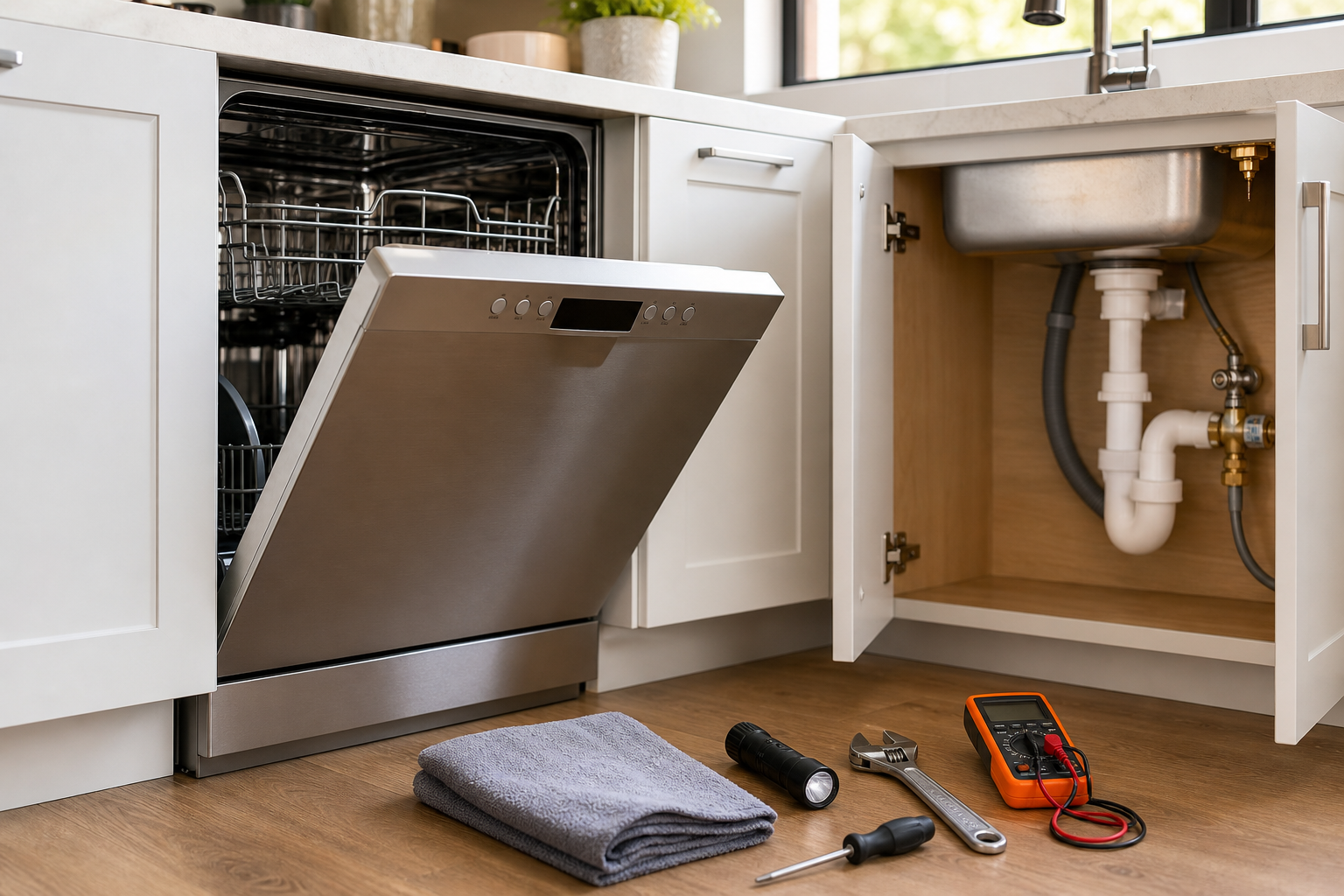
What to know about How to Reset a Bosch Dishwasher: Manual-First Checklist
Resetting a Bosch dishwasher can clear some cycle-selection or control-state problems, but it does not fix leaks, drainage blockages, heating failures, door-latch problems, or electrical faults. Use the exact model manual first because Bosch reset steps vary by control style, button layout, and error code.
Before-reset decision table
| Situation | Reset may help? | Do this first |
|---|---|---|
| Wrong cycle selected or cycle seems paused | Maybe | Check display, door latch, and manual cancel/reset instructions. |
| Error code displayed | Only after documenting it | Photograph the code and look it up in the model manual. |
| Standing water in bottom | Usually not enough | Use drain/filter checks before repeated resets. |
| Leak, burning smell, breaker trip, or water near wiring | No | Stop and call a qualified professional. |
| Door will not latch | No | Do not force; inspect rack/load obstruction and latch area. |
Model-specific reset checklist
- Find the model number, usually along the door edge or inner frame.
- Search the Bosch owner manual for “Cancel,” “Reset,” “Drain,” or the exact error code.
- Write down the cycle, options, display message, and whether water is standing in the tub.
- Close the door fully and remove any rack item that blocks the latch or dispenser.
- Use the button sequence in the manual; do not hold random buttons repeatedly.
- After reset/cancel, listen for drain activity and record whether water leaves the tub.
Control-panel and symptom patterns
| Pattern | Possible meaning | Safe next step |
|---|---|---|
| Countdown stuck but no error | Door/latch/input delay or control state | Try manual cancel/reset once. |
| Error code returns after reset | Underlying fault likely | Stop repeating reset; call service. |
| Water remains after cancel/drain | Drain/filter/hose/air-gap issue | Use manual-first drain guide. |
| Buttons unresponsive | Control lock, power, or electronics issue | Check manual for lock; avoid opening panels. |
| Cycle restarts then leaks | Leak issue, not reset issue | Stop using and document leak source. |
What not to do
Do not flip breakers repeatedly, open the kick plate, access wiring, bypass the door latch, remove control panels, or keep forcing resets when an error returns. A reset is a documentation step, not a repair. If the dishwasher is wet around electrical components or trips protection, stop using it.
What to photograph before service
- Full model/serial label.
- Display or error code before reset.
- Water level in the tub if drainage is involved.
- Under-sink drain hose, air gap, high loop, and disposer connection if water remains.
- Any leak path at the door, side, or under the machine.
When to call an appliance technician or plumber
Call an appliance technician for repeated Bosch error codes, control-panel issues, pump/motor noise, latch faults, or heating/drying failures. Call a plumber when the problem points to the sink drain, air gap, high loop, disposer inlet, or under-sink connection. Call an electrician or emergency service for breaker trips, burning smells, shock risk, or water near wiring.
What to document before service
- Brand, model number, serial tag location, and any blinking lights or error code.
- When the issue happens: startup, fill, wash, drain, dry cycle, or after sitting unused.
- Photos of the filter area, spray arms, detergent cup, air gap/high loop, under-sink drain connection, and any floor or cabinet water.
- Recent changes: new detergent, rinse aid, disposer installation, plumbing work, power outage, or water-quality changes.
Decision aid: How to Reset a Bosch Dishwasher: Manual-First Checklist
Start by identifying the relevant symptom, fixture, or planning question before choosing parts or arranging work.
Write down when the issue began, what changed, which fixtures are affected, and any model or service-history details. That record makes it easier to compare the article with the exact product documentation and to explain the problem if qualified help is needed.
- Find the exact model manual and separate appliance behavior from the drain hose, air gap, disposer, or sink connection.
- Match product-specific directions to the exact model manual and confirm local requirements where installation, gas, electricity, water quality, or structural work is involved.
- Stop for leaking near electrical parts, repeated error codes, a recently disturbed hose, or water that returns after visible cleaning.
Authoritative references for this topic
Use the current version of these sources to verify safety, efficiency, health, or product-specific details that apply to your situation.