Dishwasher
Dishwasher Door Won’t Latch: Safe Checks Before Service
A dishwasher door that will not latch may be blocked, misloaded, out of level, or have a damaged latch; check visible causes before forcing it.
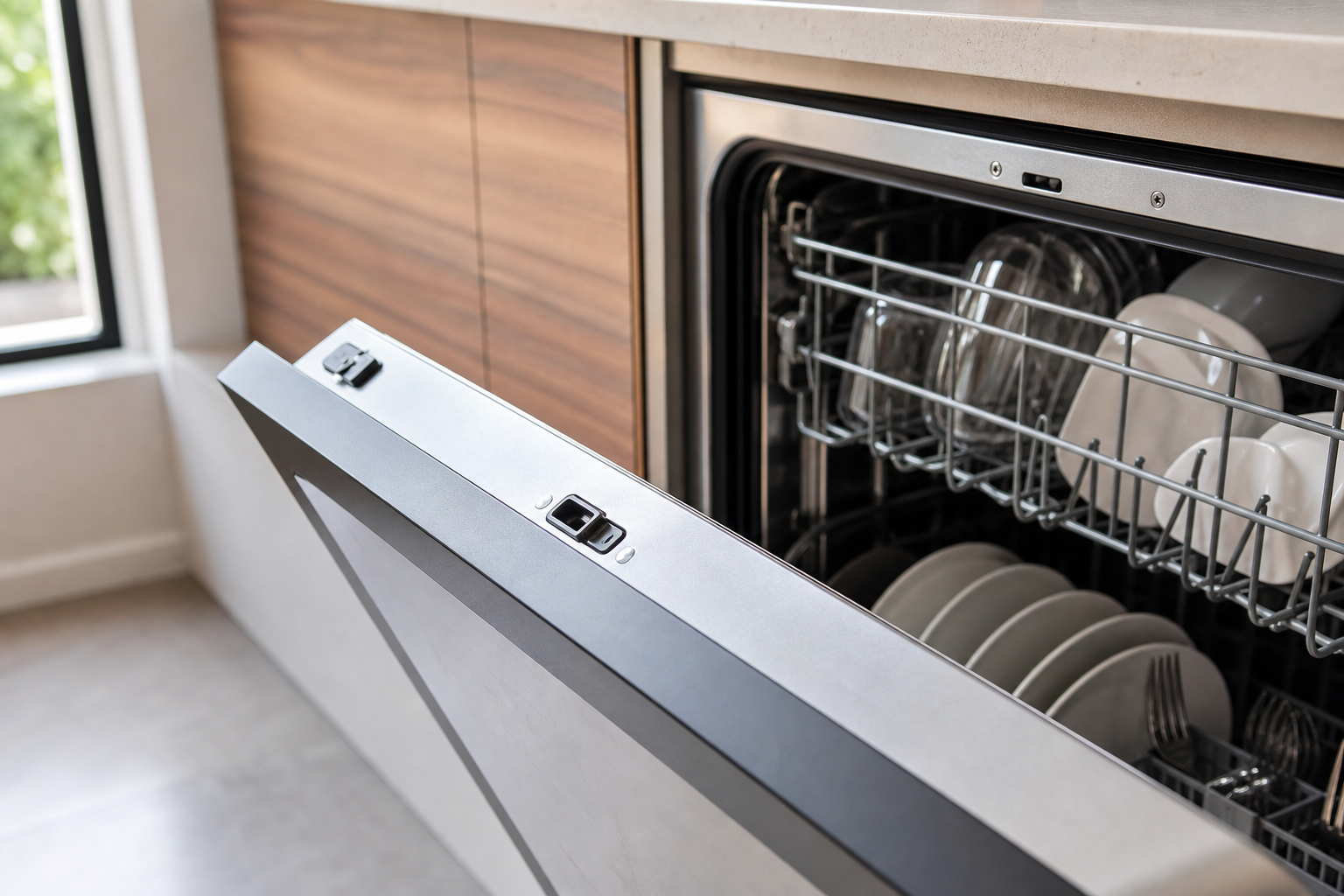
What to know about Dishwasher Door Won’t Latch: Safe Checks Before Service
Do not force a dishwasher door that will not latch. First check for rack interference, large utensils, gasket debris, level/tilt, control-lock state, and visible latch damage. If the latch or door switch appears broken, use an appliance technician.
Signs and safe next steps
| Clue | What it can mean | Safe next step |
|---|---|---|
| Rack or utensil blocks door | Loading interference | Reload and test gently |
| Gasket folded or dirty | Seal obstruction | Clean per manual |
| Door drops or sits crooked | Hinge/level issue | Stop before bending hardware |
| Latch cracked or loose | Part/service issue | Call appliance technician |
What to document before service
- Brand, model number, serial tag location, and any blinking lights or error code.
- When the issue happens: startup, fill, wash, drain, dry cycle, or after sitting unused.
- Photos of the filter area, spray arms, detergent cup, air gap/high loop, under-sink drain connection, and any floor or cabinet water.
- Recent changes: new detergent, rinse aid, disposer installation, plumbing work, power outage, or water-quality changes.
Decision aid: Dishwasher Door Won’t Latch: Safe Checks Before Service
Start by identifying the relevant symptom, fixture, or planning question before choosing parts or arranging work.
Write down when the issue began, what changed, which fixtures are affected, and any model or service-history details. That record makes it easier to compare the article with the exact product documentation and to explain the problem if qualified help is needed.
- Find the exact model manual and separate appliance behavior from the drain hose, air gap, disposer, or sink connection.
- Match product-specific directions to the exact model manual and confirm local requirements where installation, gas, electricity, water quality, or structural work is involved.
- Stop for leaking near electrical parts, repeated error codes, a recently disturbed hose, or water that returns after visible cleaning.
Authoritative references for this topic
Use the current version of these sources to verify safety, efficiency, health, or product-specific details that apply to your situation.