Dishwasher
Dishwasher Stainless-Steel Interior: Benefits, Limits, and Fit Checks
A stainless dishwasher tub can help durability, odor, drying, and sound, but filter access, rack design, drying system, support, and fit matter too.
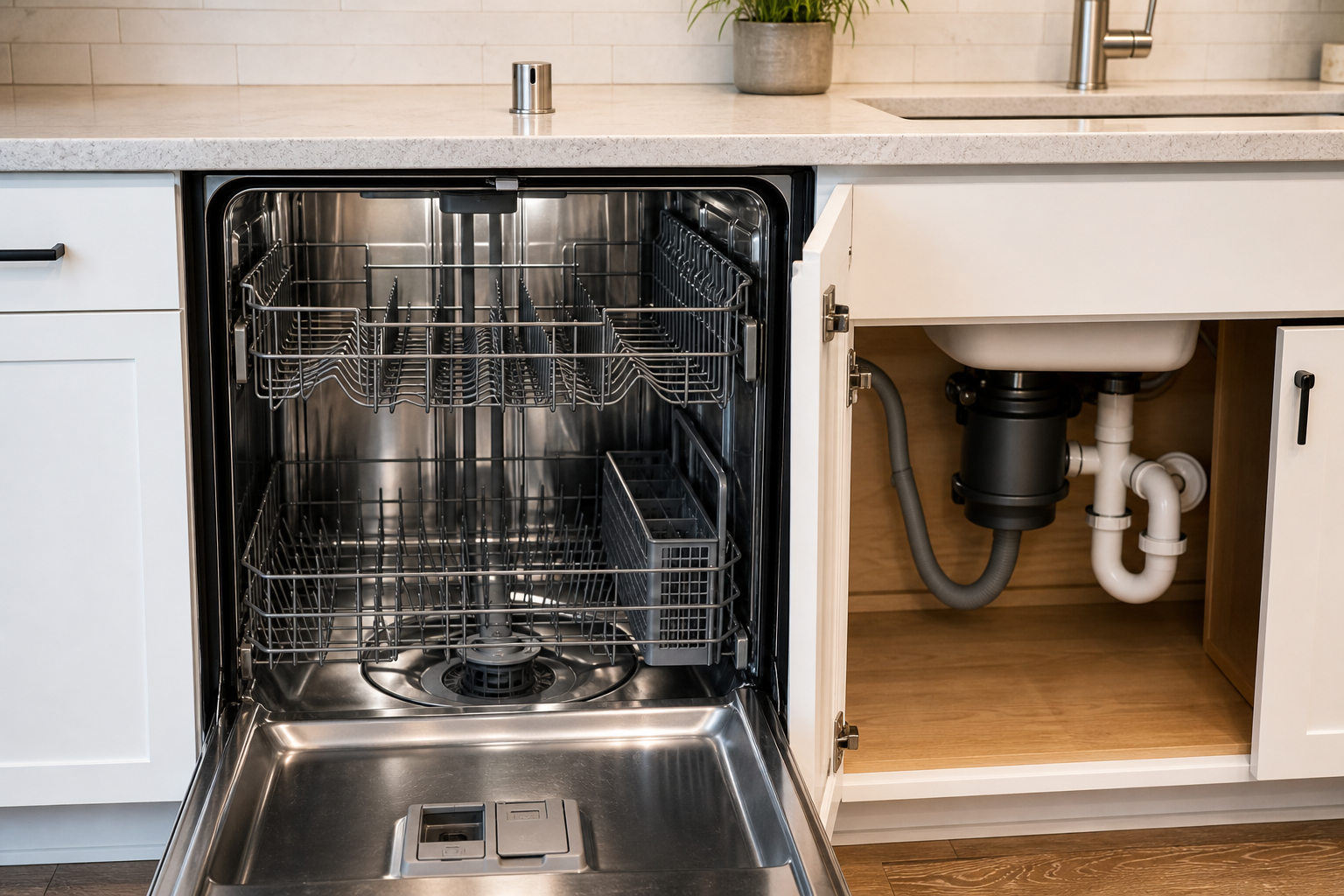
What to know about Dishwasher Stainless-Steel Interior: Benefits, Limits, and Fit Checks
A stainless-steel dishwasher interior can be worth it if you value durability, odor resistance, heat retention, quieter operation, and a more stain-resistant tub, but it is not the only factor that determines cleaning performance. Rack design, spray system, filter access, drying method, noise rating, cycle behavior, repair support, and price all matter too.
Stainless vs plastic/hybrid tub comparison
| Tub type | Potential advantages | Possible tradeoffs |
|---|---|---|
| Stainless steel tub | Durable, resists staining/odor, supports higher heat/drying, often quieter | Usually costs more; still needs cleaning and filter maintenance. |
| Plastic tub | Lower cost and common in entry models | May stain/hold odor more and can be noisier. |
| Hybrid tub/stainless door | Middle ground in some models | Benefits vary by exact design; read spec sheet. |
| Premium stainless with advanced drying | Often paired with better sound/drying features | Higher price; features differ by brand/model. |
What actually changes performance
| Feature | Why it matters | What to check |
|---|---|---|
| Filter access | Dirty filters cause odor and poor cleaning | Manual cleaning instructions and access design. |
| Drying system | Condensation, fan, door-open, or heated dry affects wet dishes | Brand/manual drying description and plastic-item limitations. |
| Noise rating | Tub insulation and motor design affect sound | Published dBA rating and kitchen layout. |
| Rack layout | Determines usable capacity more than marketing photos | Bring dish measurements or inspect rack adjustability. |
| Service/parts support | Affects long-term ownership | Warranty, parts diagrams, and local service availability. |
Buying checklist
- Read the full model spec sheet, not just “stainless interior” in the title.
- Check whether the tub is fully stainless or hybrid.
- Compare filter-cleaning access in the owner manual.
- Look at drying method and rinse-aid guidance.
- Check sound rating and whether installation insulation is required.
- Verify dimensions, panel clearance, drain routing, and electrical/plumbing requirements before buying.
Common mistakes
- Assuming stainless interior alone guarantees cleaner dishes.
- Ignoring filter maintenance and loading patterns.
- Comparing prices without checking noise, drying, rack layout, and warranty.
- Using harsh cleaners or abrasive pads inside the tub.
- Installing a dishwasher without following electrical, drain, and high-loop/air-gap rules.
When to call an appliance tech, plumber, or electrician
Call an appliance technician for pump, motor, latch, control, heating, or drying failures. Call a plumber for drain hose, air gap, disposer inlet, shutoff valve, supply leak, or under-sink connection problems. Call an electrician for hardwired connections, GFCI/breaker problems, burning smells, or water near wiring.
What to document before service
- Brand, model number, serial tag location, and any blinking lights or error code.
- When the issue happens: startup, fill, wash, drain, dry cycle, or after sitting unused.
- Photos of the filter area, spray arms, detergent cup, air gap/high loop, under-sink drain connection, and any floor or cabinet water.
- Recent changes: new detergent, rinse aid, disposer installation, plumbing work, power outage, or water-quality changes.
Decision aid: Dishwasher Stainless-Steel Interior: Benefits, Limits, and Fit Checks
Start by identifying the relevant symptom, fixture, or planning question before choosing parts or arranging work.
Write down when the issue began, what changed, which fixtures are affected, and any model or service-history details. That record makes it easier to compare the article with the exact product documentation and to explain the problem if qualified help is needed.
- Find the exact model manual and separate appliance behavior from the drain hose, air gap, disposer, or sink connection.
- Match product-specific directions to the exact model manual and confirm local requirements where installation, gas, electricity, water quality, or structural work is involved.
- Stop for leaking near electrical parts, repeated error codes, a recently disturbed hose, or water that returns after visible cleaning.
Authoritative references for this topic
Use the current version of these sources to verify safety, efficiency, health, or product-specific details that apply to your situation.