Water Quality
Hard-Water Stains on Fixtures and Glass: Surface-Specific Removal
For fixture and shower-glass mineral spots, identify the finish or coating before using acids, abrasives, pumice, or commercial descalers.
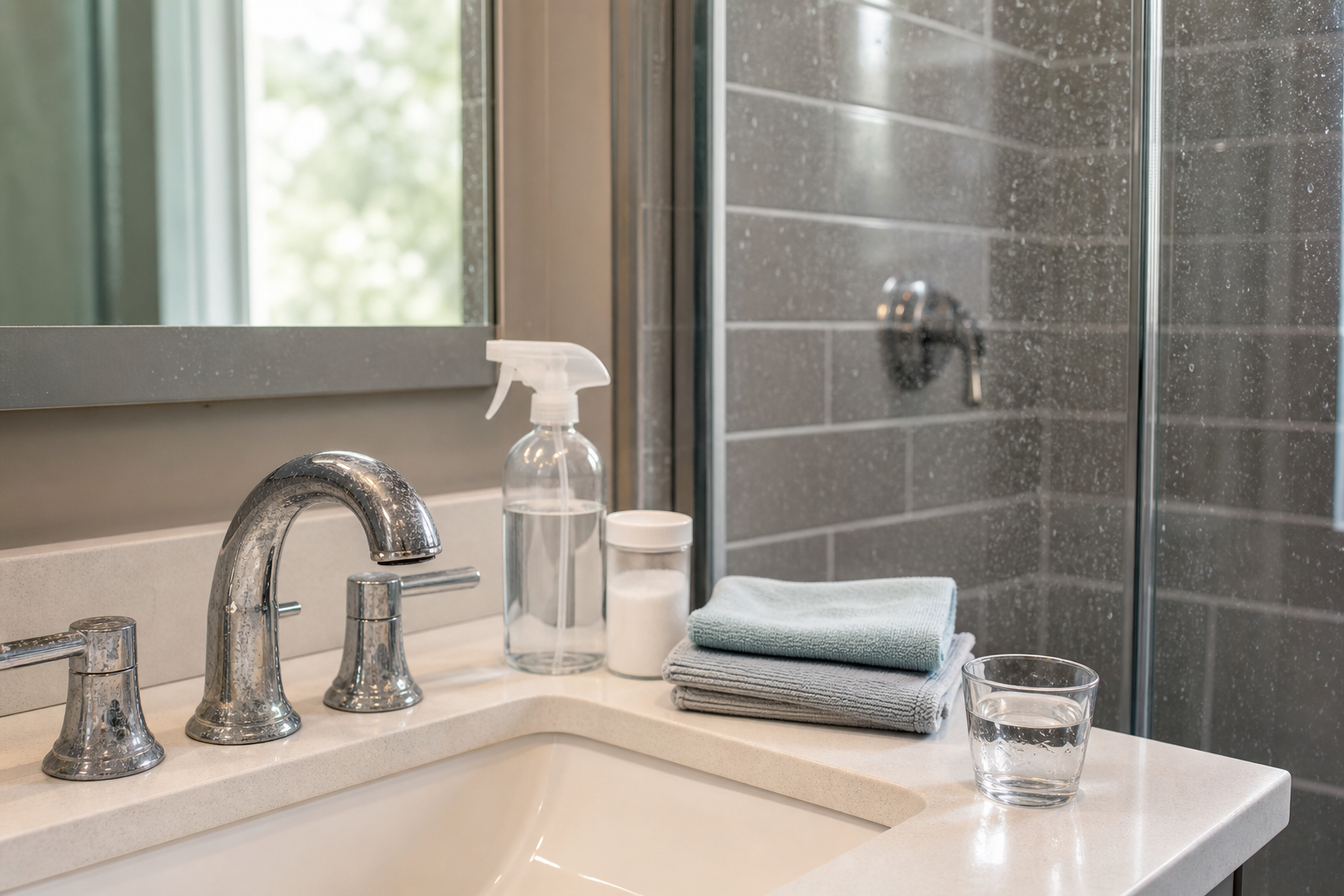
What to know about Hard-Water Stains on Fixtures and Glass: Surface-Specific Removal
For hard-water stains on fixtures and glass, identify the finish first, clean a small hidden area, and escalate from mild soap to a label-approved descaler only when the manufacturer care page allows it. Avoid long acid soaks on plated, matte, oil-rubbed, coated, acrylic, fiberglass, or stone-adjacent surfaces.
Fixture/glass removal table
| Area | Safer first action | Escalation only if allowed | Avoid |
|---|---|---|---|
| Shower glass | Soap and microfiber; rinse/dry | Glass-safe descaler or vinegar on uncoated glass | Metal blades, abrasive pads, mixing chemicals. |
| Chrome faucet | Damp cloth and mild soap | Short contact with faucet-approved descaler | Overnight vinegar bags, toilet cleaner, scouring pads. |
| Matte/decorative faucet | Manufacturer-approved cleaner only | None without care-sheet approval | Acids, abrasives, polish, bleach, ammonia. |
| Stainless sink/faucet | Clean with the grain; dry after use | Stainless-safe mineral cleaner | Steel wool, chloride bleach, leaving acids to sit. |
Safe workflow
- Remove loose dirt with water and mild soap.
- Read the fixture, tub, sink, or glass manufacturer care page.
- Read the cleaner label and SDS before use.
- Test a hidden spot and use the shortest labeled contact time.
- Rinse completely and dry the area.
- Stop if stains remain after label-safe cleaning; the surface may be etched or damaged rather than dirty.
When to use the broader guide
Use the main hard-water stain cleaning guide when natural stone, grout, acrylic tubs, fiberglass, porcelain, or toilet-bowl mineral rings are involved.
Sources for this guide
Important context
This topic may involve drinking-water safety, treatment equipment, pressure systems, local requirements, or water-heater risk. Limit homeowner action to observation, documentation, certified testing where appropriate, and planning. Ask a licensed plumber, certified water-treatment professional, local health authority, or applicable code official to confirm the requirements before work begins.
Decision aid: Hard-Water Stains on Fixtures and Glass: Surface-Specific Removal
Start by identifying the relevant symptom, fixture, or planning question before choosing parts or arranging work.
Write down when the issue began, what changed, which fixtures are affected, and any model or service-history details. That record makes it easier to compare the article with the exact product documentation and to explain the problem if qualified help is needed.
- Identify the water source, affected fixtures, timing, color or odor, recent plumbing work, and whether anyone may drink the water.
- Match product-specific directions to the exact model manual and confirm local requirements where installation, gas, electricity, water quality, or structural work is involved.
- Stop relying on appearance alone when drinking-water safety, a private well, lead, bacteria, or chemical contamination may be involved.
Authoritative references for this topic
Use the current version of these sources to verify safety, efficiency, health, or product-specific details that apply to your situation.