Water Quality & Efficiency

How to Clean Calcium Buildup on a Sink Faucet Without Damage

Clean faucet calcium buildup by identifying the finish, aerator style, and cleaner limits before using vinegar or descaler.
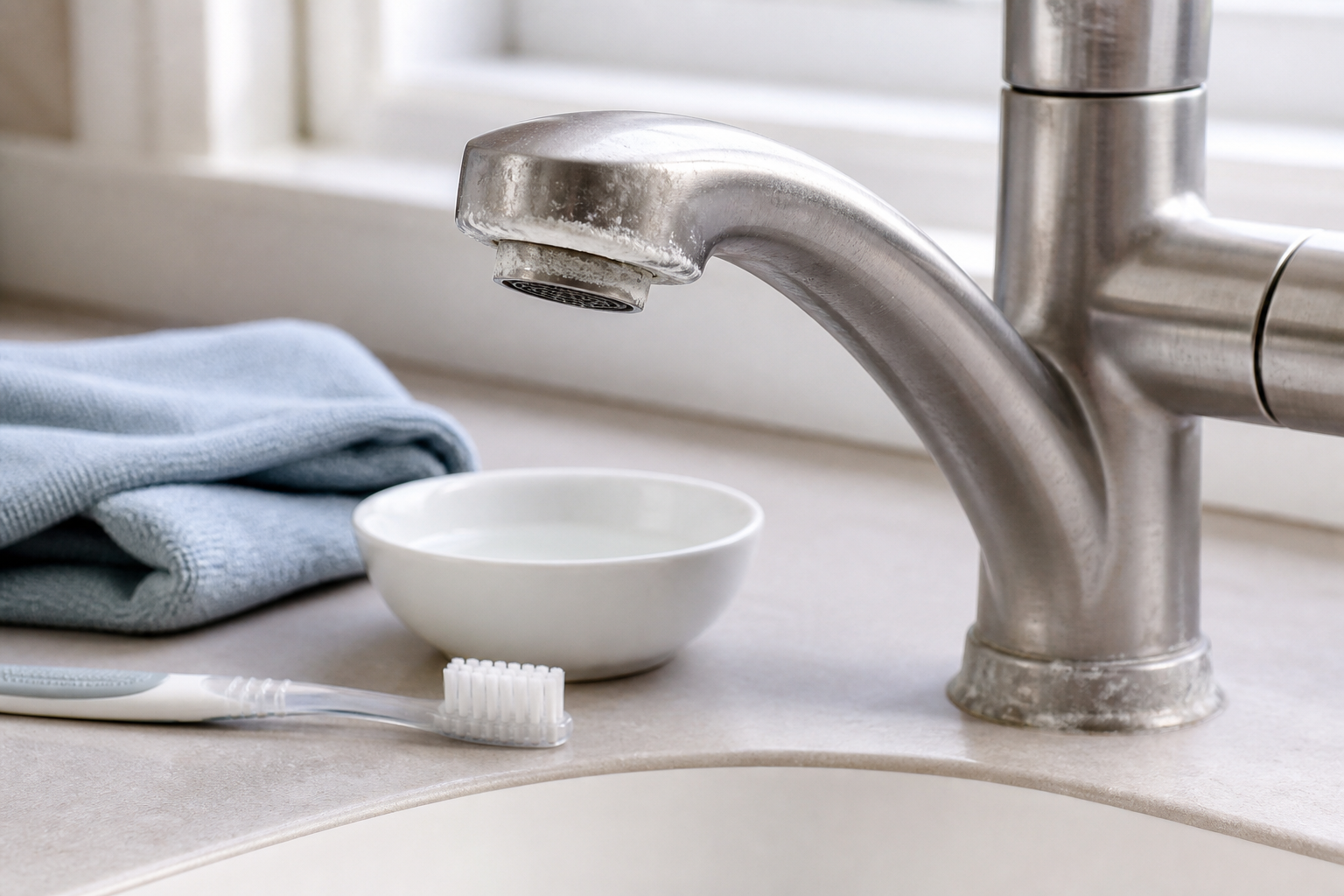
Plumbing scene for How to Clean Calcium Buildup on a Sink Faucet Without Damage

Direct answer

Clean calcium buildup on a sink faucet by matching the cleaner to the finish and part. A mild soak may be appropriate for some removable aerators, but acidic cleaners can damage stone counters, plated finishes, rubber parts, and living finishes.

Calcium-cleaning table

AreaLikely issueSafe method
Aerator faceMineral scale/debris.Remove only if it turns easily and manual allows.
Spout finishWater spotting or scale.Use manufacturer-approved cleaner and soft cloth.
Base near countertopMinerals plus trapped moisture.Protect stone/grout from acid.
Hidden/cache aeratorSpecial tool may be required.Do not gouge with pliers.

What not to use

Avoid abrasive pads, harsh acids, bleach mixes, and long vinegar soaks unless the finish-care document permits them.

Sources used

  • Moen, Delta, Kohler, Pfister, and American Standard finish-care instructions.
  • EPA WaterSense faucet/aerator resources where flow and aerator maintenance are relevant.
  • Cleaner product labels for contact time and surface warnings.

Fixture, drain, and finish boundary

Use this page as homeowner observation, fit, care, and planning guidance. Stop and call a licensed plumber or qualified service pro if the work requires hidden plumbing changes, supply-line replacement, drain reconfiguration, disposer wiring, electrical controls, wall/floor opening, sewer-odor diagnosis, repeated backups, or local code/permit decisions. For finishes and cleaners, follow the fixture, sink, disposer, and cleaner labels before trying acids, abrasives, bleach, ammonia, drain openers, or polishing products.

What to document before buying parts or calling service

  • Fixture brand, model tag, finish, hole spacing, deck thickness, supply-stop condition, and under-sink photos.
  • For sink/drain issues: whether the symptom is one fixture, multiple fixtures, disposal side, dishwasher side, trap area, or wall drain.
  • For odors/gurgles: when the smell or sound happens, whether other fixtures run, and whether there is sewer, rotten-egg, chemical, or burning odor.
  • For cleaning/finish topics: surface material, cleaner label, manufacturer care page, spot-test result, and any warranty limitation.

Additional sources

Homeowner decision support for this topic

Faucet and sink symptoms often depend on brand, finish, aerator, cartridge, disposer, drain, and shutoff condition; exact identification prevents wrong parts and finish damage. For How to Clean Calcium Buildup on a Sink Faucet Without Damage, use the sequence below so the page is useful even when your exact brand, fixture age, water conditions, or home layout differs from the examples.

Before you buy parts or try a fix

  • Photograph the fixture, appliance, pipe, label, model number, visible water path, and any stain, sound, odor, or error code.
  • Check whether the symptom is isolated to one fixture or appears at multiple fixtures, rooms, hot/cold sides, or times of day.
  • Read the manufacturer manual, product label, utility notice, public-health guidance, or local code page that applies to this exact material or fixture.
  • Compare the symptom with the related reviewed guide and category hub before assuming a generic repair applies.

Escalation thresholds

SituationWhy it changes the planSafer action
Water appears outside the fixture, under flooring, in a wall/ceiling, or near electrical equipmentHidden damage and shock risk can grow quickly.Stop using the fixture, document the area, and call qualified help.
A shutoff, handle, fastener, trim piece, or drain part is stuck or corrodedForcing it can create a larger leak or damage finished surfaces.Stop before applying more leverage; use the model manual or a pro.
The issue involves sewage, unsafe water, gas/combustion, pressure relief, or permitted workThese are safety and code boundaries, not simple homeowner maintenance.Use emergency/utility guidance or a licensed professional.
The same symptom returns after basic observation or cleaningRepeat symptoms often point to a system cause, compatibility issue, or hidden restriction.Save notes and photos for a plumber, appliance technician, utility, or local health/code office.

Related reviewed paths: Faucet/Sink hub and a relevant safety/triage guide.

Safety note: Shut off water before repairs when appropriate. Call a qualified plumber for sewer backups, major leaks, gas appliances, approvals, or work you are not confident completing safely.