Faucet & Sink
How to Clear a Clogged Drain With Standing Water Safely
Standing water in a sink, tub, or shower changes drain triage: identify the fixture pattern, avoid chemical splash risk, and know when backup signs mean stop.
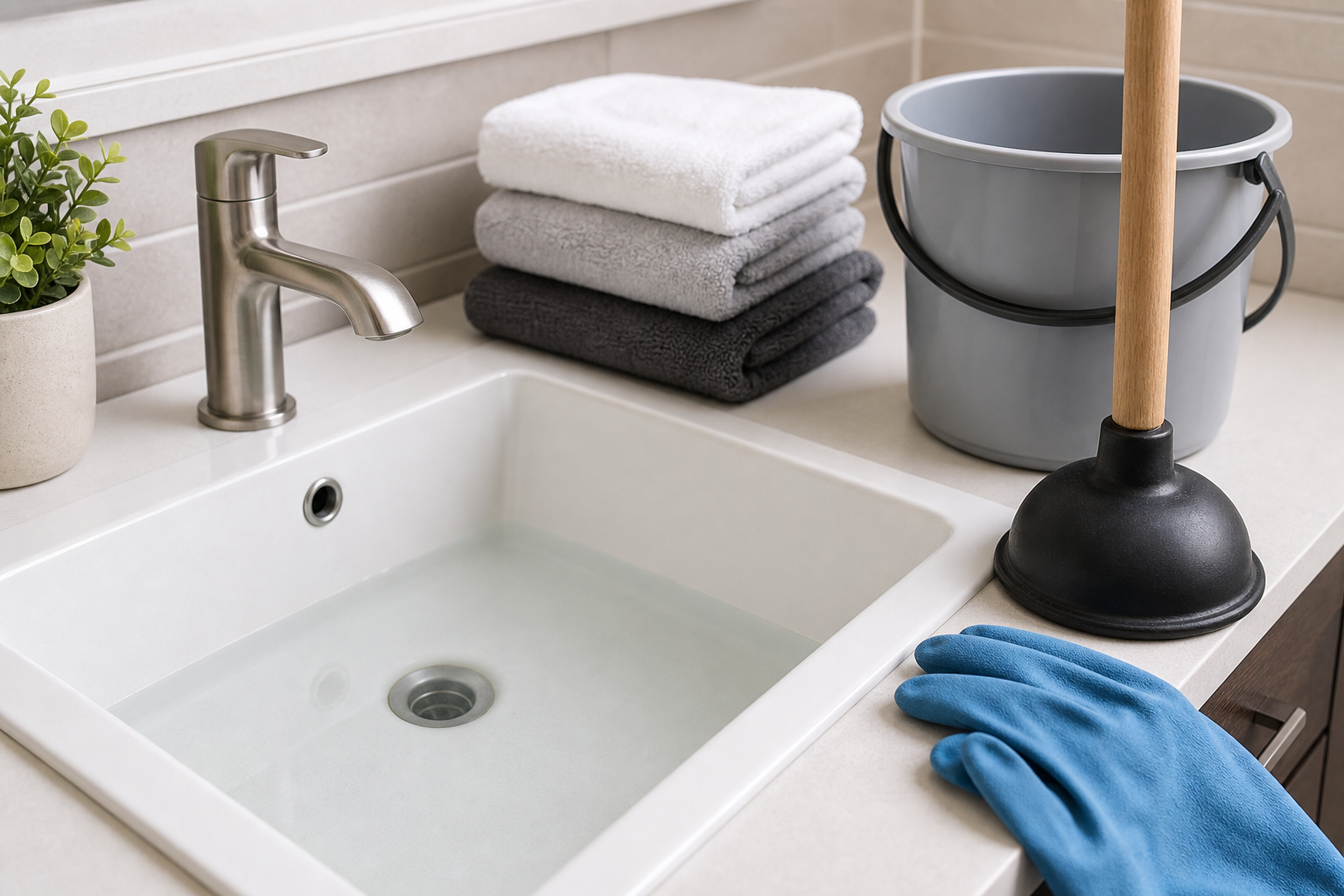
What to know about How to Clear a Clogged Drain With Standing Water Safely
Standing water means the drain is not moving wastewater away from that fixture. The safe first job is not to attack the clog; it is to identify whether the water is limited to one sink, tub, or shower, whether other fixtures are backing up, and whether chemical cleaner or contaminated wastewater is already present.
Sink vs tub vs shower standing-water clues
| Where water stands | What to look at | What it may mean | Safest next step |
|---|---|---|---|
| Bathroom or kitchen sink | Stopper, strainer, disposal side, cabinet floor | Stopper hair/soap buildup, disposal-side restriction, or trap/drain issue | Remove only visible debris at the opening; document under-sink leaks before touching piping. |
| Tub | Trip lever or stopper style, overflow plate, water level change after other fixtures run | Hair/soap near stopper or deeper branch drain issue | Use a plastic hair tool only at the opening if no chemicals were used; stop if the stopper assembly is unfamiliar. |
| Shower | Drain cover, hair mat, nearby toilet/gurgle behavior | Surface hair mat, branch restriction, or drain/vent interaction | Lift visible hair from the grate; stop if multiple bathroom fixtures are affected. |
One fixture or multiple fixtures?
Decision tree
- Only one fixture is slow or full? Treat it as localized and use only opening-level, non-chemical checks.
- Toilet, tub, shower, or floor drain also gurgles or rises? Stop using water; this can indicate branch, sewer, or main-line risk.
- Water appears in the lowest drain when another fixture runs? Stop and call a plumber because plunging one fixture can push contaminated water elsewhere.
- Sewage odor, dark water, toilet waste, or floor-drain backup? Treat as contamination risk and keep people and pets away.
Safe plunger boundaries
- Use a cup plunger on a sink or flat shower/tub drain only when the water is not contaminated and no drain chemical has been added.
- Use gentle, controlled pressure. Stop if water appears under the sink, at a ceiling below, around a toilet base, or from another fixture.
- Do not plunge after using caustic, acidic, or oxidizing drain cleaner; splashback can injure skin or eyes.
If chemicals were already used
Do not add a second product, do not plunge aggressively, and do not disassemble a trap while cleaner may be sitting in it. Ventilate the room, keep the product container or a photo of the label, and tell the plumber exactly what was used and when.
What to photograph before calling
- The fixture with standing water and approximate level.
- Other fixtures affected or not affected.
- Any cleaner label, disposal model, stopper style, and under-sink hose/trap arrangement.
- Water marks on cabinets, ceilings, flooring, or the lowest drain in the home.
Sources for this guide
What to bring to the plumber
- Which fixture has standing water and whether other fixtures gurgle or rise.
- Whether any chemical drain cleaner has already been used; share the product label.
- Photos of the sink/tub/shower drain, overflow, cleanout if visible, and under-sink area if dry and safe.
- Timing: sudden backup, recurring slowdown, after laundry/dishwasher discharge, or after heavy rain.
What this guide does not cover
It does not teach main-line clearing, sewer cleaning, chemical mixing, powered auger use, roof-vent work, or work in contaminated wastewater. Multi-fixture backup, sewage odor, or water in the lowest drain is a plumber call.
Decision aid: How to Clear a Clogged Drain With Standing Water Safely
Start by identifying the relevant symptom, fixture, or planning question before choosing parts or arranging work.
Write down when the issue began, what changed, which fixtures are affected, and any model or service-history details. That record makes it easier to compare the article with the exact product documentation and to explain the problem if qualified help is needed.
- Separate a faucet or supply symptom from a drain symptom, and note whether it affects hot water, cold water, or both.
- Match product-specific directions to the exact model manual and confirm local requirements where installation, gas, electricity, water quality, or structural work is involved.
- Stop if water reaches a cabinet, wall, floor, or electrical part, or if a shutoff or fixture starts to move when it should not.
Authoritative references for this topic
Use the current version of these sources to verify safety, efficiency, health, or product-specific details that apply to your situation.