Toilet
How to Check a Loose or Broken Toilet Handle Safely
Check handle return, trip lever, chain slack, and handle nut without disturbing the fill valve, supply line, or toilet base.
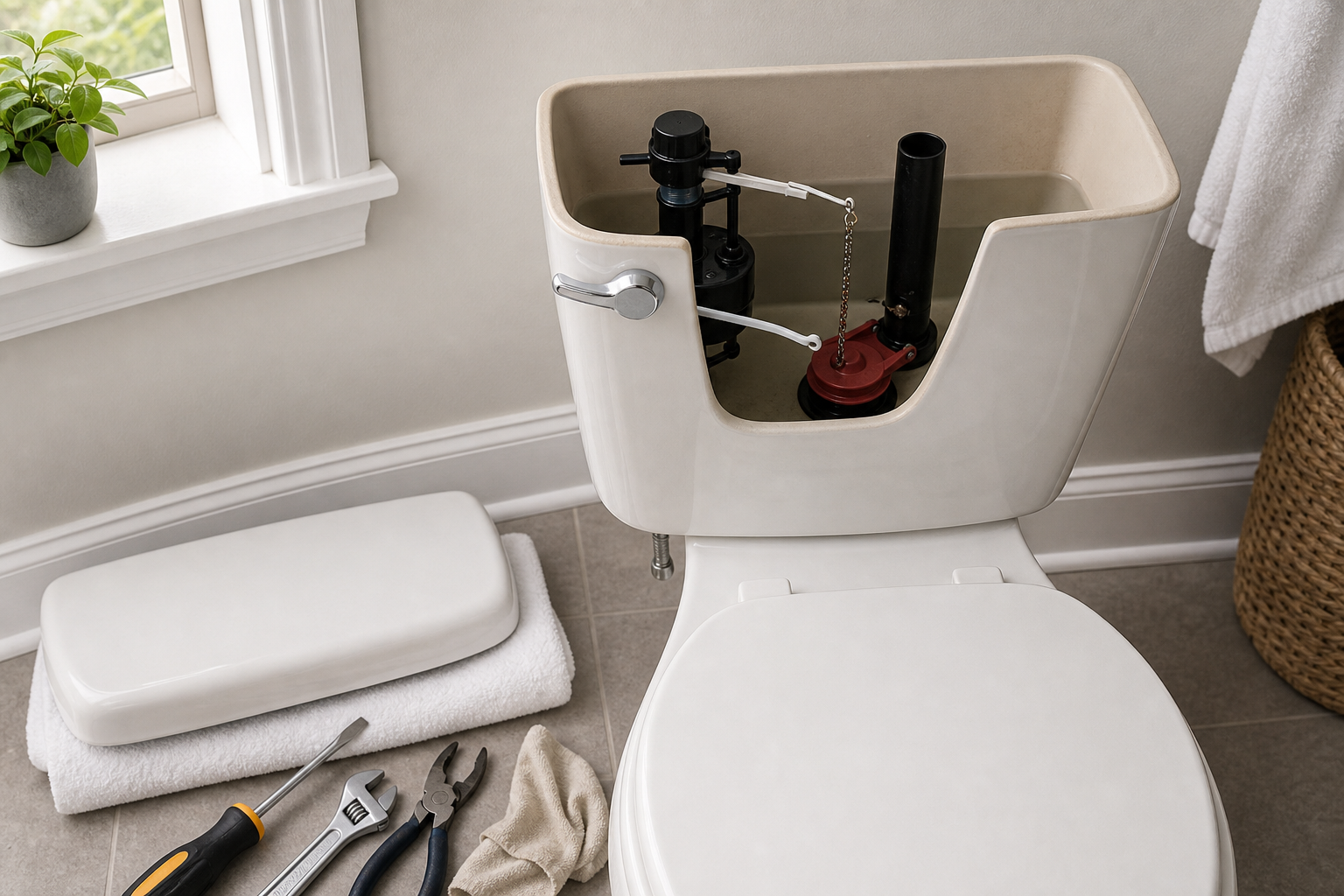
What to know about How to Check a Loose or Broken Toilet Handle Safely
A loose or broken toilet handle is usually a handle lever, reverse-thread nut, trip arm, or chain-slack problem. Check only the parts inside the tank that move when you press the handle; do not disturb the fill valve, shutoff valve, toilet base, or supply line.
Handle symptom table
| Symptom | Likely area | Safe check | Do not touch |
|---|---|---|---|
| Handle wiggles but flushes | Mounting nut inside tank | Hold handle square and inspect nut direction; many are reverse-thread. | Do not overtighten plastic nuts. |
| Handle moves freely but no flush | Chain disconnected or too much slack | Photograph chain connection and reconnect only if clip is visible. | Do not bend trip arm sharply. |
| Handle sticks down | Lever binding, chain too tight, flapper not seating | Watch one flush with tank lid off. | Do not replace fill valve for a handle symptom. |
| Handle is cracked or corroded | Handle kit compatibility | Match tank hole shape, lever length, and finish. | Do not force a corroded nut if tank flexes. |
What to bring before buying
- Photo of the inside tank, handle hole, trip arm direction, and chain connection.
- Tank brand/model stamp or number under the lid/tank wall.
- Whether the handle is front, side, angle, or right-hand mounted.
Stop and call a plumber
Stop if the toilet rocks, the tank or bowl leaks, the shutoff valve drips, or you would need to remove tank bolts or supply tubing.
Decision aid: How to Check a Loose or Broken Toilet Handle Safely
Start by identifying the relevant symptom, fixture, or planning question before choosing parts or arranging work.
Write down when the issue began, what changed, which fixtures are affected, and any model or service-history details. That record makes it easier to compare the article with the exact product documentation and to explain the problem if qualified help is needed.
- Confirm the toilet model, whether the symptom occurs during refill or flushing, and whether water is visible outside the bowl or tank.
- Match product-specific directions to the exact model manual and confirm local requirements where installation, gas, electricity, water quality, or structural work is involved.
- Stop if the toilet rocks, leaks at the base, the shutoff is stuck, or more than one fixture backs up.
Authoritative references for this topic
Use the current version of these sources to verify safety, efficiency, health, or product-specific details that apply to your situation.