Faucet & Sink
Dripping Bathroom Faucet Handle: Safe Checks and Next Steps
Identify whether the drip is from the handle, spout, cartridge area, or supply connection before touching shutoff valves or trim.
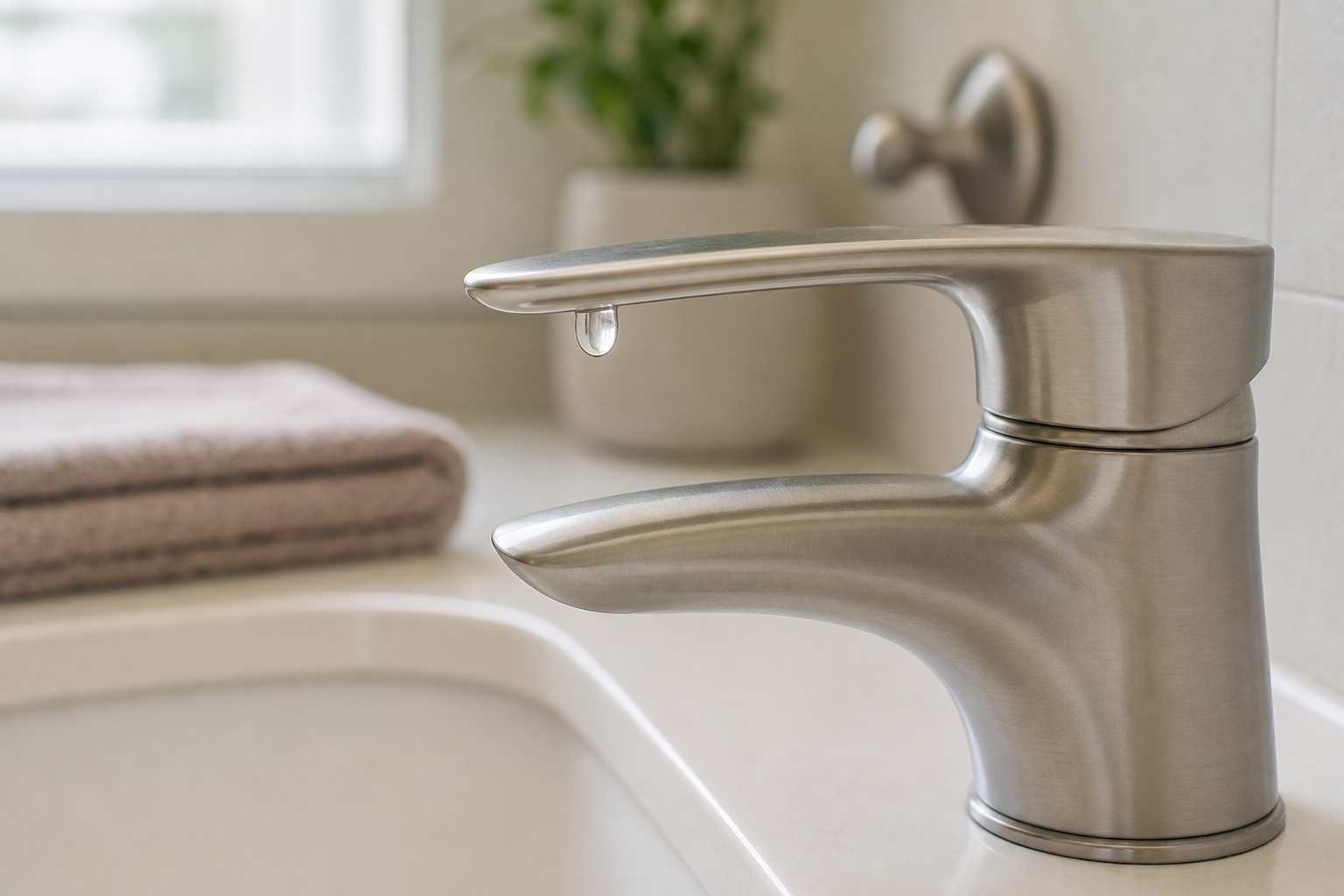
What to know about Dripping Bathroom Faucet Handle: Safe Checks and Next Steps
A drip at a bathroom faucet handle may come from the cartridge, stem, handle trim, or water splashing around the base. Identify the faucet brand and leak location before removing trim or buying parts.
Drip location table
| Where water appears | Likely clue | Safe next step |
|---|---|---|
| From spout when handles are off | Cartridge/stem seal not closing | Identify faucet model and shutoff condition. |
| Around handle when water runs | Cartridge/stem/packing or trim issue | Photograph handle style and brand mark. |
| Under sink while faucet runs | Supply or faucet body leak | Stop and call a plumber if active. |
| Only after countertop gets wet | Splash or failed caulk/trim seal | Dry area and retest carefully. |
Compatibility checks
- Find brand, model, handle count, cartridge/stem style, and sink-hole layout.
- Check whether shutoff valves turn freely before planning any part replacement.
- Do not remove a stuck handle if the valve body twists below the sink.
Decision aid: Dripping Bathroom Faucet Handle: Safe Checks and Next Steps
Start by identifying the relevant symptom, fixture, or planning question before choosing parts or arranging work.
Write down when the issue began, what changed, which fixtures are affected, and any model or service-history details. That record makes it easier to compare the article with the exact product documentation and to explain the problem if qualified help is needed.
- Separate a faucet or supply symptom from a drain symptom, and note whether it affects hot water, cold water, or both.
- Match product-specific directions to the exact model manual and confirm local requirements where installation, gas, electricity, water quality, or structural work is involved.
- Stop if water reaches a cabinet, wall, floor, or electrical part, or if a shutoff or fixture starts to move when it should not.
Authoritative references for this topic
Use the current version of these sources to verify safety, efficiency, health, or product-specific details that apply to your situation.