Bathtub & Shower
How to Remove Rust Stains From a Bathtub Safely
Rust stains on tubs may come from metal, water, or coating damage; choose cleaner by tub material and avoid harsh mixtures.
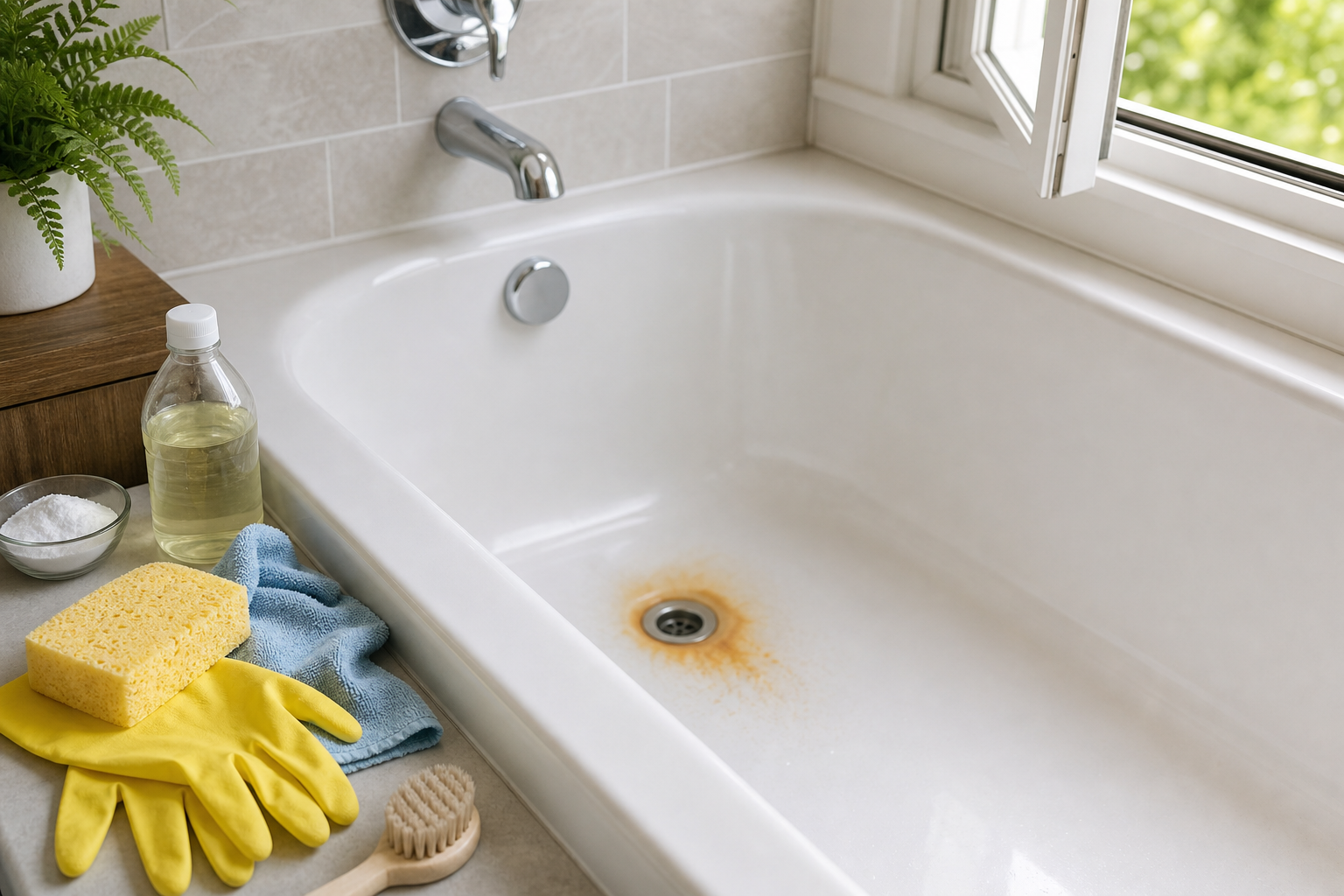
Remove a rust stain without damaging the tub
First identify the tub material and finish: acrylic, fiberglass, enameled cast iron, porcelain and refinished coatings may have different cleaner limits. A rust-colored mark may be a removable deposit or a chip exposing metal; cleaning cannot repair damaged enamel.
Use a surface-approved method
- Check the exact tub care sheet and cleaner label. Protect nearby fittings and surfaces and test the permitted product in an inconspicuous area.
- Start with mild soap, water and a soft cloth if allowed. Rinse and dry, then inspect whether the orange mark remains.
- If needed, use only a rust remover approved for the exact tub and follow its label for ventilation, protection, application time and rinsing. Sterling lists a rust remover for its acrylic baths; that example is not approval for other tubs or finishes.
- Stop if the finish dulls, scratches or is chipped. Contact the tub manufacturer or a refinishing professional.
Never mix rust removers with bleach, acids, ammonia or other cleaners; avoid abrasive pads or metal scrapers unless the surface maker expressly permits them. Recurring stains across fixtures may warrant a water test. A leak or soft floor needs repair before cosmetic cleaning.
Source
- Sterling: How to Clean & Care for Acrylic Bathtubs — acrylic-specific care and rust-remover example; accessed October 27, 2026.