Faucet & Sink
Loose Moen Single-Handle Kitchen Faucet: Tightening and Stop Points
Check handle set screw, mounting hardware, and under-sink movement on a Moen single-handle faucet, with stop points for leaks and corroded parts.
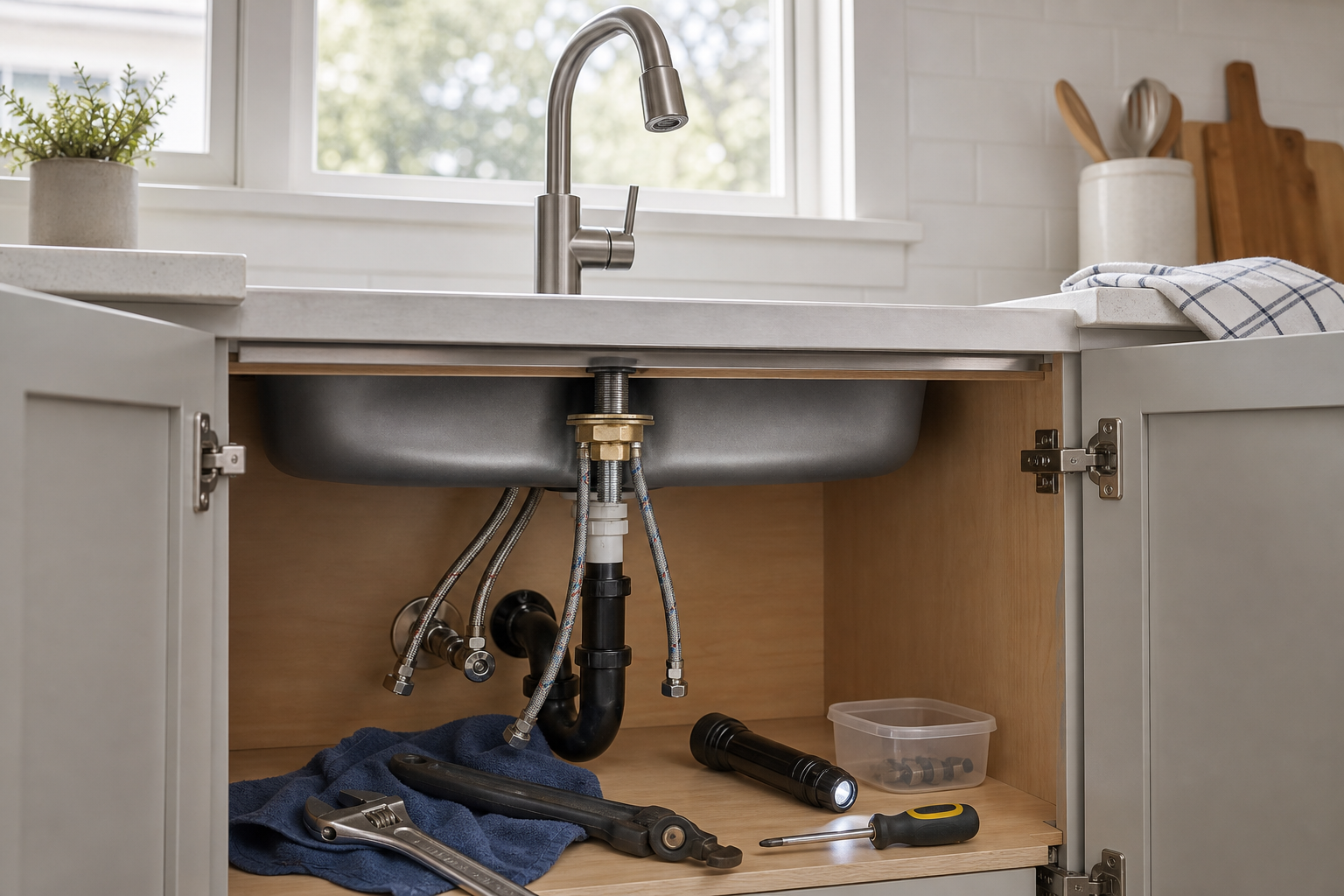
First determine whether only the handle wobbles or the entire faucet body moves. A loose handle fastener and a loose mounting bracket are different problems; if water leaks or the supply lines move with the faucet, stop and arrange repair.
Handle movement
- Identify the model and handle style before selecting a tool. Moen's top-handle identification guide shows designs with a plug button, a rear screw hole, or another handle assembly. These are not interchangeable.
- Turn the faucet off. If your exact manual identifies an accessible handle set screw, use its specified, fully seated hex key to snug the screw gently. Do not force a rounded screw or overtighten it. Refit any plug as the manual directs.
- Test that the handle remains secure and operates normally. If it still wobbles or will not stay on, stop and consult the model parts diagram or Moen; an adapter or other part may be damaged.
Whole body or leak
If only the spout moves unusually freely while the base stays still, use the model parts diagram before removing anything; the spout and its retaining parts differ by design. If the base moves, inspect the mounting area from a dry cabinet and photograph the bracket, pull-down hose and weight path, and any moisture. The required fastener and access depend on the model. Stop if supply tubes strain, a shutoff is stuck, the mounting hardware is corroded, or water is present. Ask a plumber to secure the faucet or repair the leak. Moen's handle-leak guide notes that cartridges differ and are not interchangeable; identify the faucet before ordering parts.