Drains & Pipes
Pipe Freeze Alarms: What They Do and Where to Place Them
Pipe freeze alarms warn about low-temperature risk; choose placement, alert type, battery plan, and response steps before cold weather.
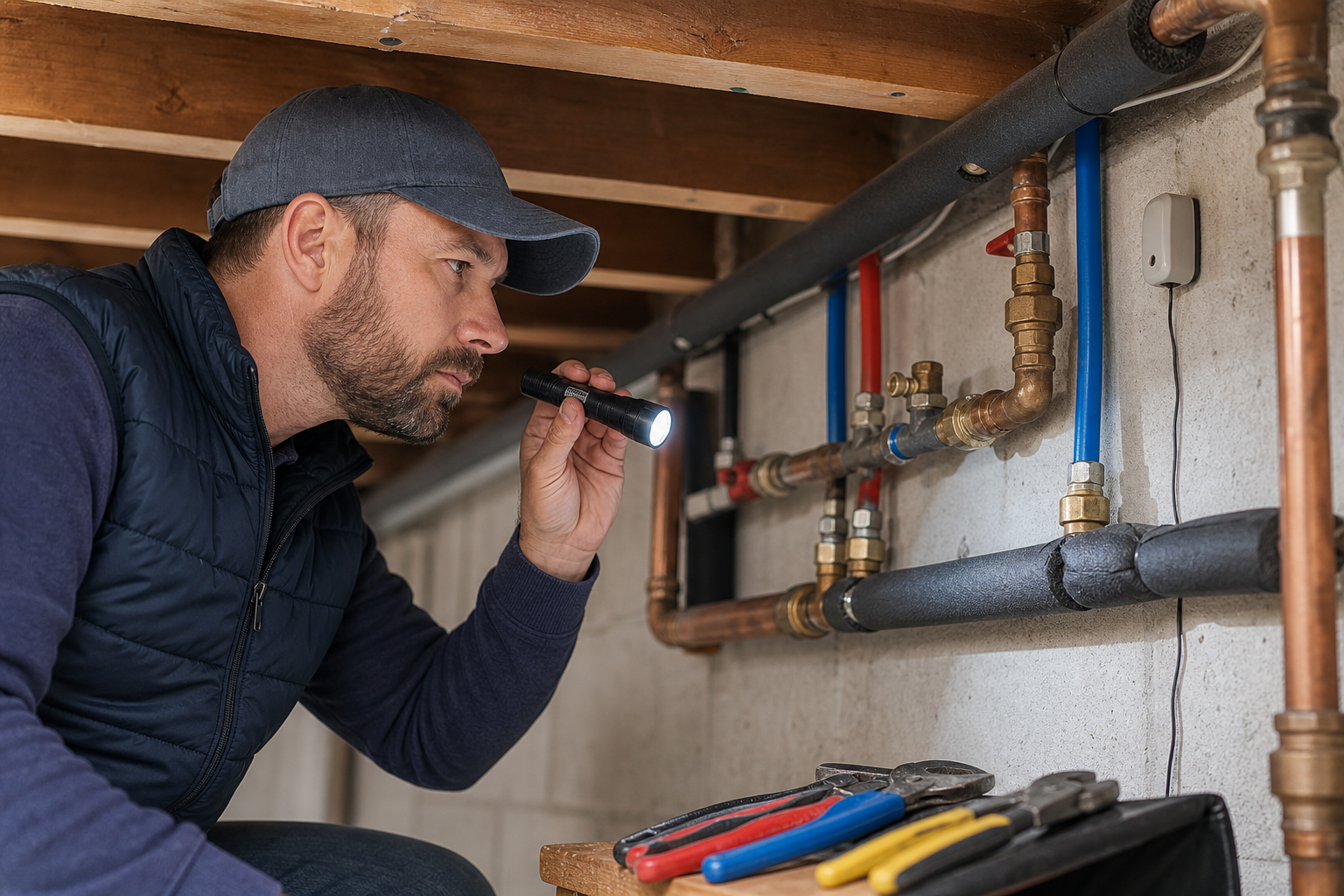
What to know about Pipe Freeze Alarms: What They Do and Where to Place Them
Pipe freeze alarms do not warm pipes or prevent every freeze; they warn when a space gets cold enough that plumbing may be at risk. Use them in basements, crawl-space access areas, garages, cabins, and near known cold spots with a clear response plan.
Alarm placement table
| Location | Good fit | Limit |
|---|---|---|
| Basement mechanical area | Early warning near exposed piping. | May miss exterior-wall branches. |
| Garage/laundry wall | Alerts near vulnerable supply lines. | Needs Wi-Fi/cellular/power plan. |
| Crawl-space entrance | Monitors accessible cold area. | Do not enter unsafe crawl spaces to place it. |
| Vacation property | Remote low-temp alert. | Needs notification testing and backup contacts. |
Buying/fit checks
- Temperature threshold, battery life, notification method, Wi-Fi/cellular dependency, and alarm volume.
- Whether it senses temperature only or also water leaks.
- Who responds if you are away.
Decision aid: Pipe Freeze Alarms: What They Do and Where to Place Them
Start by identifying the relevant symptom, fixture, or planning question before choosing parts or arranging work.
Write down when the issue began, what changed, which fixtures are affected, and any model or service-history details. That record makes it easier to compare the article with the exact product documentation and to explain the problem if qualified help is needed.
- Record the pipe or drain material, location, affected fixtures, and whether the problem is visible, concealed, or shared by several fixtures.
- Match product-specific directions to the exact model manual and confirm local requirements where installation, gas, electricity, water quality, or structural work is involved.
- Stop for sewage, a hidden or pressurized leak, a main-line problem, structural damage, or water near electricity.
Authoritative references for this topic
Use the current version of these sources to verify safety, efficiency, health, or product-specific details that apply to your situation.