Drains & Pipes
How to Prevent Frozen Pipes Safely
Prevent freeze damage with safe observation, insulation planning, draft sealing, shutoff knowledge, and clear no-flame/no-unsafe-thawing boundaries.
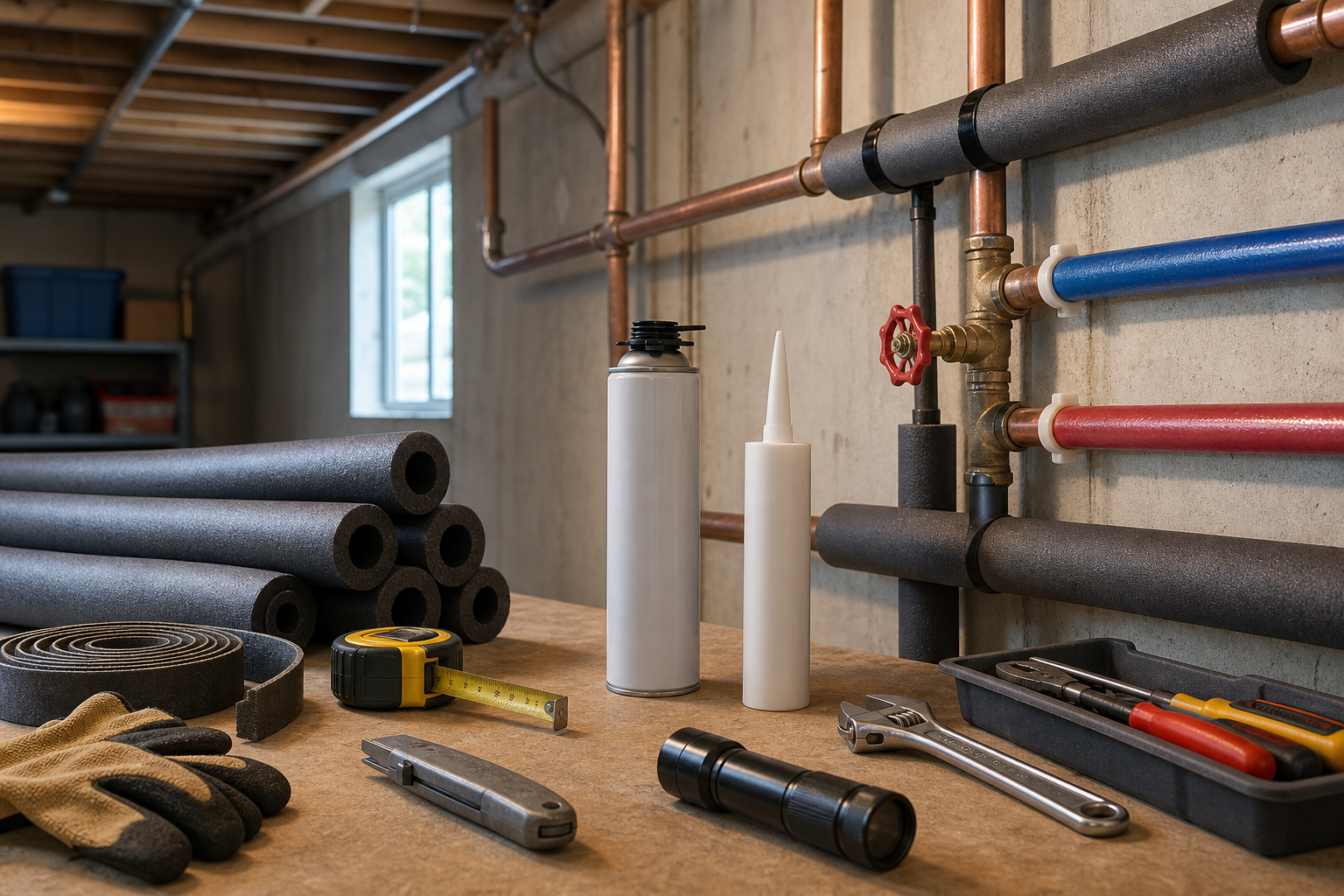
What to know about How to Prevent Frozen Pipes Safely
Prevent frozen pipes by reducing exposure before the freeze: know the main shutoff, insulate accessible pipes, seal drafts, protect exterior hose bibbs, and keep vulnerable cabinets warm. Do not use open flames, charcoal, unvented heaters, or unsafe extension cords to thaw plumbing.
Freeze-prevention checklist
| Area | What to check | Stop point |
|---|---|---|
| Exterior wall fixtures | Cabinet doors, insulation gaps, cold drafts. | Do not cut walls for insulation from this guide. |
| Crawl spaces/garages | Accessible pipe insulation and air sealing. | Do not enter unsafe crawl spaces. |
| Outdoor hose bibbs | Disconnect hoses and use covers where appropriate. | Call plumber if valve leaks or will not shut. |
| Main shutoff | Location and valve type. | Do not force stuck/corroded valves. |
If a pipe may already be frozen
Stop and call a plumber if there is no water at multiple fixtures, bulging pipe, visible split, water near wiring, or water entering walls/floors.
Decision aid: How to Prevent Frozen Pipes Safely
Start by identifying the relevant symptom, fixture, or planning question before choosing parts or arranging work.
Write down when the issue began, what changed, which fixtures are affected, and any model or service-history details. That record makes it easier to compare the article with the exact product documentation and to explain the problem if qualified help is needed.
- Record the pipe or drain material, location, affected fixtures, and whether the problem is visible, concealed, or shared by several fixtures.
- Match product-specific directions to the exact model manual and confirm local requirements where installation, gas, electricity, water quality, or structural work is involved.
- Stop for sewage, a hidden or pressurized leak, a main-line problem, structural damage, or water near electricity.
Authoritative references for this topic
Use the current version of these sources to verify safety, efficiency, health, or product-specific details that apply to your situation.