Faucet & Sink
Are Black Faucets Hard to Keep Clean? Finish-Care Checks
Black faucets can stay clean-looking with finish-specific care, but hard water, soap film, fingerprints, and cleaner compatibility matter.
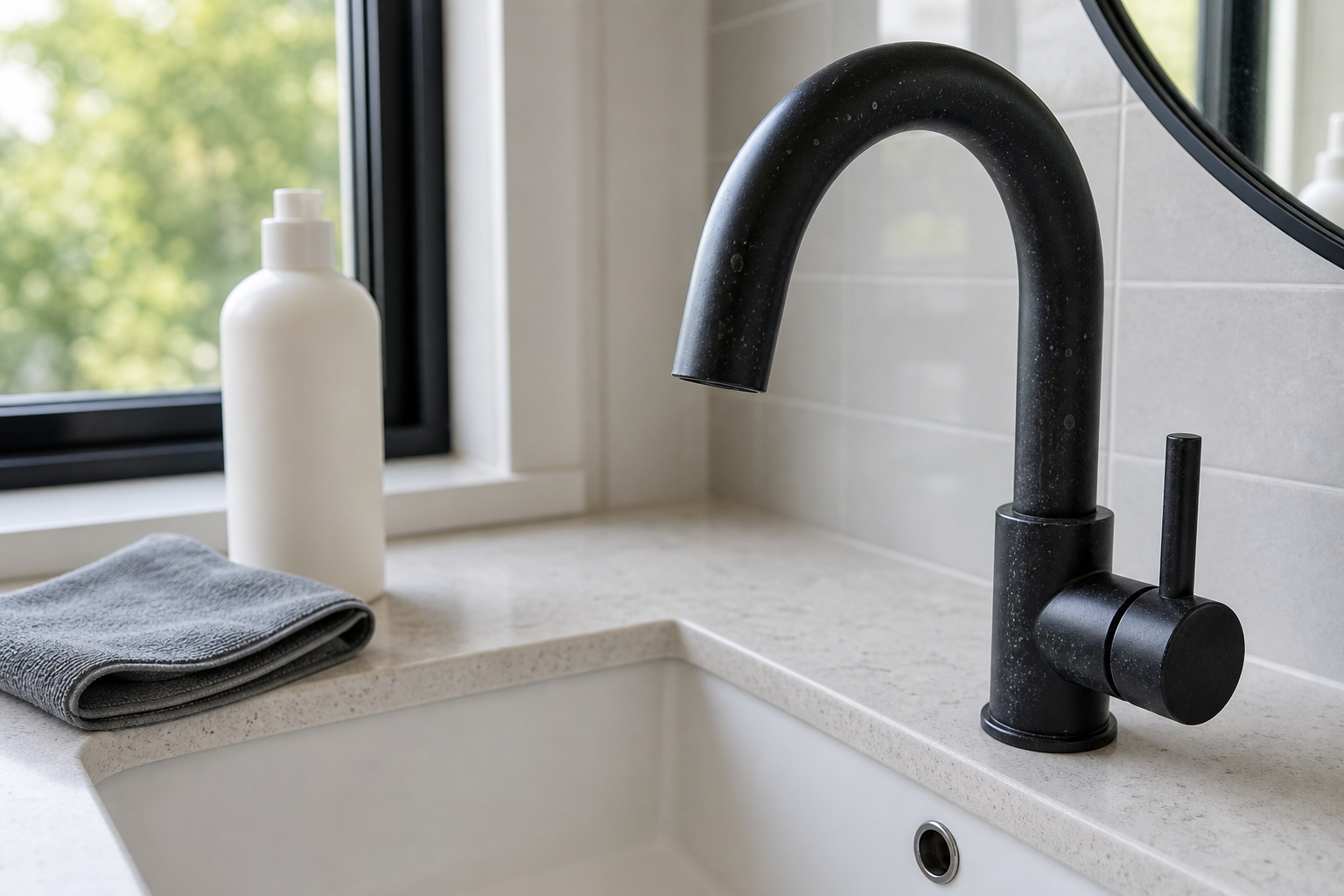
What to know about Are Black Faucets Hard to Keep Clean? Finish-Care Checks
Black faucets are not automatically hard to keep clean, but they show different problems than chrome: light mineral spots, soap film, fingerprints, towel scratches, and finish wear stand out more on matte or very dark finishes. The right care depends on the exact finish—matte black, glossy black, oil-rubbed bronze, powder-coated, plated, or PVD-style coating—and the manufacturer’s warranty language.
Finish types and what they show
| Finish | What usually shows | Care implication |
|---|---|---|
| Matte black | Light hard-water spots, soap film, fingerprints, lint from towels | Use soft cloths and mild soap; dry after use if water is hard. |
| Glossy black | Fingerprints, streaks, polishing swirls, cleaner residue | Use non-abrasive microfiber and rinse well; avoid rough pads. |
| Oil-rubbed bronze | Intentional color variation, worn highlights, mineral spotting | Do not treat every color change as damage; check the care sheet. |
| Powder-coated or painted finish | Chips or scratches can expose a lighter layer | Avoid abrasives and metal tools; photograph damage before warranty contact. |
| PVD / plated dark finish | Often more durable, but still cleaner-sensitive | Follow the brand’s approved-cleaner list and warranty exclusions. |
Cleaner compatibility table
| Cleaner or tool | Usually safer use | Avoid or verify first |
|---|---|---|
| Mild dish soap and warm water | Good first cleaner for most finishes | Do not leave soap film to dry on matte finishes. |
| White vinegar / acidic descaler | Only if the faucet maker allows it and only diluted/briefly | Many finish warranties warn against acids or soaking. |
| Bleach, ammonia, drain cleaner, toilet cleaner | Not appropriate for faucet finish care | Can stain, etch, discolor, or void finish warranties. |
| Magic eraser / abrasive pad | Avoid on dark decorative finishes | Can dull matte finishes or create shiny spots. |
| Microfiber cloth | Good for drying and fingerprints | Use clean cloths; grit trapped in a cloth can scratch. |
Hard water, fingerprints, and soap film
Hard water is the main reason black faucets look difficult. Minerals dry as pale dots on the spout, handle, base, and aerator. Fingerprints are usually worse on glossy black; soap film is usually more visible on matte black. A practical routine is to rinse splash zones, wipe with a soft damp cloth, then dry the faucet base and handle after heavy use.
What to do if the finish is peeling or scratched
Do not scrub harder. Take close photos in good light, note the faucet brand/model, check the installation date or receipt, and review the finish-warranty exclusions before contacting the manufacturer. Peeling, bubbling, bare metal, or finish flaking is different from water spots and may need a warranty claim or replacement part rather than cleaning.
Bring this information before buying or requesting support
- Finish name from the box/spec sheet, not just “black faucet.”
- Water hardness context: city water report, well water, softener status, or repeated scale on aerators.
- Photos of the spout, handle, base, drain trim, and any scratched/peeling area.
- Care-sheet language from Delta, Moen, Kohler, Pfister, American Standard, or the exact brand.
- Whether the faucet is bathroom, kitchen, pull-down, touchless, or filtered-water style.
Common mistakes
- Using toilet bowl cleaner, limescale remover, bleach, or abrasive pads because the spots look like scale.
- Soaking the faucet or wrapping it in vinegar without checking the finish warranty.
- Scrubbing dark drain trim with the same tool used for porcelain or tile.
- Assuming oil-rubbed bronze and matte black need the same care routine.
Related next steps
For fit and maintenance context, compare the faucet aerator guide, hard-water faucet guide, sink material-care guides, and finish-selection pages before choosing replacement parts or cleaners.
What to bring to the store or manufacturer support
- Photo of the faucet finish in natural light and under task lighting.
- Brand, model, receipt, and warranty/care-sheet language if available.
- Photo of nearby cleaner bottles already used on the finish.
- Local water-hardness or utility water-quality link if mineral spots are the main complaint.
What this guide does not cover
This guide does not rank black faucet brands, promise a finish will not spot, or recommend acidic cleaners for decorative finishes. If the coating is peeling, bubbling, or changing color, treat it as a warranty/manufacturer-support question rather than a cleaning problem.
Decision aid: Are Black Faucets Hard to Keep Clean? Finish-Care Checks
Start by identifying the relevant symptom, fixture, or planning question before choosing parts or arranging work.
Write down when the issue began, what changed, which fixtures are affected, and any model or service-history details. That record makes it easier to compare the article with the exact product documentation and to explain the problem if qualified help is needed.
- Separate a faucet or supply symptom from a drain symptom, and note whether it affects hot water, cold water, or both.
- Match product-specific directions to the exact model manual and confirm local requirements where installation, gas, electricity, water quality, or structural work is involved.
- Stop if water reaches a cabinet, wall, floor, or electrical part, or if a shutoff or fixture starts to move when it should not.
Authoritative references for this topic
Use the current version of these sources to verify safety, efficiency, health, or product-specific details that apply to your situation.