Faucet & Sink
Necklace in the Sink Drain: Safe Retrieval Before Disassembly
If jewelry falls into a sink drain, stop running water, protect the area, and decide whether it is visible, in the stopper, or likely in the trap.
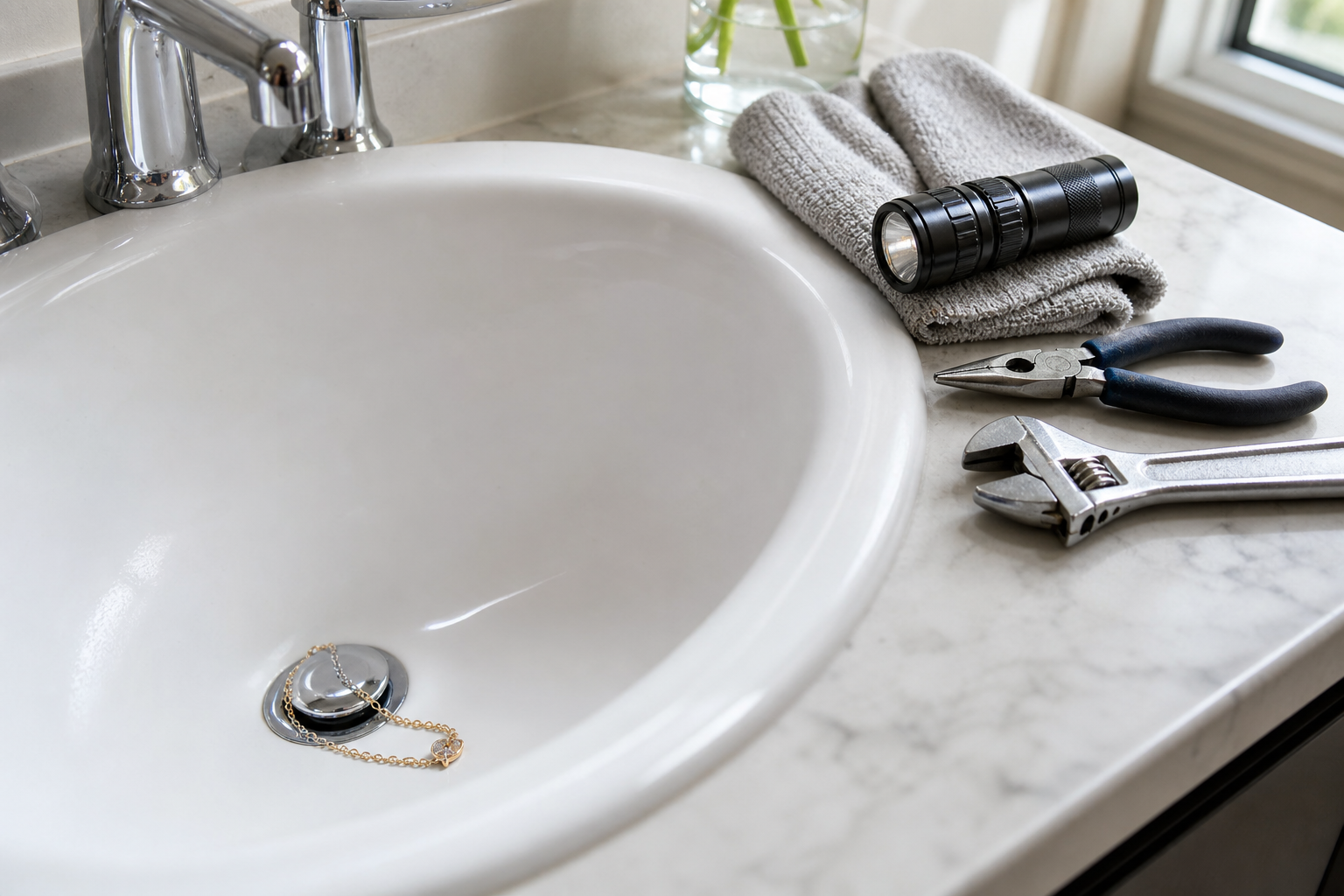
What to know about Necklace in the Sink Drain: Safe Retrieval Before Disassembly
If a necklace falls into a sink drain, stop running water immediately and do not pour chemicals. If the necklace is visible at the drain opening, retrieve it gently; if it is not visible, it may be caught in the stopper or trap and may need careful disassembly or a plumber.
Jewelry retrieval table
| Situation | Safe action | Risk boundary |
|---|---|---|
| Necklace visible | Use plastic tweezers/grabber carefully. | Do not push it deeper. |
| Stopper catches chain | Photograph stopper type first. | Stop if linkage is hidden. |
| Not visible but water not run | It may be in trap. | Use bucket/parts caution or call plumber. |
| Chemicals already added | Avoid contact. | Tell plumber product and time used. |
What to photograph
Drain opening, stopper style, under-sink trap layout, jewelry type/value, and whether water has been run.
Fixture, drain, and finish boundary
Decision aid: Necklace in the Sink Drain: Safe Retrieval Before Disassembly
Start by identifying the relevant symptom, fixture, or planning question before choosing parts or arranging work.
Write down when the issue began, what changed, which fixtures are affected, and any model or service-history details. That record makes it easier to compare the article with the exact product documentation and to explain the problem if qualified help is needed.
- Separate a faucet or supply symptom from a drain symptom, and note whether it affects hot water, cold water, or both.
- Match product-specific directions to the exact model manual and confirm local requirements where installation, gas, electricity, water quality, or structural work is involved.
- Stop if water reaches a cabinet, wall, floor, or electrical part, or if a shutoff or fixture starts to move when it should not.
Authoritative references for this topic
Use the current version of these sources to verify safety, efficiency, health, or product-specific details that apply to your situation.