Bathtub & Shower
Leaking Shower Drain: What to Observe Before Repair
A leaking shower drain can involve seals, pans, tile, or plumbing below; observe location and damage before any repair decision.
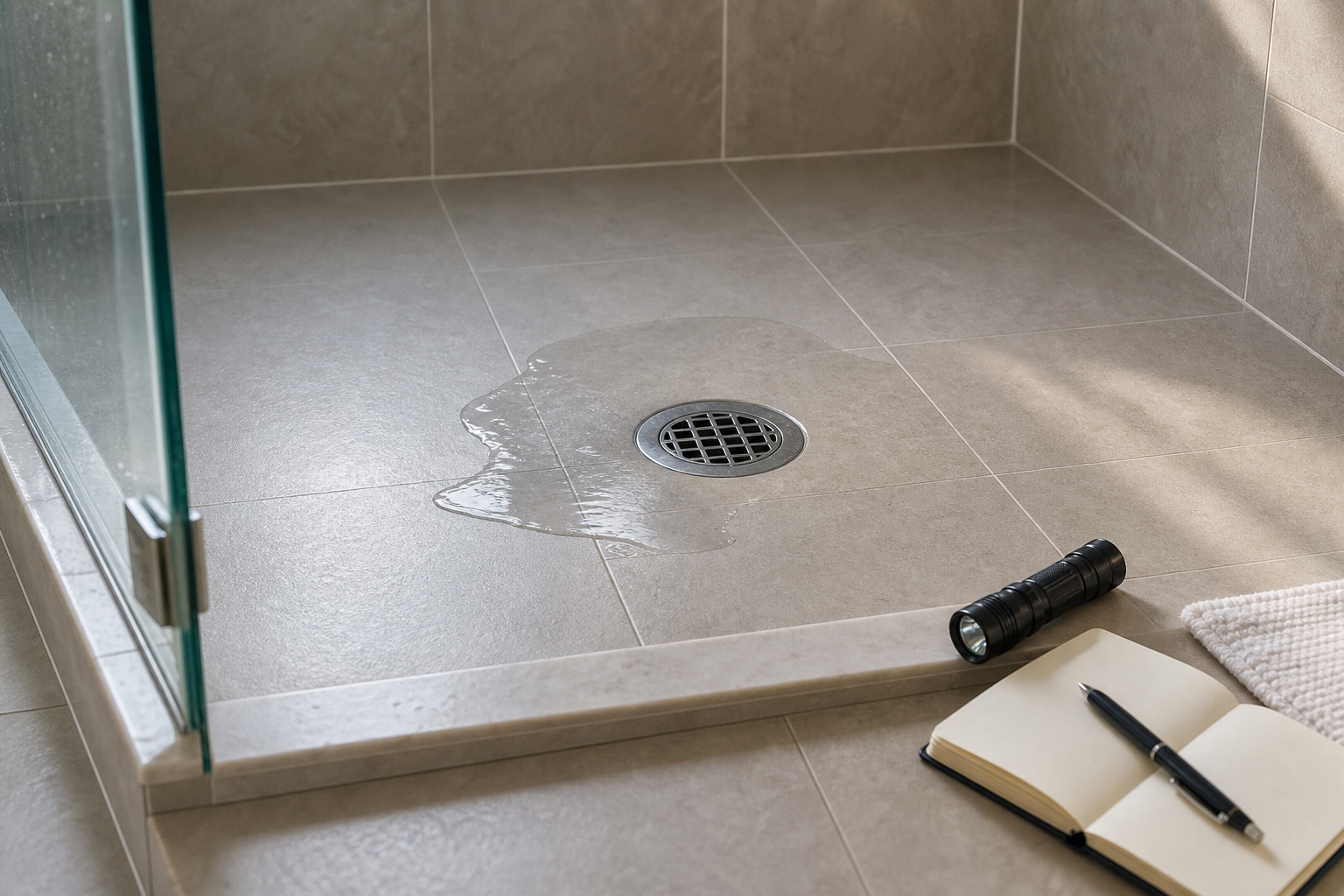
Find the leak before choosing a repair
Water below a shower can originate at the drain assembly, pan, plumbing, curb or door. A ceiling stain may appear away from the source. Stop using the shower if water is spreading, and do not reseal the drain merely because the stain is below it.
Document the evidence
- Photograph the dry drain, curb and surrounding wall, and the safely visible stain below. Note whether moisture appears during shower use, after water reaches the door, or while another fixture drains.
- Do not repeatedly run water to reproduce damage. Avoid sagging ceilings, soft floors and wet electrical equipment.
- Ask a plumber to assess the drain and supply, and a qualified shower waterproofing professional to assess the pan, curb and tile assembly as needed. A reliable repair depends on locating the leak and restoring the affected waterproofing, not adding caulk over an unknown fault.
Do not unscrew the drain body, cut the ceiling or disturb a pan from this general guide. EPA advises fixing moisture sources and drying affected materials; water-damaged porous materials may need evaluation or removal. If sewage backs up, stop using water and avoid contact.
Sources
- EPA: A Brief Guide to Mold, Moisture and Your Home — repair leaks and dry affected materials; accessed October 27, 2026.
- Roxborough Water and Sanitation District: Avoid Sewer Backups — stop-water guidance for sewage backup; accessed October 27, 2026.
- Schluter: Shower System — example of an integrated drain and waterproofing assembly; accessed October 27, 2026.
- EPA: Moisture Control Guidance for Building Design, Construction and Maintenance — water can travel along framing away from a plumbing leak; accessed October 27, 2026.