Bathtub & Shower
How to Shave Without Clogging a Shower Drain
Reduce shaving-related shower clogs with hair capture, drain-cover cleaning, and chemical-free stop points.
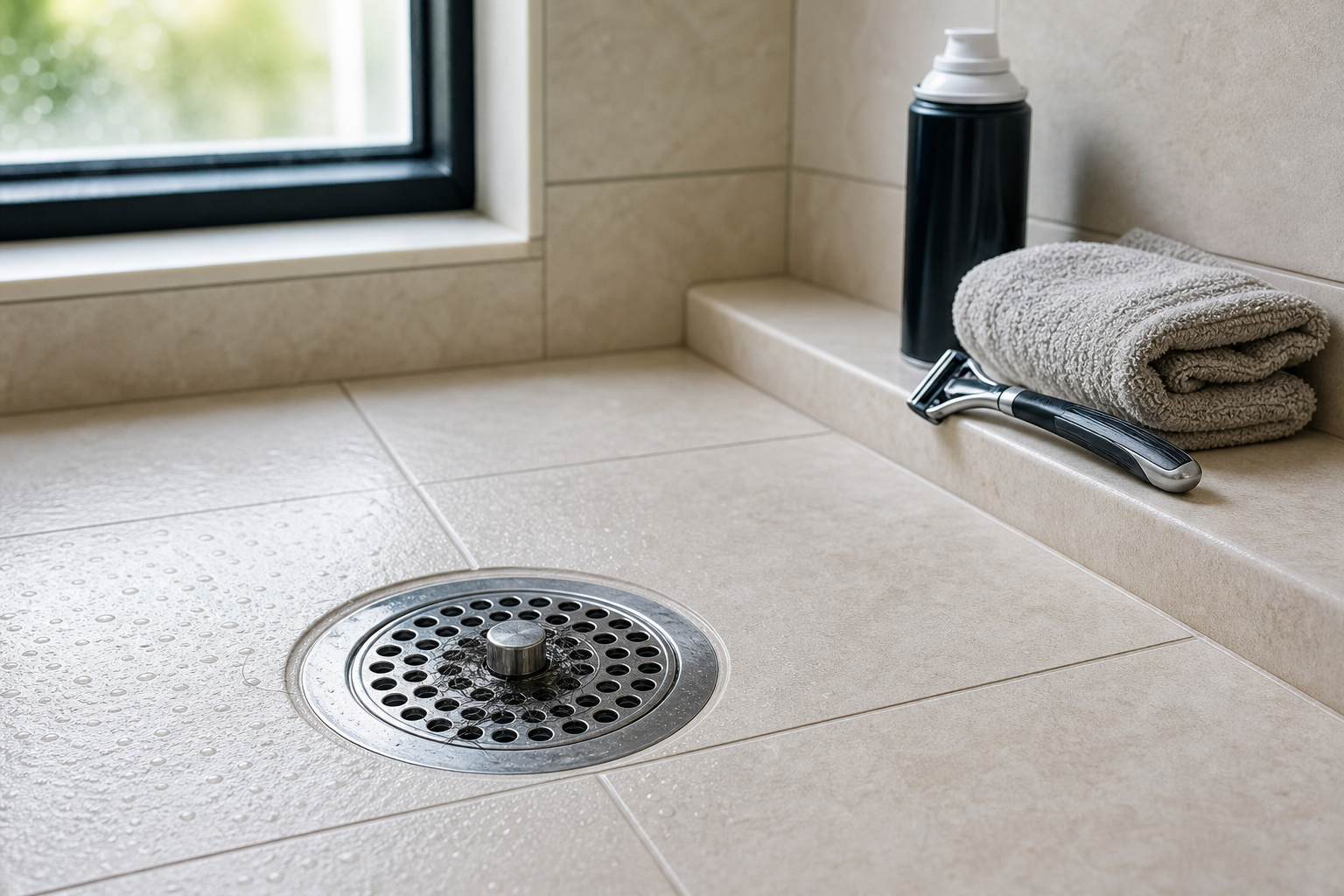
Catch hair before it enters the drain
Place a removable hair catcher or fine screen over the shower drain before shaving, provided it fits the drain and allows water to pass. Collect loose hair from the catcher after each use and put it in the trash. The City of Bismarck recommends a fine drain screen and disposal of collected hair in the trash. No catcher traps every short clipping, so clean it regularly and watch how the shower drains.
For a larger amount of hair, trim over a dry towel or wastebasket before showering if practical, then put the clippings in the trash. Avoid rinsing piles of hair down the drain. Keep the catcher stable so it does not create a slipping hazard or obstruct drainage.
Clean the catcher and visible cover
- Let the water drain and lift the removable catcher; do not force a fixed drain cover.
- Use a tissue or gloved hand to remove the hair and discard it. Rinse or wash the catcher according to its instructions and replace it securely.
- Wipe accessible soap film from the cover with a soft cloth and a cleaner suitable for the finish. Never mix cleaning products.
Recognize a bigger drain problem
For an already blocked fixture, see standing-water drain checks. Hair collection can reduce one source of buildup, but it cannot correct a blockage farther down the line. If water stands or drains increasingly slowly, stop adding water and investigate. If the shower backs up along with another fixture, gurgles, smells of sewage, or a drain chemical has already been used, call a plumber and tell them about any chemical. Do not plunge into chemical-laden water.
Source for prevention
- City of Bismarck — What Not to Flush — recommends a fine screen for bath and shower hair and disposal in the trash; accessed October 27, 2026.
Stop if trim movement affects piping in the wall, waterproofing is damaged, or water appears outside the bathing area.