Bathtub & Shower
Low-Flow Showerheads: Benefits, Limits, and Fit Checks
Low-flow showerheads can reduce fixture flow when the label and fit match the home, but low pressure may indicate a plumbing issue rather than a showerhead upgrade.
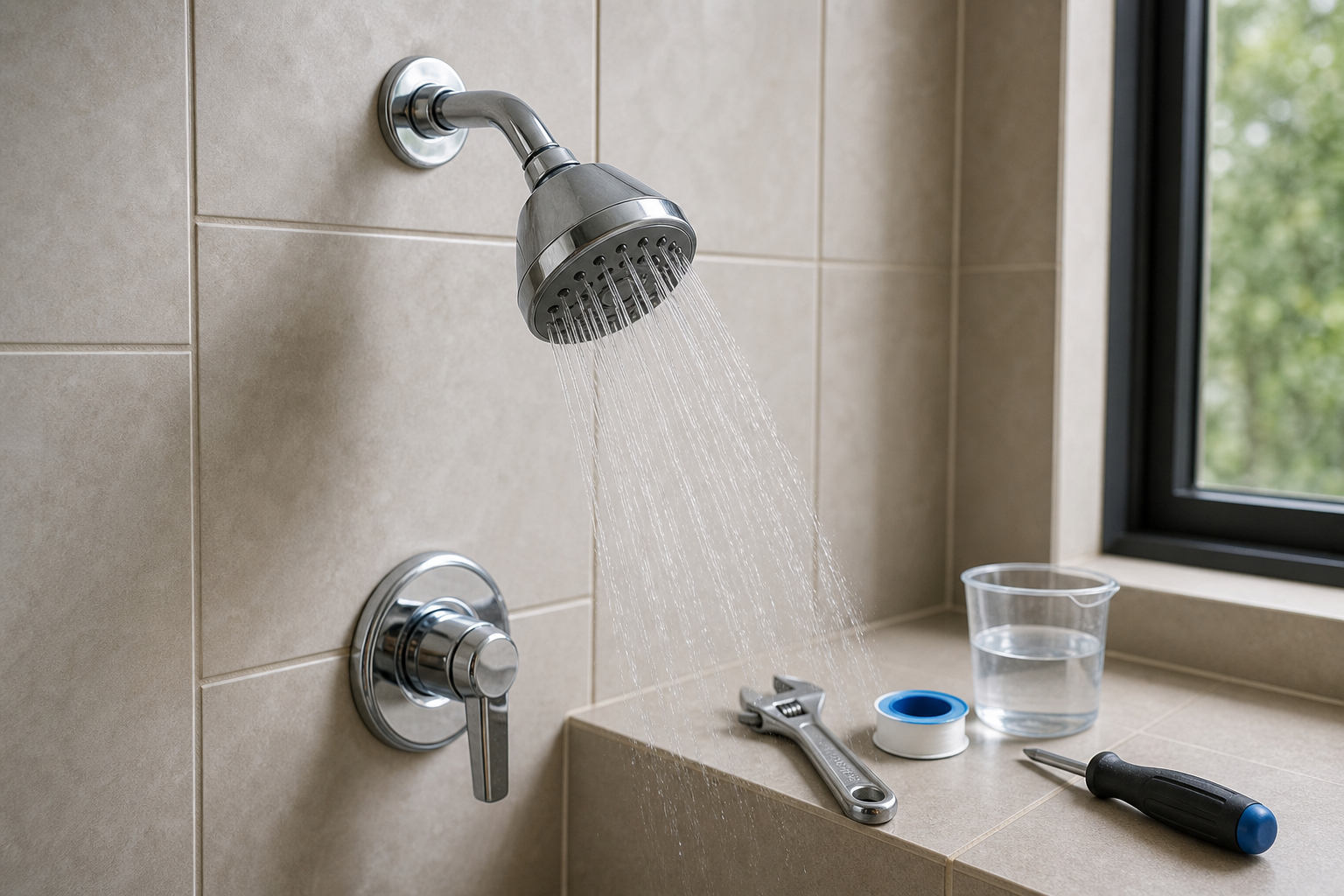
What to know about Low-Flow Showerheads: Benefits, Limits, and Fit Checks
A low-flow showerhead can be a good fit when the WaterSense label or manufacturer spec matches your comfort needs and the home has normal pressure. If every fixture suddenly has low flow, replacing the showerhead is not a diagnosis.
WaterSense label explanation
The WaterSense label is used for products that meet EPA criteria for water efficiency and performance in the labeled category. For showerheads, use the label and current product specification to confirm rated flow rather than vague eco marketing.
Benefits, limits, and fit checks
| Question | Why it matters | Safe check |
|---|---|---|
| Is the current showerhead scaled? | A dirty screen can mimic low pressure. | Inspect only removable screen if manufacturer allows. |
| Is low flow only at one shower? | May be showerhead, valve, cartridge, or branch issue. | Compare nearby sink and other showers. |
| Is low flow housewide or sudden? | May involve main valve, regulator, supply, or municipal work. | Call a plumber or utility before swapping parts. |
| Fixed, handheld, or rain-style? | Spray comfort changes with pattern and height. | Check hose length, bracket angle, ceiling/arm clearance, and reach. |
Thread and arm compatibility checklist
- Confirm existing shower arm condition before turning anything.
- Do not force a corroded showerhead or twist the shower arm in the wall.
- Check whether the new head needs a washer, manufacturer flow restrictor, or specific tape guidance.
- Stop if the arm loosens, leaks at the wall, or valve/trim moves.
When low pressure is not a showerhead issue
Low flow at multiple fixtures, hot-only/cold-only problems, banging pipes, discoloration, or symptoms after plumbing work are diagnostic clues for a plumber, not a showerhead shopping problem.
Low-flow decision table
| Goal | What to compare | Stop point |
|---|---|---|
| Lower water use | WaterSense label, rated flow, spray pattern, and local pressure. | Do not remove required flow controls if prohibited by law or product design. |
| Improve weak shower feel | Check if the issue is showerhead clogging, house pressure, valve, or hot-water capacity. | Call a plumber for whole-home pressure or temperature swings. |
| Reduce hot-water demand | Fixture flow, shower length, heater recovery, and household schedule. | Do not adjust heater temperature unsafely to compensate. |
How to decide whether a low-flow showerhead fits the problem
A low-flow showerhead is a water-use decision, not a cure-all for poor shower performance. If the goal is lower water use, compare labeled flow rate, WaterSense status, spray pattern, cleanability, and user comfort. If the problem is weak flow, diagnose the context first: the existing showerhead may be clogged with scale, the valve may be restricted, the whole home may have pressure issues, or the water heater may be running out of hot water. Replacing the head can help comfort in some cases, but it will not fix whole-home pressure loss, a failing mixing valve, undersized plumbing, or hot-water recovery limits.
Before buying, document the current showerhead flow rate if known, whether other fixtures have weak flow, whether hot and cold behave differently, and whether the shower arm or finish is corroded. Avoid tools that could twist a shower arm hidden in the wall, and do not remove flow controls if doing so violates the product design or requirements adopted by the local authority having jurisdiction. In homes with tankless heaters, recirculation systems, pressure-balancing valves, or very low household pressure, changing flow can affect comfort in ways that deserve installer guidance. A good final choice balances water savings, comfort, cleaning needs, warranty support, and compatibility with the existing valve and heater rather than simply picking the highest-pressure marketing claim.
Decision aid: Low-Flow Showerheads: Benefits, Limits, and Fit Checks
Start by identifying the relevant symptom, fixture, or planning question before choosing parts or arranging work.
Write down when the issue began, what changed, which fixtures are affected, and any model or service-history details. That record makes it easier to compare the article with the exact product documentation and to explain the problem if qualified help is needed.
- Note whether the problem is at the trim, spout, showerhead, drain, valve, wall, or ceiling below before choosing a remedy.
- Match product-specific directions to the exact model manual and confirm local requirements where installation, gas, electricity, water quality, or structural work is involved.
- Stop if trim movement affects piping in the wall, waterproofing is damaged, or water appears outside the bathing area.
Authoritative references for this topic
Use the current version of these sources to verify safety, efficiency, health, or product-specific details that apply to your situation.