Water Quality
Smart Home Plumbing Solutions: Leak Alerts, Shutoffs, and Safe Planning
Smart plumbing products can alert you to leaks or shut off water, but compatibility, power, Wi-Fi, valve access, and manual overrides matter.
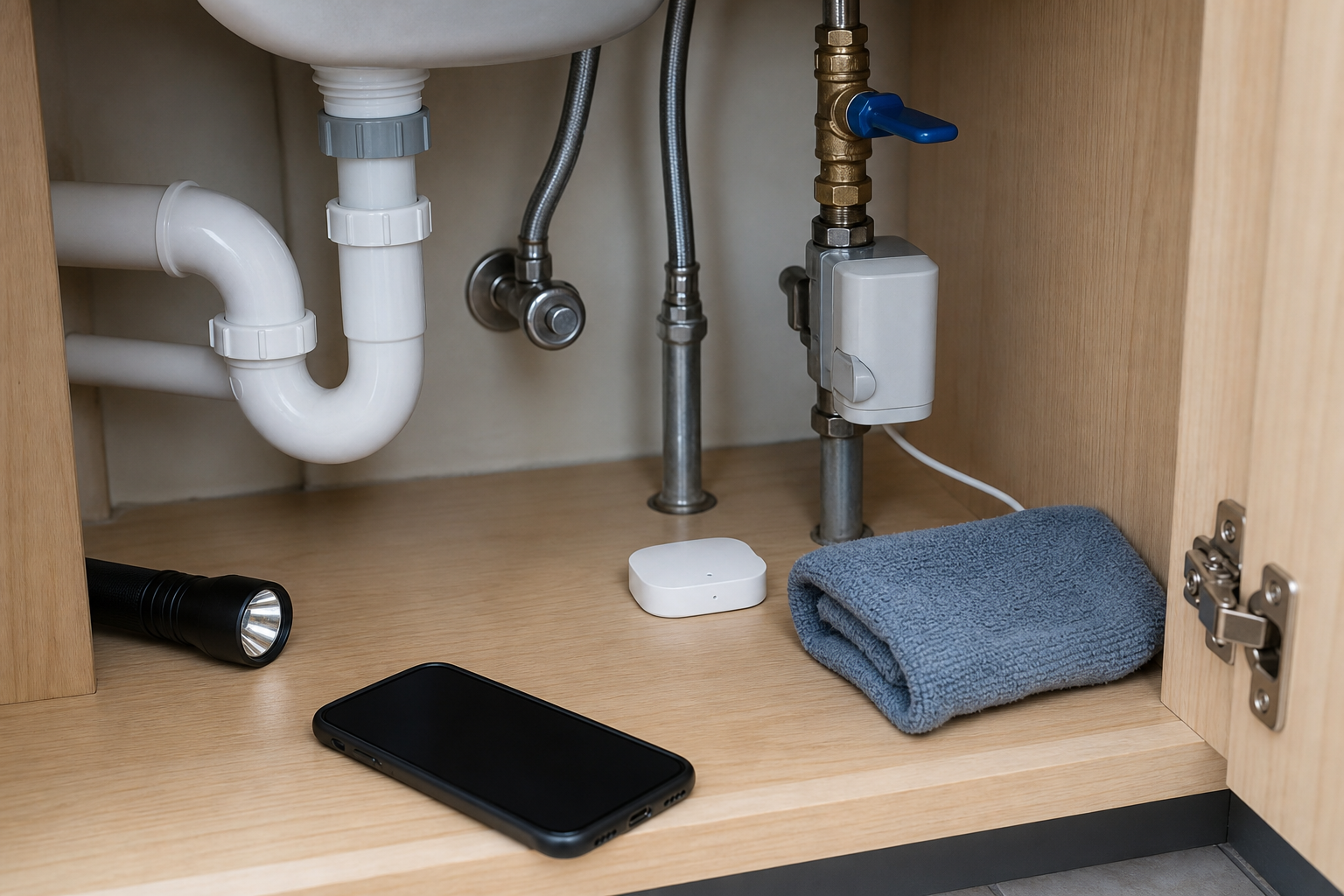
What to know about Smart Home Plumbing Solutions: Leak Alerts, Shutoffs, and Safe Planning
Smart plumbing devices range from simple leak sensors to automatic shutoff valves and flow monitors. The safest first step is identifying the problem you want solved, valve access, power/Wi-Fi, app support, manual override, and whether a plumber is needed.
Signs and safe next steps
| Question or clue | Why it matters | Safe next step |
|---|---|---|
| Under-sink leak sensor | Local alert only | Place near risk points |
| Whole-home shutoff valve | Can stop water automatically | Check pipe/valve compatibility |
| Flow monitor | Usage/leak insight | Compare utility meter data |
| No accessible main valve | Install complexity | Call plumber |
Installation boundary
Leak sensors are usually homeowner-placeable, but automatic shutoff valves, powered devices near water, smart toilets, pumps, and hardwired controls may require a plumber or electrician. Do not weaken backflow, pressure, or water-heater safety devices to add smart equipment.
Important context
This topic may involve drinking-water safety, treatment equipment, pressure systems, local requirements, or water-heater risk. Limit homeowner action to observation, documentation, certified testing where appropriate, and planning. Ask a licensed plumber, certified water-treatment professional, local health authority, or applicable code official to confirm the requirements before work begins.
Decision aid: Smart Home Plumbing Solutions: Leak Alerts, Shutoffs, and Safe Planning
Start by identifying the relevant symptom, fixture, or planning question before choosing parts or arranging work.
Write down when the issue began, what changed, which fixtures are affected, and any model or service-history details. That record makes it easier to compare the article with the exact product documentation and to explain the problem if qualified help is needed.
- Identify the water source, affected fixtures, timing, color or odor, recent plumbing work, and whether anyone may drink the water.
- Match product-specific directions to the exact model manual and confirm local requirements where installation, gas, electricity, water quality, or structural work is involved.
- Stop relying on appearance alone when drinking-water safety, a private well, lead, bacteria, or chemical contamination may be involved.
Authoritative references for this topic
Use the current version of these sources to verify safety, efficiency, health, or product-specific details that apply to your situation.