Water Quality
Water Softener Maintenance Checks for Homeowners
Observe salt level, salt bridges, bypass position, regeneration display, drain discharge, and water-quality changes without changing treatment chemistry blindly.
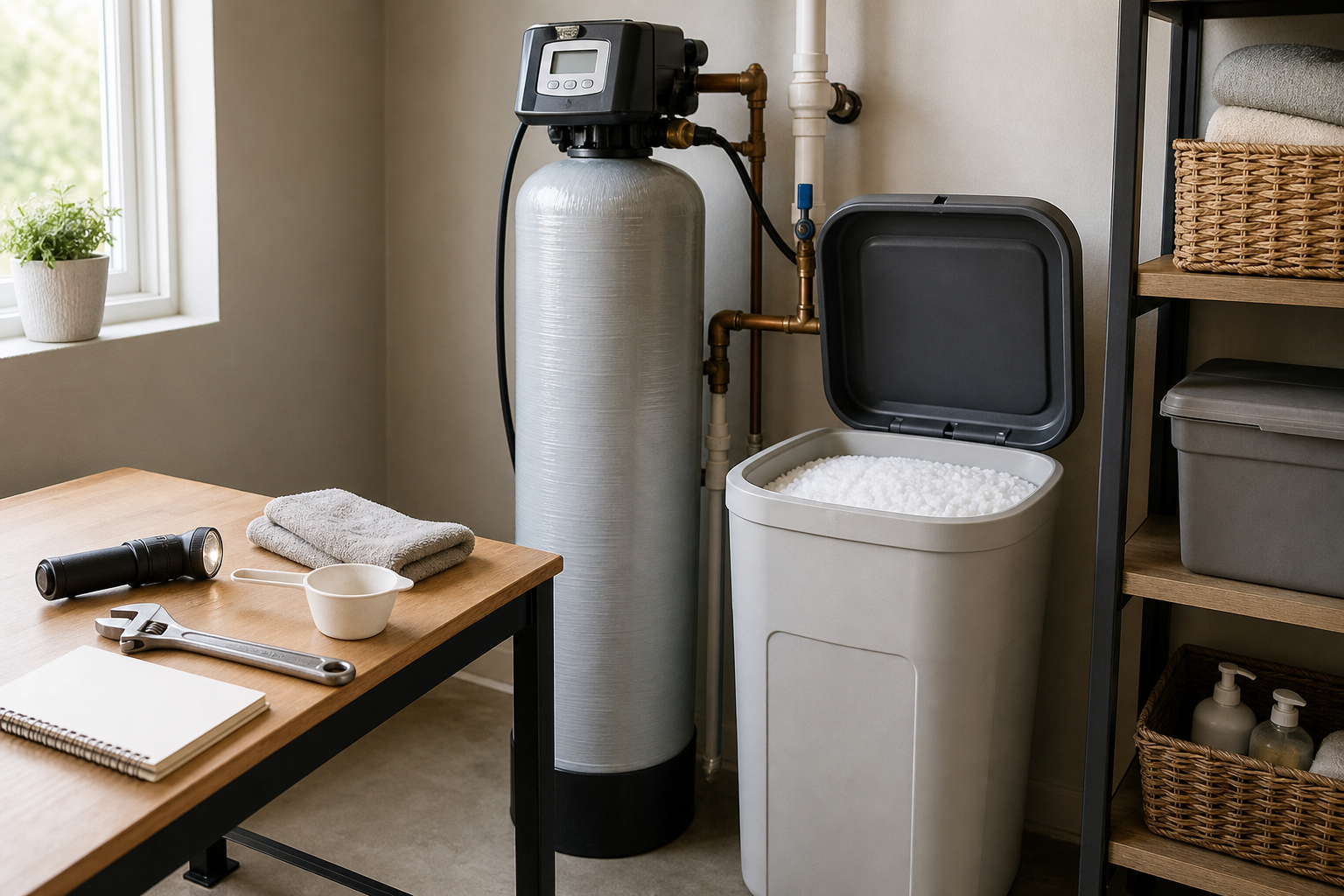
What to know about Water Softener Maintenance Checks for Homeowners
Water-softener maintenance is mostly observation: confirm brine-tank salt type and level, check for a salt bridge, note bypass position, read the regeneration display, and watch the drain/discharge area. Do not change treatment chemistry from a generic article.
What to observe
| Area | What to look for | Why it matters |
|---|---|---|
| Brine tank | Salt level, crusting, mushy salt, standing water above normal. | Salt condition affects regeneration. |
| Salt bridge | Hard crust with hollow space below. | Tank may look full while unit cannot make brine. |
| Bypass valve | Service vs bypass position. | A unit in bypass will not soften water. |
| Regeneration display | Error codes, clock, salt alert, cycle status. | Displays require owner manual. |
| Drain/discharge | Leaks, kinks, unusual discharge, missing air gap where required. | Drain problems can create damage or code issues. |
Water-quality and health caveats
Private wells, taste/odor concerns, iron, manganese, sulfur odor, bacteria indicators, sodium-sensitive diets, and drinking-water treatment require testing and qualified guidance. Do not adjust regeneration frequency, salt dose, chemical feeders, or treatment settings without the exact model-specific installation document and water-quality data.
NSF/ANSI certification note
If a device mentions NSF/ANSI certification, confirm exact standard, model, contaminant-reduction claim, and listing. Certification is model- and claim-specific.
What to photograph before service
- Brand/model/serial label and control display.
- Bypass valve position and plumbing connections.
- Brine tank salt condition and water level.
- Error codes, drain line routing, and leak marks.
Sources for this guide
Decision aid: Water Softener Maintenance Checks for Homeowners
Start by identifying the relevant symptom, fixture, or planning question before choosing parts or arranging work.
Write down when the issue began, what changed, which fixtures are affected, and any model or service-history details. That record makes it easier to compare the article with the exact product documentation and to explain the problem if qualified help is needed.
- Identify the water source, affected fixtures, timing, color or odor, recent plumbing work, and whether anyone may drink the water.
- Match product-specific directions to the exact model manual and confirm local requirements where installation, gas, electricity, water quality, or structural work is involved.
- Stop relying on appearance alone when drinking-water safety, a private well, lead, bacteria, or chemical contamination may be involved.
Authoritative references for this topic
Use the current version of these sources to verify safety, efficiency, health, or product-specific details that apply to your situation.