Water Quality
Tap Water Quality and Plumbing: What Homeowners Should Watch
Water quality affects stains, scale, corrosion, odor, filters, softeners, and fixture life; use testing and utility reports rather than guesses.
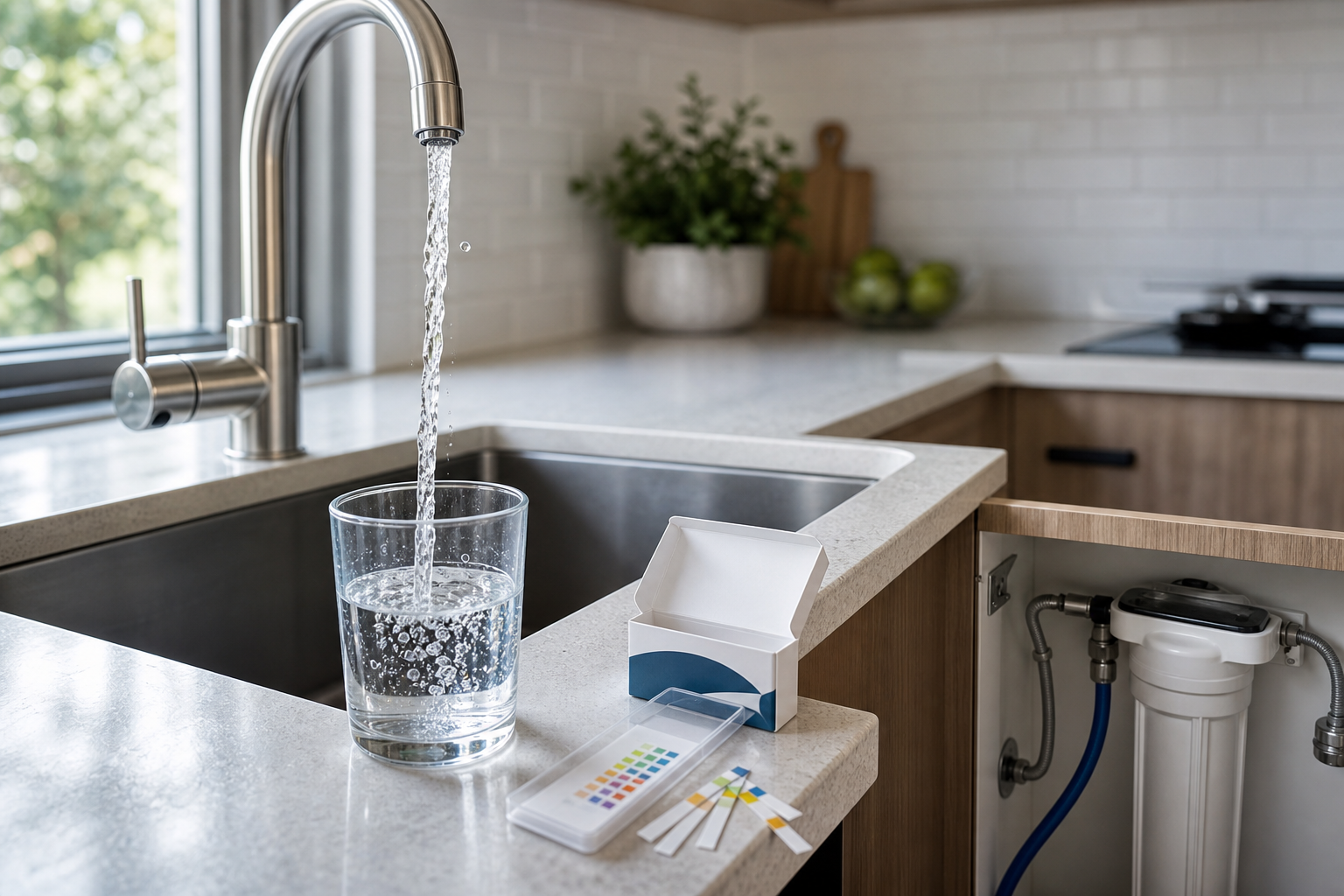
What to know about Tap Water Quality and Plumbing: What Homeowners Should Watch
Tap water quality can affect scale, corrosion, staining, odor, taste, filters, softeners, fixtures, and pipe life. Use utility reports, certified lab tests, and manufacturer limits instead of guessing from stains alone.
Signs and safe next steps
| Clue | What it can mean | Safe next step |
|---|---|---|
| White scale | Hardness/minerals | Check utility report or test |
| Blue-green stains | Copper corrosion clue | Test pH/corrosivity |
| Rotten-egg odor | Sulfur/water-heater/well clue | Separate hot/cold and test |
| Black/orange staining | Manganese/iron/sediment possible | Use lab or utility guidance |
Tap-water impact table
| Finding or symptom | Plumbing relevance | Safe next step |
|---|---|---|
| Hardness, scale, or white deposits | Can affect fixtures, valves, heaters, and cleaning frequency. | Compare utility report or test result with fixture symptoms before choosing treatment. |
| Lead, bacteria, nitrate, arsenic, or unusual odor/color | Moves the topic from maintenance into health and testing. | Use certified lab or local utility/health guidance; do not rely on appearance alone. |
| Corrosion or blue/green staining | May indicate water chemistry or pipe-material issues. | Document materials and call a qualified plumber or water professional. |
Tap-water sources and limits
For tap-water quality, do not diagnose drinking-water safety from taste, color, or plumbing symptoms alone. Use the local Consumer Confidence Report where available, ask the utility about recent main work or advisories, and use a certified laboratory for private-well or in-home contaminant questions. Plumbing symptoms such as staining, scale, odors, corrosion, or sediment can suggest what to document, but they do not replace water testing or local health guidance.
How to connect water-quality clues to plumbing without overdiagnosing
Start with whether the water is supplied by a public utility, a private well, a shared well, a cistern, or another source. For public water, the Consumer Confidence Report and utility notices are the first context; for private wells, household testing and local health guidance carry more weight because there is no routine utility report. Then separate health questions from plumbing-maintenance clues. Scale, white spots, and mineral crust usually point toward hardness or evaporation deposits, but they do not prove the water is unsafe. Blue-green staining can suggest copper corrosion or water chemistry issues, but the right response is documentation and testing, not a guessed treatment device. Rotten-egg, fuel, chemical, sewage, or musty odors should be treated as stop-and-check signals because the source may be fixture-specific, water-heater-related, well-related, or drain-related.
For plumbing impact, collect the pattern before choosing equipment: which fixtures show symptoms, whether hot and cold water differ, whether the issue appears after water sits, whether filters were recently changed, and whether neighbors or the utility report the same condition. A useful plumber or water-treatment visit starts with photos, dates, test results, the home’s pipe materials, water-heater age, and a list of affected fixtures. Avoid buying a filter, softener, neutralizer, or chemical feeder just because one symptom resembles a common problem. Treatment should match a measured contaminant or water-chemistry issue and should preserve code, warranty, backflow, maintenance, and drinking-water safety requirements.
What to bring to a water-quality professional
Bring the utility report or lab report, photos of staining or deposits, the fixture list, pipe-material clues, filter model numbers, water-heater age, and a timeline of when the symptom began. If the concern is health-related, include who uses the water, whether infants or medically vulnerable people are present, and whether any boil-water notice, flood, main break, or well repair occurred. Ask the professional to explain which result supports each recommendation, what standard or certification applies to any device, what maintenance is required, and what retesting schedule proves the treatment is still working.
Decision aid: Tap Water Quality and Plumbing: What Homeowners Should Watch
Start by identifying the relevant symptom, fixture, or planning question before choosing parts or arranging work.
Write down when the issue began, what changed, which fixtures are affected, and any model or service-history details. That record makes it easier to compare the article with the exact product documentation and to explain the problem if qualified help is needed.
- Identify the water source, affected fixtures, timing, color or odor, recent plumbing work, and whether anyone may drink the water.
- Match product-specific directions to the exact model manual and confirm local requirements where installation, gas, electricity, water quality, or structural work is involved.
- Stop relying on appearance alone when drinking-water safety, a private well, lead, bacteria, or chemical contamination may be involved.
Authoritative references for this topic
Use the current version of these sources to verify safety, efficiency, health, or product-specific details that apply to your situation.