Water Quality
Water-Saving Plumbing Devices: What Helps and What to Skip
Compare aerators, showerheads, toilet repair parts, leak sensors, and smart shutoff valves by fit, source support, installation risk, and rebate eligibility.
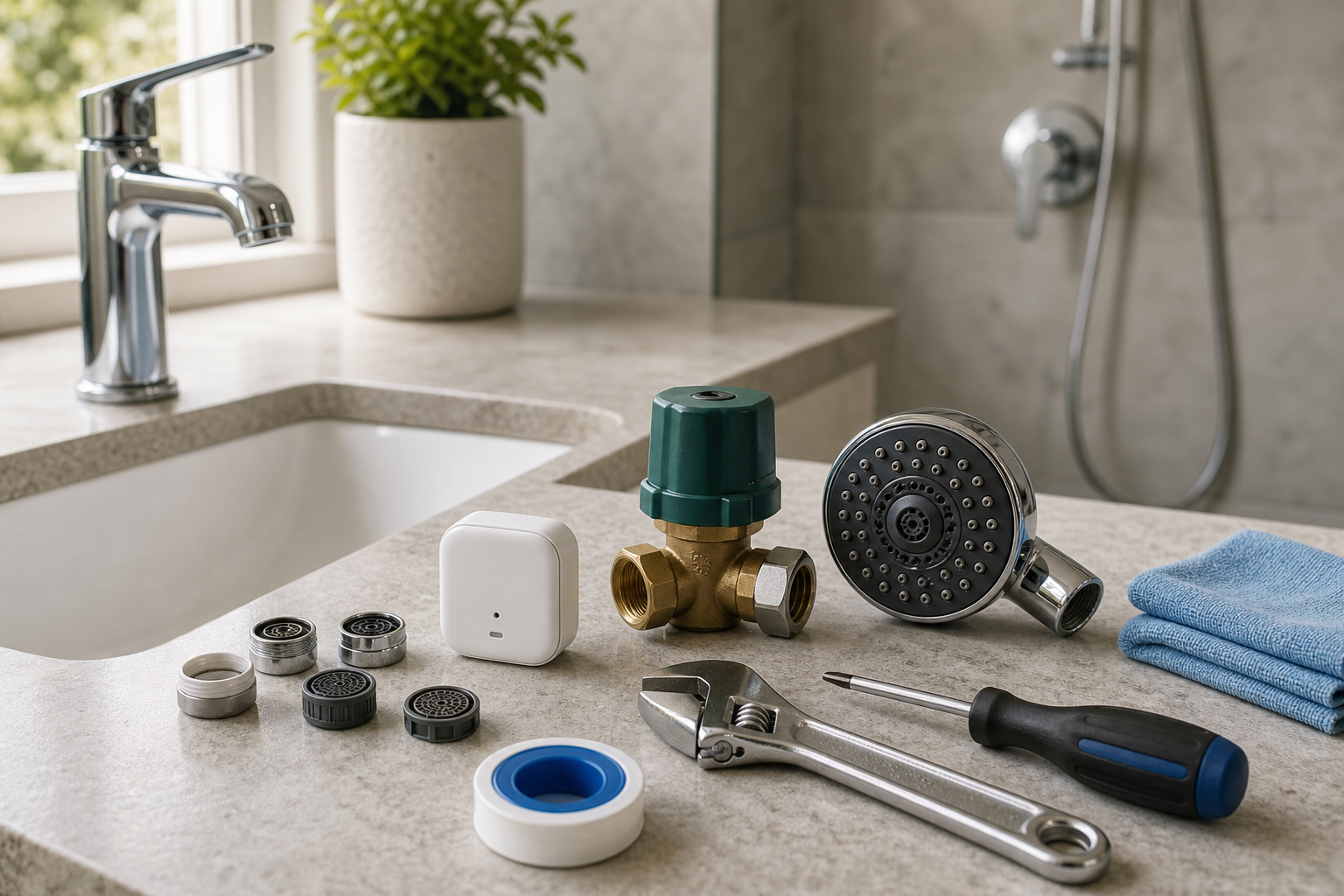
What to know about Water-Saving Plumbing Devices: What Helps and What to Skip
Water-saving devices are useful when they match the fixture, installation risk, and household problem. The best choices are usually correct aerators, WaterSense-labeled showerheads, toilet leak-repair parts, leak sensors, and professionally installed smart shutoff valves when risk justifies it.
Device comparison
| Device | Good fit | Poor fit | Source to check | Pro needed? |
|---|---|---|---|---|
| Faucet aerator | Sinks with compatible threads. | Pull-down or specialty faucets without standard inserts. | Faucet spec, aerator label, WaterSense when relevant. | Usually no unless stuck or faucet body moves. |
| Low-flow showerhead | Normal pressure and desire for lower fixture flow. | Sudden or whole-house low pressure. | WaterSense and manufacturer spec. | No for simple replacement; yes if arm/valve leaks. |
| Toilet repair parts | Running toilet or phantom refill. | Rocking toilet, base leak, cracked tank, stuck shutoff. | Tank model and part instructions. | Often DIY; plumber if shutoff leaks. |
| Leak sensor | Early warning under sinks, laundry, toilets. | Expecting sensor to stop water automatically. | Battery/app/support details. | No for puck sensors. |
| Smart shutoff valve | Vacation homes or high leak risk. | Unknown main-line condition or no qualified installer. | Manufacturer install requirements and plumber quote. | Usually yes for inline valves. |
Utility rebate guidance
Check your utility before buying. Rebates may require WaterSense-labeled products, preapproval, receipts, model numbers, or professional installation.
Before buying a device
Verify current labels, warranties, compatibility, and local rebate rules.
Smart shutoff caveats
- Inline valves can require cutting the main water line, power/app setup, and a bypass/maintenance plan.
- Confirm pipe material, size, valve access, Wi-Fi/hub requirements, and power/internet-loss behavior.
- Ask a plumber whether the device is appropriate for your main shutoff layout and requirements adopted by the local authority having jurisdiction.
Sources for this guide
Water-saving device comparison table
| Device type | Useful check | Risk boundary |
|---|---|---|
| Showerheads and faucet aerators | Look for WaterSense or manufacturer flow information. | Do not force incompatible threads or damage finishes. |
| Leak detectors and smart shutoffs | Check power, Wi-Fi, valve size, and manual override. | Use a plumber for whole-home shutoff installation. |
| Toilet or irrigation upgrades | Compare rated use, rebates, and installation constraints. | Follow local utility and code requirements. |
How to evaluate water-saving gadgets safely
Group water-saving devices by how invasive they are. Low-risk swaps include faucet aerators and showerheads when threads match and the fixture finish is protected. Medium-planning devices include leak sensors, smart detectors, toilet upgrades, and irrigation controls because they need batteries, placement decisions, app support, or utility-program compatibility. Higher-risk devices include automatic shutoff valves, whole-home monitors, pressure-related devices, and equipment tied into potable plumbing because installation can affect valves, backflow protection, warranty, and code requirements.
Before buying, write down the actual goal: lower monthly use, catch leaks sooner, reduce hot-water waste, manage irrigation, or improve fixture comfort. Then document valve size, pipe material, power or battery needs, Wi-Fi coverage, manual override, notification method, replacement parts, and what happens during power or internet outages. For leak sensors, place them where a small leak would be noticed early: under sinks, near water heaters, behind washing machines, by dishwashers, near toilets, and at known low spots. For shutoff devices, use a plumber if installation requires cutting pipe, changing the main valve, or working near electrical equipment. Water-saving gadgets are helpful only when they match the home’s plumbing layout and when someone will maintain batteries, filters, apps, and alerts.
Questions to ask before installing a smart shutoff or monitor
Ask whether the device fits the pipe material and valve location, whether it needs a licensed installer, how it behaves during a power outage, whether it can be manually reopened, whether it needs a subscription, and how false shutoffs are handled. Confirm that automatic shutoff will not interfere with fire suppression, boiler fill, irrigation, medical equipment, or other systems that depend on water. A simple sensor may be a better first step in rentals, condos, older homes, or houses where the main valve condition is unknown.
Decision aid: Water-Saving Plumbing Devices: What Helps and What to Skip
Start by identifying the relevant symptom, fixture, or planning question before choosing parts or arranging work.
Write down when the issue began, what changed, which fixtures are affected, and any model or service-history details. That record makes it easier to compare the article with the exact product documentation and to explain the problem if qualified help is needed.
- Identify the water source, affected fixtures, timing, color or odor, recent plumbing work, and whether anyone may drink the water.
- Match product-specific directions to the exact model manual and confirm local requirements where installation, gas, electricity, water quality, or structural work is involved.
- Stop relying on appearance alone when drinking-water safety, a private well, lead, bacteria, or chemical contamination may be involved.
Authoritative references for this topic
Use the current version of these sources to verify safety, efficiency, health, or product-specific details that apply to your situation.