Water Heater
Water Heater Replacement Questions Before Hiring a Plumber
Plan a replacement conversation around household demand, fuel type, space, venting, electrical/gas limits, recovery, efficiency, and contractor questions - not DIY installation.
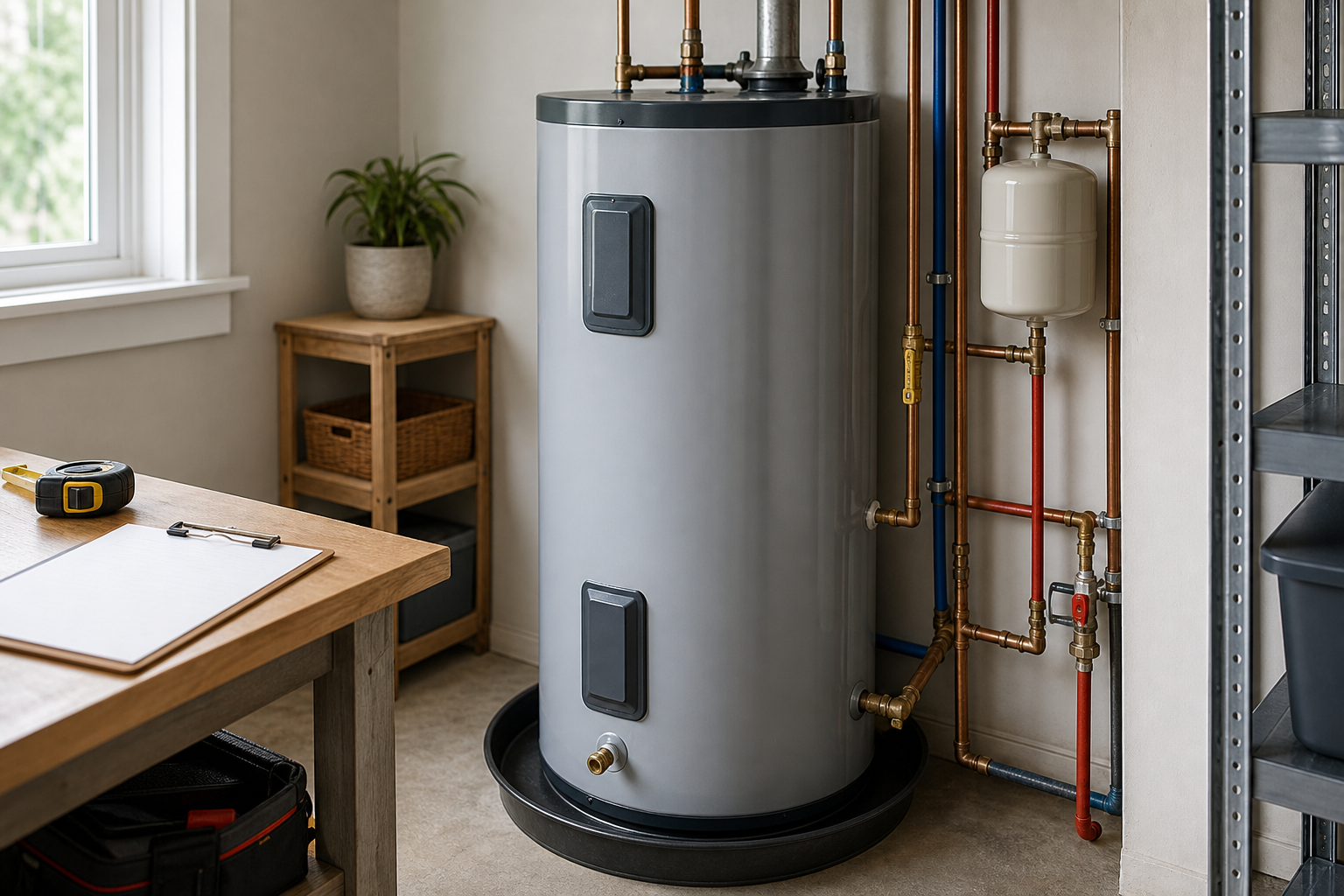
What to know about Water Heater Replacement Questions Before Hiring a Plumber
Choosing a water-heater size is a replacement-planning conversation, not a simple gallon chart. A plumber should consider household demand, first-hour rating, recovery rate, fuel type, electrical/gas capacity, venting/combustion air, available space, code requirements, and whether tankless, heat-pump, solar, or recirculation changes make sense.
Replacement planning table
| Question | Why it matters | Bring this information |
|---|---|---|
| How many people and simultaneous uses? | Demand affects first-hour rating and tankless sizing. | Occupants, showers, tubs, laundry, dishwasher, peak time. |
| Fuel and utility limits? | Gas, electric, heat-pump, and tankless systems can require different capacity, venting, or circuits. | Existing heater label, panel/gas-meter constraints if known, photos. |
| Space and drainage? | Height, width, pan, drain, condensate, and service clearance matter. | Closet/garage/basement photos and measurements. |
| Safety/code changes? | Expansion tanks, seismic straps, venting, combustion air, permits, and T&P discharge can affect scope. | Local permit/AHJ requirements and contractor quote details. |
Questions to ask contractors
- What first-hour rating, recovery rate, or tankless flow assumptions did you use?
- Will the job require permit, inspection, expansion tank, pan/drain, venting, combustion-air, condensate, or electrical/gas upgrades?
- What manufacturer warranty, maintenance schedule, and installation manual apply?
- What unsafe old conditions should be corrected instead of reused?
What this guide does not cover
It does not provide a DIY installation procedure, gas sizing calculation, venting design, combustion-air design, electrical circuit sizing, or code approval. It is a contractor-prep checklist.
Important context
This topic may involve drinking-water safety, treatment equipment, pressure systems, local requirements, or water-heater risk. Limit homeowner action to observation, documentation, certified testing where appropriate, and planning. Ask a licensed plumber, certified water-treatment professional, local health authority, or applicable code official to confirm the requirements before work begins.
Decision aid: Water Heater Replacement Questions Before Hiring a Plumber
Start by identifying the relevant symptom, fixture, or planning question before choosing parts or arranging work.
Write down when the issue began, what changed, which fixtures are affected, and any model or service-history details. That record makes it easier to compare the article with the exact product documentation and to explain the problem if qualified help is needed.
- Record the exact model, fuel or power type, visible code, leak location, temperature symptom, and any alarm without opening the appliance.
- Match product-specific directions to the exact model manual and confirm local requirements where installation, gas, electricity, water quality, or structural work is involved.
- Stop for fuel odor, a carbon-monoxide alarm, soot, scorching, repeated breaker trips, active leaking, or pressure-safety concerns.
Authoritative references for this topic
Use the current version of these sources to verify safety, efficiency, health, or product-specific details that apply to your situation.