Water Heater
Water in the Water-Heater Pan: Leak or Condensation Warning Signs
A water-heater pan should not be treated as normal storage for water. Use this triage guide to document leak, condensation, drain-line, and emergency shutoff clues.
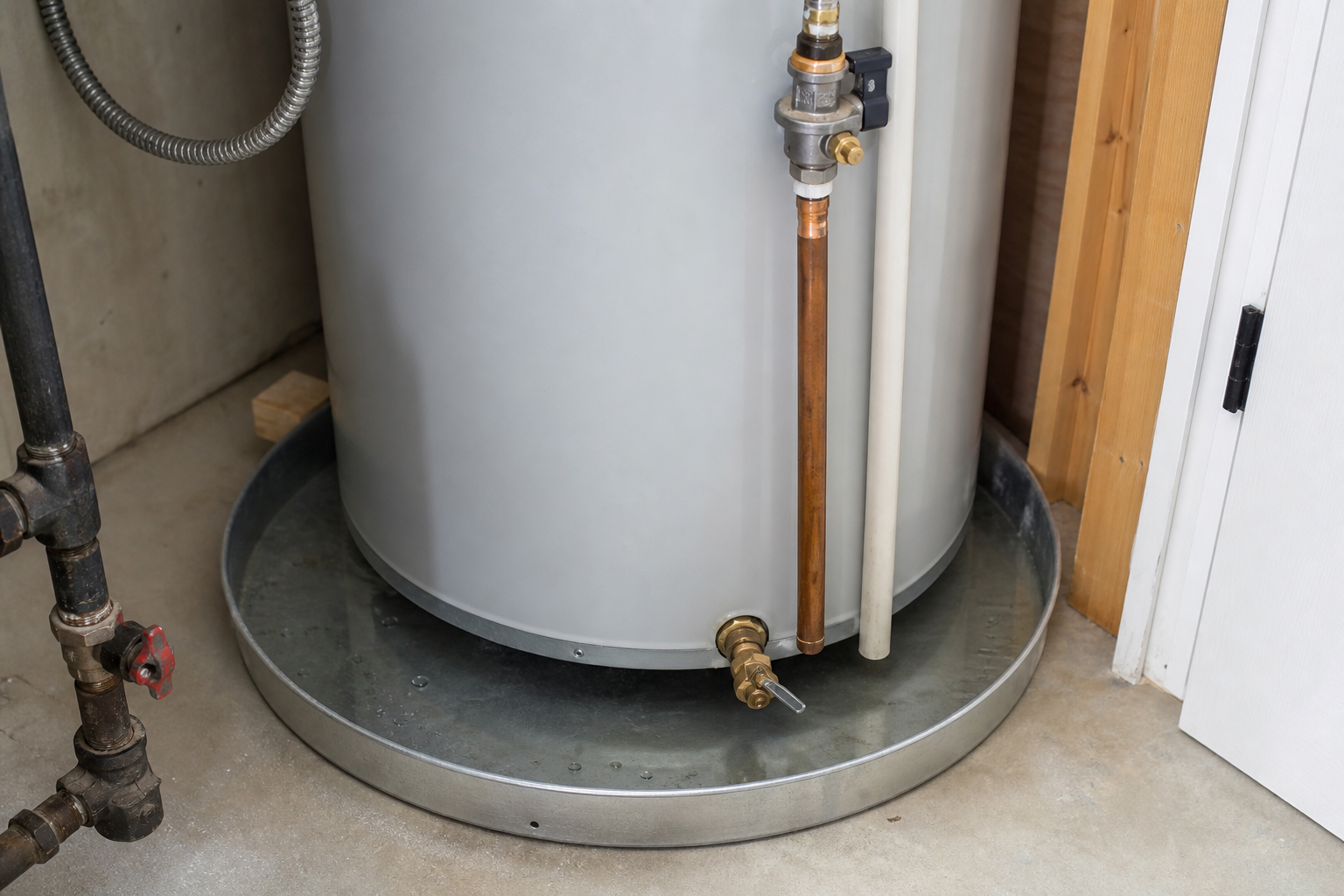
What to know about Water in the Water-Heater Pan: Leak or Condensation Warning Signs
A water-heater pan is a safety catch pan, not a place where water should routinely sit. A small one-time drip after nearby work may dry, but repeated or standing water can signal a tank leak, fitting leak, relief-valve discharge, pan-drain problem, condensation, or nearby plumbing leak. Treat spreading water, ceiling damage, or electrical/gas hazards as urgent.
Pan-water clue table
| Clue | What it can mean | Safer next step |
|---|---|---|
| Water keeps returning after drying | Active leak or discharge | Photograph source; call plumber. |
| Water appears during/after heating cycle | Pressure/temperature relief discharge or tank/fitting issue | Never block a relief line; call qualified service. |
| Water around heater plus gas/electrical concern | Safety hazard | Use emergency/pro guidance; do not touch wet electrical components. |
| Pan drain is blocked, disconnected, or missing | Overflow risk | Document route; ask plumber about code-compliant drain/pan options. |
Emergency stop points
- Gas smell, CO alarm, soot, burner/vent damage, or flame concern.
- Water contacting electrical wiring, controls, outlet, or appliance cabinet.
- Rapid leaking, ceiling damage, saturated floor, or water near finished space.
- Relief-valve discharge, hissing steam, or dangerously hot water.
What to bring to the plumber
- Photos of pan, drain route, fittings above heater, relief pipe, and heater label.
- When water appears: constant, after shower/laundry, after heating, rain/flooding, or random.
- Whether the heater is gas, electric, tankless, hybrid, or indirect.
Important context
This topic may involve drinking-water safety, treatment equipment, pressure systems, local requirements, or water-heater risk. Limit homeowner action to observation, documentation, certified testing where appropriate, and planning. Ask a licensed plumber, certified water-treatment professional, local health authority, or applicable code official to confirm the requirements before work begins.
Decision aid: Water in the Water-Heater Pan: Leak or Condensation Warning Signs
Start by identifying the relevant symptom, fixture, or planning question before choosing parts or arranging work.
Write down when the issue began, what changed, which fixtures are affected, and any model or service-history details. That record makes it easier to compare the article with the exact product documentation and to explain the problem if qualified help is needed.
- Record the exact model, fuel or power type, visible code, leak location, temperature symptom, and any alarm without opening the appliance.
- Match product-specific directions to the exact model manual and confirm local requirements where installation, gas, electricity, water quality, or structural work is involved.
- Stop for fuel odor, a carbon-monoxide alarm, soot, scorching, repeated breaker trips, active leaking, or pressure-safety concerns.
Authoritative references for this topic
Use the current version of these sources to verify safety, efficiency, health, or product-specific details that apply to your situation.