Water Heater
What Is a Recirculating Pump? Hot-Water Convenience and Planning Checks
A recirculating pump can reduce hot-water wait time, but fit depends on plumbing layout, controls, energy use, and professional installation needs.
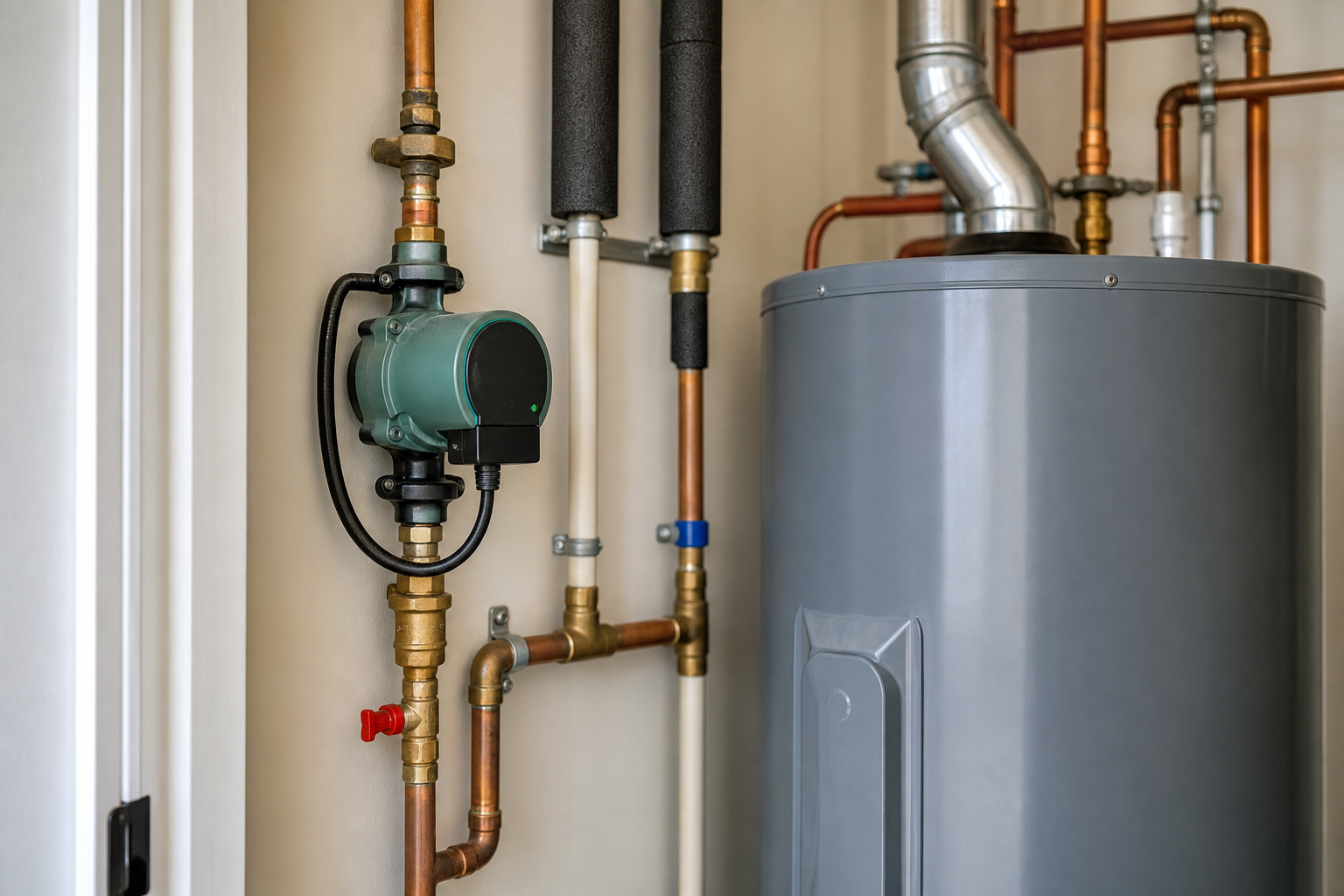
What to know about What Is a Recirculating Pump? Hot-Water Convenience and Planning Checks
A recirculating pump moves hot water through a loop or demand-controlled path so fixtures get hot water faster. It is a planning topic, not a generic DIY install: pipe layout, pump type, controls, check valves, energy use, and code matter.
Signs and safe next steps
| Question or clue | Why it matters | Safe next step |
|---|---|---|
| Long wait for hot water | Possible recirculation use case | Measure wait time and fixture locations |
| No dedicated return line | Different pump strategies | Ask plumber about options |
| Timer or demand control | Energy/water tradeoff | Compare controls |
| Tankless or mixed system | Compatibility issue | Use manufacturer guidance |
Water-heater hub paths
For broader water-heater planning, see water-heater warning signs, hot water running out quickly, water in the heater pan, and replacement sizing questions.
Important context
This topic may involve drinking-water safety, treatment equipment, pressure systems, local requirements, or water-heater risk. Limit homeowner action to observation, documentation, certified testing where appropriate, and planning. Ask a licensed plumber, certified water-treatment professional, local health authority, or applicable code official to confirm the requirements before work begins.
Recirculation planning detail
For recirculating-pump planning, confirm whether the home has a dedicated return line, crossover valve, smart/timer control, check valve, nearby power, insulation, and a water-heater model that allows the proposed setup. Homeowners can document delay-to-hot-water, fixture distance, utility goals, and comfort complaints, but pump sizing, installation location, electrical work, and warranty/code constraints should stay with a qualified installer.
Decision aid: What Is a Recirculating Pump? Hot-Water Convenience and Planning Checks
Start by identifying the relevant symptom, fixture, or planning question before choosing parts or arranging work.
Write down when the issue began, what changed, which fixtures are affected, and any model or service-history details. That record makes it easier to compare the article with the exact product documentation and to explain the problem if qualified help is needed.
- Record the exact model, fuel or power type, visible code, leak location, temperature symptom, and any alarm without opening the appliance.
- Match product-specific directions to the exact model manual and confirm local requirements where installation, gas, electricity, water quality, or structural work is involved.
- Stop for fuel odor, a carbon-monoxide alarm, soot, scorching, repeated breaker trips, active leaking, or pressure-safety concerns.
Authoritative references for this topic
Use the current version of these sources to verify safety, efficiency, health, or product-specific details that apply to your situation.