Faucet & Sink
How to Reduce Garbage Disposal Odor Safely
Reduce disposal odors with safe cleaning habits and know when smell points to drainage or installation trouble.
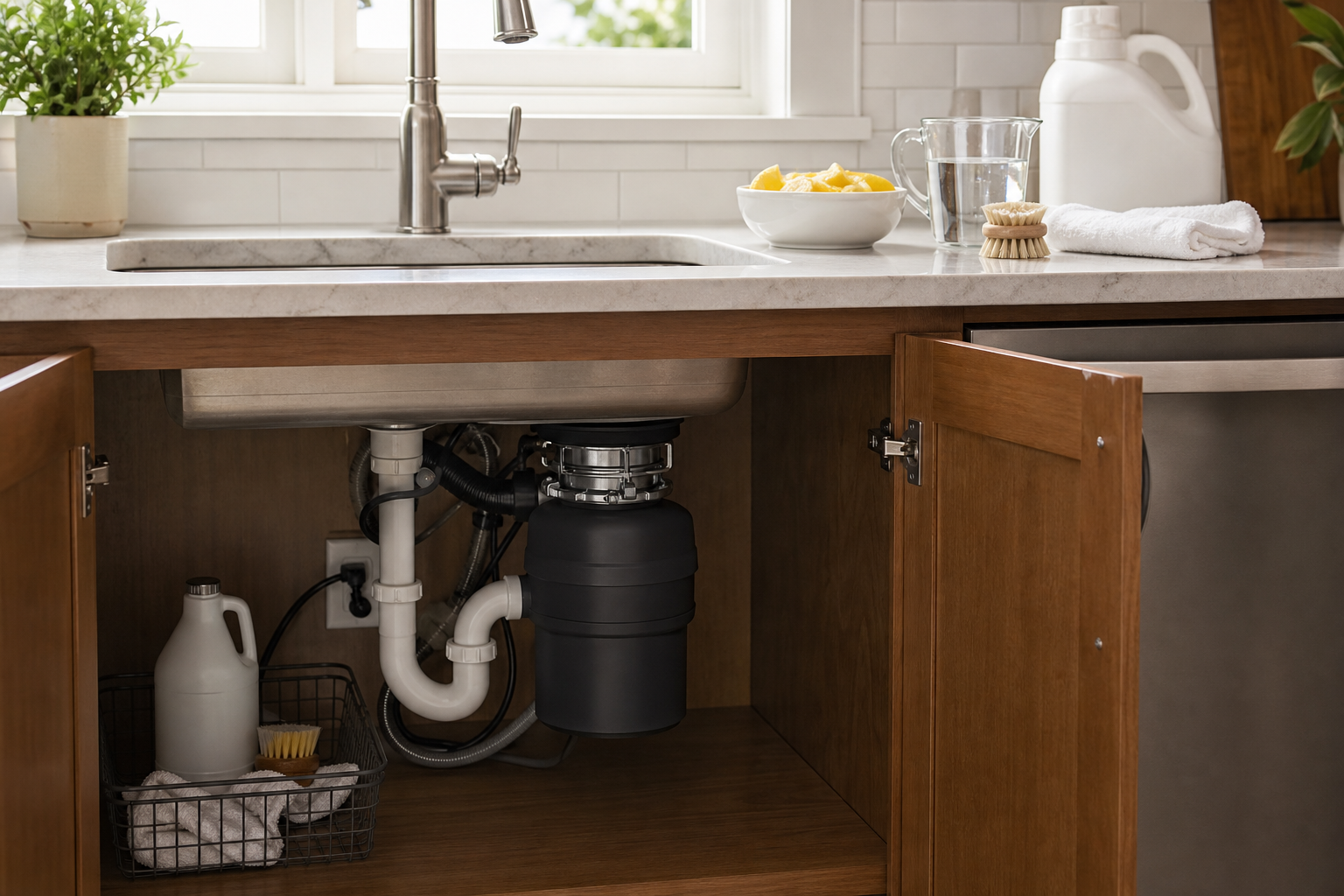
What to know about How to Reduce Garbage Disposal Odor Safely
Garbage disposal odor usually comes from food film on the splash guard, grind chamber, sink flange, or drain path. Clean only the visible/disposal-approved surfaces and never put hands inside the disposal.
Odor source table
| Odor pattern | Likely source | Safe action |
|---|---|---|
| Smell at rubber splash guard | Food film on underside | Clean removable guard if model allows, with power off as manual directs. |
| Smell after dishwasher drains | Dishwasher hose/air gap/disposer path | Check dishwasher filter and air gap guide. |
| Rotten or sewer-like smell | Drain/trap/vent issue | Call plumber if persistent or paired with gurgling. |
| Burning/electrical smell | Motor or wiring concern | Stop using disposal. |
Safe cleaning boundaries
- Use cold water and manufacturer-approved cleaning methods.
- Do not use caustic drain openers in the disposal unless the disposal and product label explicitly allow it.
- Do not reach into the chamber; use tongs only when power is safely off and the manual allows object removal.
Fixture, drain, and finish boundary
Decision aid: How to Reduce Garbage Disposal Odor Safely
Start by identifying the relevant symptom, fixture, or planning question before choosing parts or arranging work.
Write down when the issue began, what changed, which fixtures are affected, and any model or service-history details. That record makes it easier to compare the article with the exact product documentation and to explain the problem if qualified help is needed.
- Separate a faucet or supply symptom from a drain symptom, and note whether it affects hot water, cold water, or both.
- Match product-specific directions to the exact model manual and confirm local requirements where installation, gas, electricity, water quality, or structural work is involved.
- Stop if water reaches a cabinet, wall, floor, or electrical part, or if a shutoff or fixture starts to move when it should not.
Authoritative references for this topic
Use the current version of these sources to verify safety, efficiency, health, or product-specific details that apply to your situation.