Water Quality
How to Read a Water Meter: Leak and Usage Checks for Homeowners
A water meter can help separate normal usage from a possible leak, but meter styles and utility rules vary; record readings before assuming the source.
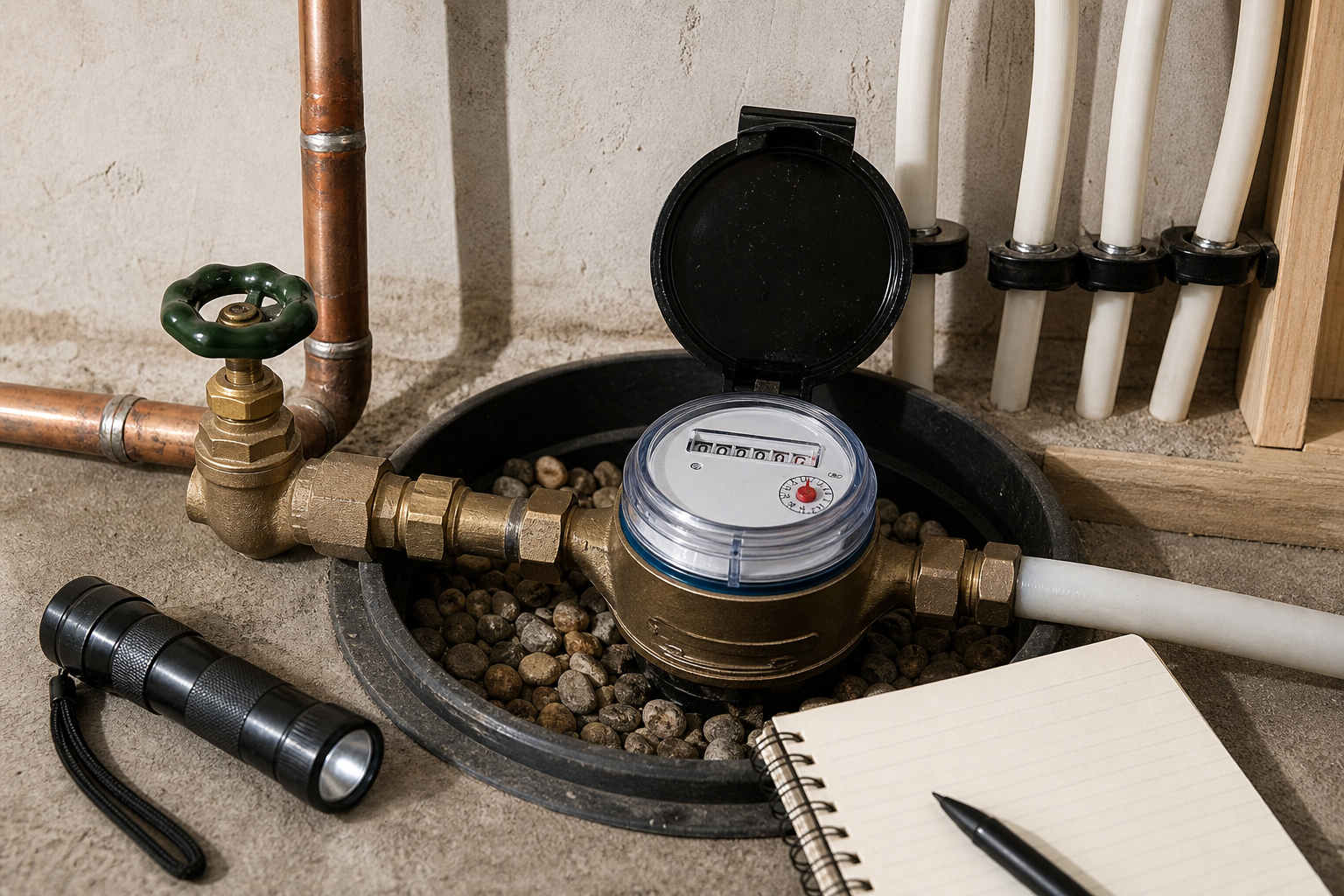
What to know about How to Read a Water Meter: Leak and Usage Checks for Homeowners
A water meter can help you document usage and possible leaks, but meter faces, AMI portals, and utility billing rules vary. Record the reading, time, fixture use, and leak indicator behavior before calling the utility or plumber.
Signs and safe next steps
| Clue | What it can mean | Safe next step |
|---|---|---|
| Meter moves with all fixtures off | Possible leak or appliance fill | Record time and isolate fixtures |
| Utility portal shows overnight flow | Leak clue | Check toilets/irrigation |
| Estimated bill | Billing artifact possible | Ask utility about read type |
| Meter box flooded or unsafe | Access hazard | Call utility |
Meter-reading troubleshooting table
| Observation | What it may suggest | What to document |
|---|---|---|
| Meter moves when all fixtures are off | Possible leak or running fixture. | Time, meter photo, fixture checks, irrigation status, and whether movement continues. |
| Bill rises but meter is stable during test | Usage pattern, rate change, irrigation, guests, or billing period issue. | Bill dates, usage units, prior months, irrigation schedule, and utility notes. |
| Water appears near meter or curb stop | Possible service-line or utility-side issue. | Photos, exact location, and call utility/plumber before digging or operating curb valves. |
Step-by-step meter reading workflow
Use the meter as a documentation tool, not as a substitute for leak diagnosis. First, confirm the meter location and whether it is safe and legal for the homeowner to access. Do not open utility-only lids, operate curb stops, dig around the meter, or reach into flooded or insect-filled boxes. Photograph the face before touching anything nearby. Record the date, time, full reading, and whether the meter uses gallons, cubic feet, or another unit. If the meter has a low-flow indicator, watch it only after making sure every fixture, irrigation zone, humidifier, ice maker, dishwasher, washing machine, and toilet is off.
For a suspected leak, take a first reading, avoid water use for a set period, then take a second reading. If the reading changes while all water use is off, document the result and begin safe fixture-level checks such as listening for running toilets, looking for dripping hose bibbs, and checking visible supply lines. Do not cut walls, lift flooring, or operate utility valves. If the meter is still moving after obvious fixtures are ruled out, the useful next step is a plumber or utility call with photos and timestamps. For bill disputes, compare billing periods, rate changes, estimated versus actual reads, irrigation schedules, guests, seasonal use, and prior-month usage before assuming a leak.
When a meter reading should become a service call
Escalate from observation to service when the meter moves with all fixtures off, the shutoff valve will not close, water appears at the meter box, the bill spike repeats, or the suspected leak could be under a slab, inside a wall, or between the meter and the house. A plumber or utility can use the meter photos, timestamped readings, and fixture checklist to narrow responsibility faster. Keep the page focused on reading and documenting; leak locating, valve replacement, and service-line decisions belong with qualified help.
Decision aid: How to Read a Water Meter: Leak and Usage Checks for Homeowners
Start by identifying the relevant symptom, fixture, or planning question before choosing parts or arranging work.
Write down when the issue began, what changed, which fixtures are affected, and any model or service-history details. That record makes it easier to compare the article with the exact product documentation and to explain the problem if qualified help is needed.
- Identify the water source, affected fixtures, timing, color or odor, recent plumbing work, and whether anyone may drink the water.
- Match product-specific directions to the exact model manual and confirm local requirements where installation, gas, electricity, water quality, or structural work is involved.
- Stop relying on appearance alone when drinking-water safety, a private well, lead, bacteria, or chemical contamination may be involved.
Authoritative references for this topic
Use the current version of these sources to verify safety, efficiency, health, or product-specific details that apply to your situation.