Faucet & Sink
What Is a Faucet Escutcheon and When Do You Need One?
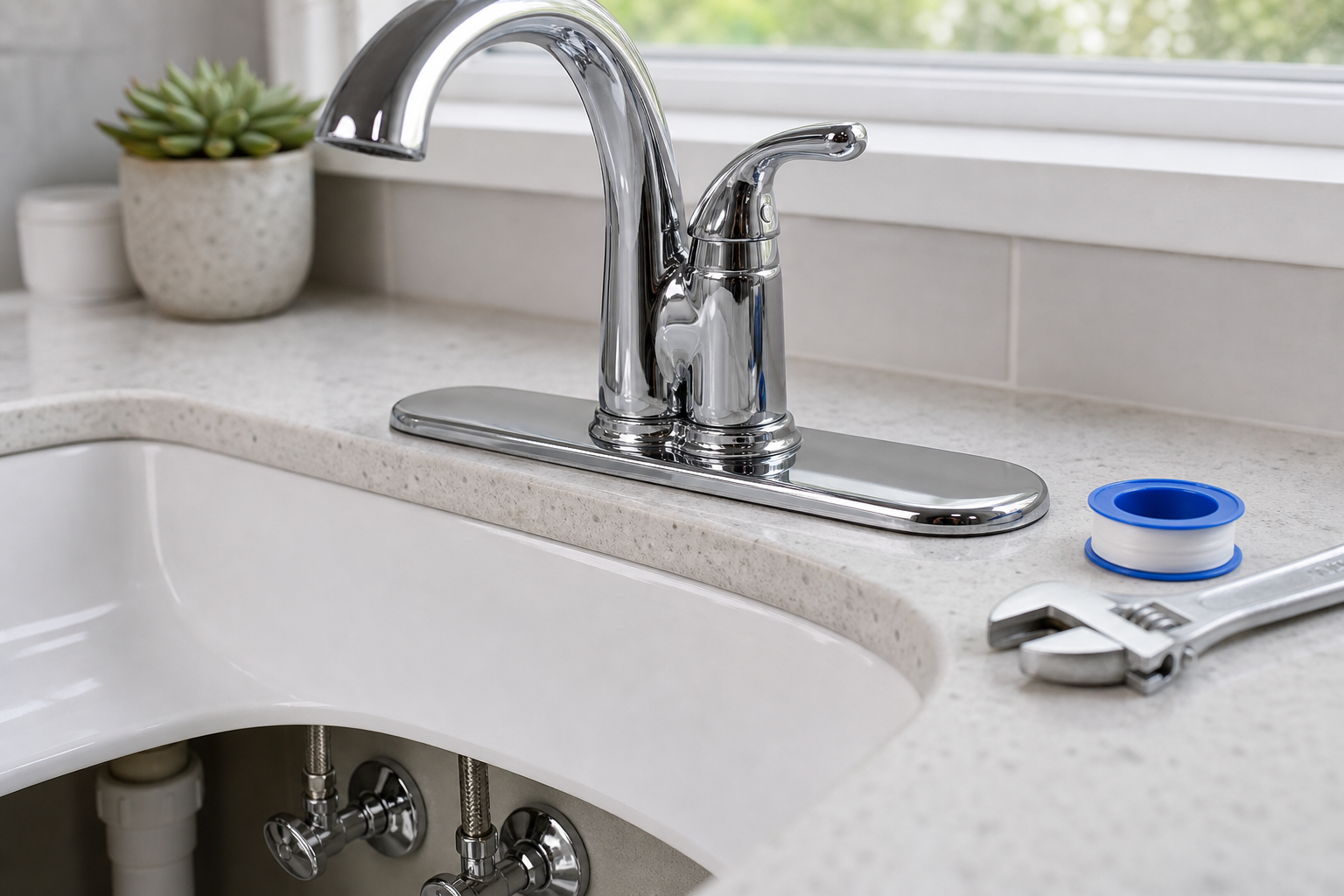
A faucet escutcheon covers holes or pipe penetrations, but it should not hide leaks, loose valves, rot, or wrong-fit trim.
What to know about What Is a Faucet Escutcheon and When Do You Need One
A faucet escutcheon is the trim plate or flange that covers the hole around a faucet, valve, shower arm, or pipe penetration. You need one when it is part of the faucet design, when it covers unused sink holes, or when it seals/finishes a wall or countertop opening. It should not be used to hide active leaks, rot, loose valves, or a bad fit.
Escutcheon type table
| Type | Where you see it | Main fit question |
|---|---|---|
| Deck plate | Under a kitchen or bathroom faucet on the sink/counter | Does it match hole spacing and cover unused holes? |
| Single-hole base ring | Small trim ring under faucet body | Is it required by the faucet spec sheet? |
| Shower/tub valve trim plate | Around handle/valve at wall | Does it match valve series and seal to finished wall? |
| Shower arm flange | Around pipe where shower arm exits wall | Does it sit flat without stressing the pipe? |
| Supply or pipe escutcheon | Around exposed supply line or drain at wall/floor | Does it fit pipe diameter and wall gap? |
When an escutcheon helps
- Covering two unused holes when converting a 3-hole sink to a single-hole faucet.
- Finishing a rough countertop or sink opening when the faucet maker supplies the plate.
- Hiding normal clearance around a shower arm or supply penetration.
- Matching a faucet finish so the installation looks intentional.
When an escutcheon is not the fix
| Problem | Why trim is not enough | Better next step |
|---|---|---|
| Water under sink or behind wall | Trim does not stop pressurized or drain leaks | Find and document the leak source; call plumber if needed. |
| Loose faucet body | Mounting hardware or countertop support may be wrong | Check faucet manual and underside access. |
| Rotted countertop or wall | Plate may trap moisture and hide damage | Repair surface before covering it. |
| Wrong valve trim | Shower trim must match valve brand/series | Use manufacturer parts diagram/model number. |
Fit checklist before buying
- Identify faucet brand/model and finish name if possible.
- Measure hole spacing: single-hole, 4-inch centerset, or 8-inch widespread are not interchangeable.
- Measure pipe diameter for pipe escutcheons.
- Check plate length/width against unused holes and old marks.
- Confirm finish match; chrome, brushed nickel, matte black, oil-rubbed bronze, and stainless-look finishes vary by brand.
Surface and sealing caveats
Some deck plates include gaskets; others require plumber’s putty or silicone only where the manufacturer specifies. Stone, stainless, porcelain, laminate, and solid-surface counters can have different sealant restrictions. Do not apply sealant in a way that traps water or blocks weep paths described in the manual.
What to photograph before calling support
- Top view of holes, faucet body, and existing plate.
- Underside mounting hardware and supply-line layout.
- Brand marks on faucet, valve trim, or aerator.
- The leak or stain if the escutcheon is being considered because of water damage.
Decision aid: What Is a Faucet Escutcheon and When Do You Need One
Start by identifying the relevant symptom, fixture, or planning question before choosing parts or arranging work.
Write down when the issue began, what changed, which fixtures are affected, and any model or service-history details. That record makes it easier to compare the article with the exact product documentation and to explain the problem if qualified help is needed.
- Separate a faucet or supply symptom from a drain symptom, and note whether it affects hot water, cold water, or both.
- Match product-specific directions to the exact model manual and confirm local requirements where installation, gas, electricity, water quality, or structural work is involved.
- Stop if water reaches a cabinet, wall, floor, or electrical part, or if a shutoff or fixture starts to move when it should not.
Authoritative references for this topic
Use the current version of these sources to verify safety, efficiency, health, or product-specific details that apply to your situation.