Faucet & Sink
Why Are Kitchen Faucets So Expensive? What Actually Changes the Price
Kitchen faucet price usually reflects finish, cartridge, hose/docking, electronics, filtration, trim coordination, warranty, and parts support.
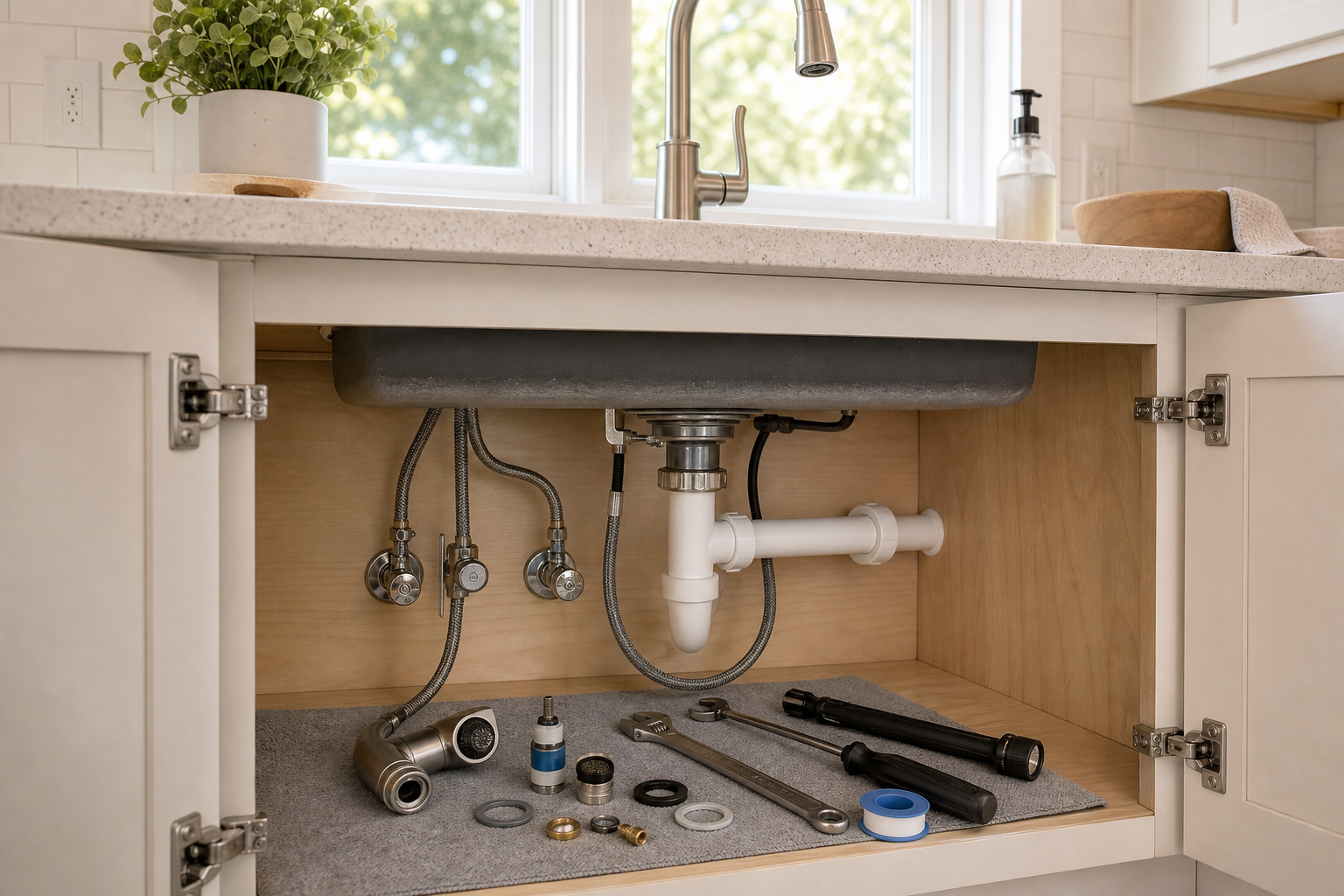
What to know about Why Are Kitchen Faucets So Expensive? What Actually Changes the Price
Kitchen faucets get expensive because of finish, valve/cartridge quality, pull-down hose and docking design, spray head, sensor/touch electronics, water-filtration features, heavy or specialty construction, coordinated trim, warranty/support, and brand/showroom distribution. Price alone does not guarantee better fit or longer life; the useful question is which features solve your sink, water, and maintenance needs.
What drives faucet price
| Cost driver | What changes | What to verify |
|---|---|---|
| Finish | Decorative finishes can cost more and need specific care | Finish code, warranty, and cleaner restrictions. |
| Cartridge/valve | Controls handle feel and leak resistance | Replacement cartridge availability and parts diagram. |
| Pull-down hose/docking | Affects daily use and wear | Hose length, weight/magnet docking, replacement parts. |
| Sensor/touch electronics | Adds convenience and failure points | Battery/power needs, bypass/manual mode, warranty. |
| Filtration or specialty water | Adds cartridges and flow restrictions | NSF/ANSI claims, replacement filters, flow rate. |
| Showroom/custom collections | More finishes/trim coordination | Lead time, return policy, support channel. |
Budget vs premium decision table
| Situation | Spend more may help | Spend less may be fine |
|---|---|---|
| Busy primary kitchen | Better hose, docking, cartridge, and parts support can matter | Avoid paying for electronics you do not want. |
| Hard-water area | Finish and aerator care are important | Choose serviceable aerator and simple finish. |
| Rental/short-term use | Durability and easy parts matter more than style | Simple replaceable model may be better. |
| Design remodel | Coordinated finish/trim may matter | Verify all accessories before ordering. |
| Low-pressure complaint | Expensive faucet may not fix plumbing pressure | Diagnose supply/aerator/house pressure first. |
Checklist before paying more
- Measure hole configuration, deck thickness, backsplash clearance, and sink depth.
- Read the spec sheet for spout reach, height, flow rate, and supply connection size.
- Check replacement cartridges, spray head, hose, aerator, and mounting kit availability.
- Read finish-care and warranty exclusions.
- For touch/sensor faucets, check battery location, manual override, and electrical/safety instructions.
- For filtered faucets, verify contaminant-specific NSF/ANSI claims and filter replacement cost.
Common mistakes
- Buying the most expensive faucet to solve low water pressure without checking the aerator or supply first.
- Ignoring replacement-part availability.
- Choosing matte black, brass, or bronze finish without reading care instructions.
- Assuming a showroom line and retail line have the same parts or warranty path.
- Overlooking sink depth and splash from tall/pre-rinse designs.
When to call a plumber or manufacturer
Call a plumber if shutoff valves are stuck, supply lines are corroded, holes must be drilled, the sink/countertop is damaged, or low pressure affects more than one fixture. Call the manufacturer before buying if you need parts support, warranty clarity, finish matching, or sensor/touch power details.
Fixture, drain, and finish boundary
Decision aid: Why Are Kitchen Faucets So Expensive? What Actually Changes the Price
Start by identifying the relevant symptom, fixture, or planning question before choosing parts or arranging work.
Write down when the issue began, what changed, which fixtures are affected, and any model or service-history details. That record makes it easier to compare the article with the exact product documentation and to explain the problem if qualified help is needed.
- Separate a faucet or supply symptom from a drain symptom, and note whether it affects hot water, cold water, or both.
- Match product-specific directions to the exact model manual and confirm local requirements where installation, gas, electricity, water quality, or structural work is involved.
- Stop if water reaches a cabinet, wall, floor, or electrical part, or if a shutoff or fixture starts to move when it should not.
Authoritative references for this topic
Use the current version of these sources to verify safety, efficiency, health, or product-specific details that apply to your situation.