Water Quality
How to Clean Hard-Water Stains From Glass Safely
Hard-water stains on glass need cleaner-label caution, ventilation, and surface protection; avoid mixing acids, bleach, or abrasives.
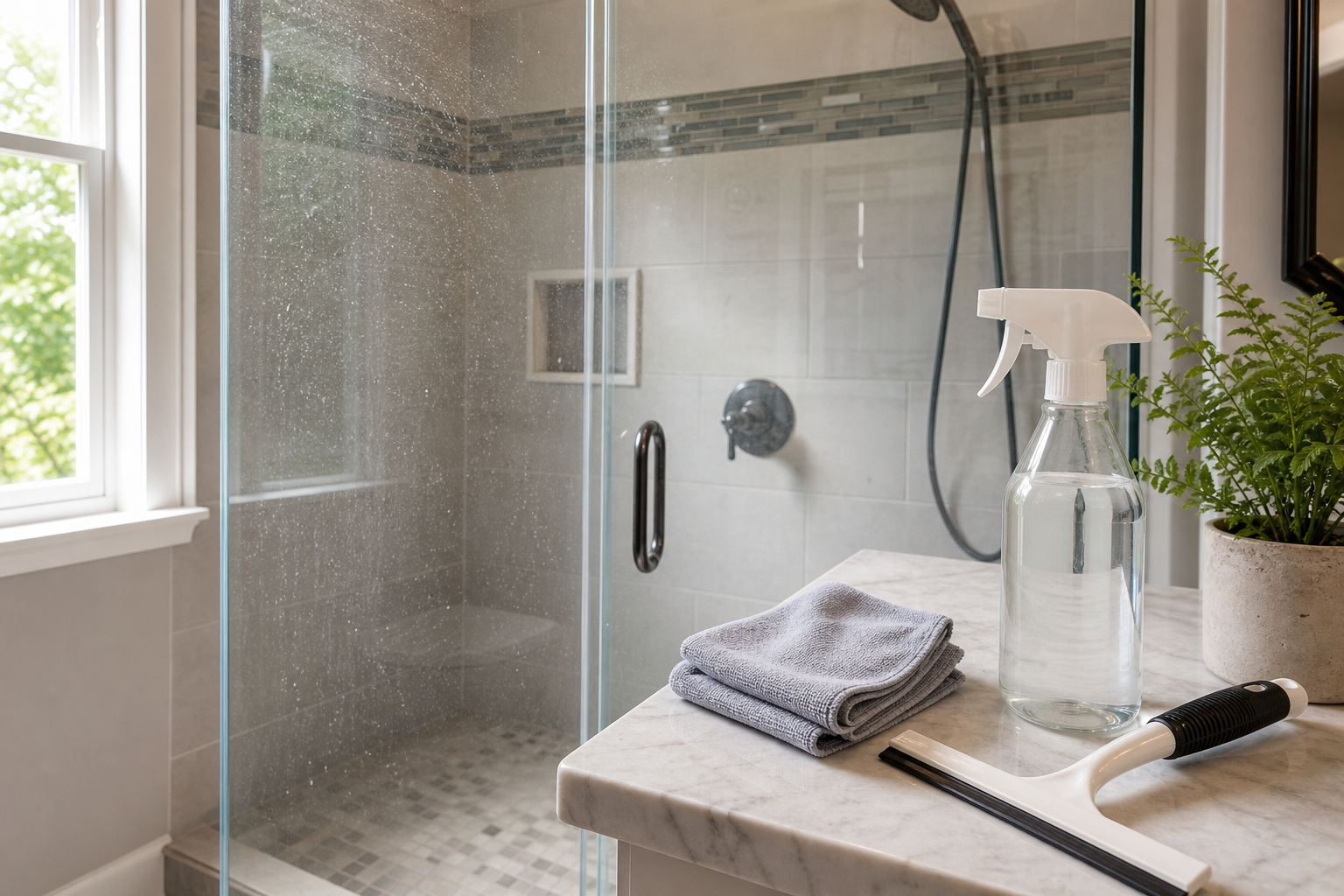
What to know about How to Clean Hard-Water Stains From Glass Safely
Clean hard-water stains from glass with a glass-safe cleaner, short contact time, ventilation, and protection for metal, stone, grout, and coatings. Do not mix acidic cleaners with bleach or ammonia.
Glass stain table
| Surface | Risk | Safe check |
|---|---|---|
| Plain glass | Mineral film. | Use glass-safe cleaner and soft pad. |
| Coated shower glass | Coating damage. | Check door manufacturer care sheet. |
| Near natural stone | Acid etching. | Protect stone before acidic products. |
| Metal frame | Finish damage/corrosion. | Rinse/dry per label. |
Chemical warning
Use one cleaner at a time and follow the label. Ventilate the bathroom and keep children/pets away during cleaning.
What to document before service or inspection
- Fixture or system affected, age if known, photos of accessible parts, and whether the issue is one fixture, multiple fixtures, or whole home.
- Timing: seasonal, after heavy use, after utility work, after a filter change, during freezing weather, or after cleaning products were used.
- Safety clues: standing water near electricity, sewage odor, moldy materials, hot-water scald risk, pressure spikes, or inability to close the main shutoff.
- Maintenance records: filter date/size, previous plumber notes, water bills, leak alarms, shutoff location, and any local code or permit question to ask the pro.
Decision aid: How to Clean Hard-Water Stains From Glass Safely
Start by identifying the relevant symptom, fixture, or planning question before choosing parts or arranging work.
Write down when the issue began, what changed, which fixtures are affected, and any model or service-history details. That record makes it easier to compare the article with the exact product documentation and to explain the problem if qualified help is needed.
- Identify the water source, affected fixtures, timing, color or odor, recent plumbing work, and whether anyone may drink the water.
- Match product-specific directions to the exact model manual and confirm local requirements where installation, gas, electricity, water quality, or structural work is involved.
- Stop relying on appearance alone when drinking-water safety, a private well, lead, bacteria, or chemical contamination may be involved.
Authoritative references for this topic
Use the current version of these sources to verify safety, efficiency, health, or product-specific details that apply to your situation.