Water Quality
How to Remove Hard-Water Stains From Shower Glass Without Damage
Hard-water stains on shower glass need glass/coating-safe cleaning, chemical-safety boundaries, and prevention—not aggressive scraping by default.
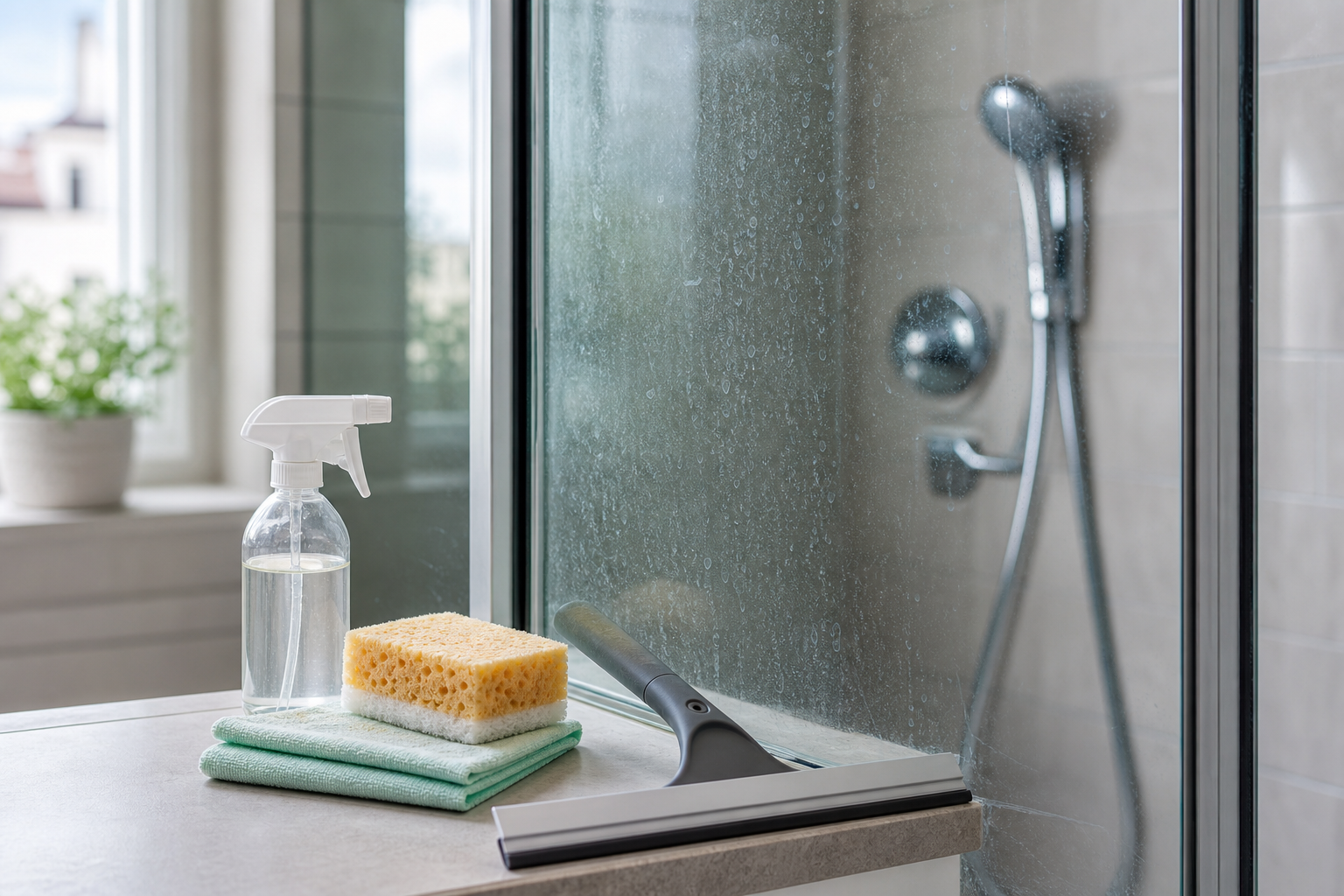
What to know about How to Remove Hard-Water Stains From Shower Glass Without Damage
Hard-water stains on shower glass are mineral deposits left after water dries, but the safest cleaning method depends on the glass coating, frame finish, stone/tile nearby, and cleaner label. Start mild, protect surrounding surfaces, avoid abrasives, and stop if the glass is etched, scratched, coated, or if the deposits do not respond to label-safe cleaning.
Stain or damage decision table
| What you see | Likely issue | Safe next step |
|---|---|---|
| White spots that feel slightly rough | Mineral scale on surface | Use glass-safe cleaner per label and rinse/dry. |
| Cloudiness that never changes after cleaning | Etching or damaged coating possible | Stop scrubbing; ask glass/shower-door manufacturer. |
| Rust/orange marks near metal | Metal staining or frame hardware issue | Avoid harsh acids on metal finishes; document source. |
| White crust at frame/track | Mineral buildup plus trapped soap/debris | Clean gently; check caulk/drainage path. |
| Scratches or shiny dull patches | Abrasive damage | Do not use more abrasive pads or powders. |
Surface-safe cleaning checklist
- Identify whether the shower glass has a factory coating or aftermarket water-repellent treatment.
- Read the shower-door/glass manufacturer care sheet if available.
- Test cleaner on a small inconspicuous area and protect nearby natural stone, metal trim, and grout.
- Use non-scratch pads or microfiber; avoid razor blades unless the glass maker explicitly allows them.
- Rinse thoroughly and dry the glass and metal hardware after cleaning.
- Improve ventilation and squeegee/dry habits to slow future deposits.
Cleaner compatibility table
| Cleaner/tool | May be useful for | Do not use when |
|---|---|---|
| Mild dish soap | Soap film and light residue | It will not dissolve heavy mineral scale alone. |
| Vinegar or acidic descaler | Some mineral deposits if label/manufacturer allows | Natural stone, sensitive metals, coated glass, or unlabeled mixing. |
| Commercial shower-glass cleaner | Routine glass care | Label conflicts with coating or surrounding materials. |
| Abrasive powder / melamine pad | Usually risky on glass coatings | Coated, tinted, textured, or warranty-sensitive glass. |
| Razor blade | Only if manufacturer allows on plain glass | Coated glass, tempered-glass warnings, or near frames/seals. |
What not to do
- Do not mix vinegar, bleach, ammonia, toilet cleaner, drain cleaner, or other chemicals.
- Do not use toilet-bowl cleaner or strong acid meant for porcelain on shower glass/metal/stone.
- Do not scrape coated or textured glass without manufacturer approval.
- Do not ignore repeated spotting; water hardness and drying habits are part of prevention.
When to call a pro
Call a shower-door company, glass professional, or installer if the glass is coated, etched, scratched, delaminating, leaking at the frame, or if hardware corrosion is involved. Call a water-treatment professional if hard-water deposits recur quickly across fixtures and you need testing or treatment advice.
Prevention checklist
- Squeegee or towel-dry glass after showers.
- Keep ventilation running long enough to reduce moisture.
- Clean before deposits become thick crust.
- Use a cleaner compatible with the glass coating and frame finish.
- Consider water testing if scale appears on faucets, aerators, showerheads, and dishwasher glassware too.
Decision aid: How to Remove Hard-Water Stains From Shower Glass Without Damage
Start by identifying the relevant symptom, fixture, or planning question before choosing parts or arranging work.
Write down when the issue began, what changed, which fixtures are affected, and any model or service-history details. That record makes it easier to compare the article with the exact product documentation and to explain the problem if qualified help is needed.
- Identify the water source, affected fixtures, timing, color or odor, recent plumbing work, and whether anyone may drink the water.
- Match product-specific directions to the exact model manual and confirm local requirements where installation, gas, electricity, water quality, or structural work is involved.
- Stop relying on appearance alone when drinking-water safety, a private well, lead, bacteria, or chemical contamination may be involved.
Authoritative references for this topic
Use the current version of these sources to verify safety, efficiency, health, or product-specific details that apply to your situation.